Copenhagen Center for Glycomics, University of Copenhagen, Copenhagen 2200, Denmark.
Department of Odontology, University of Copenhagen, Copenhagen 2200, Denmark.
Anal Chem. 2022 Mar 15;94(10):4343-4351. doi: 10.1021/acs.analchem.1c05068. Epub 2022 Mar 4.
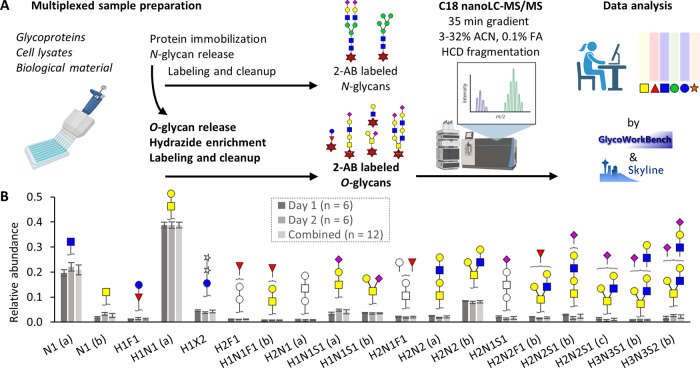
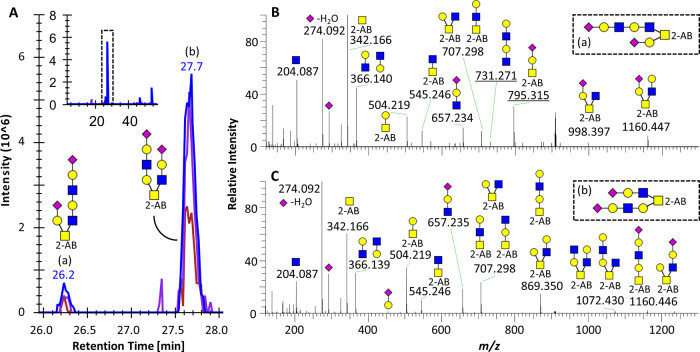
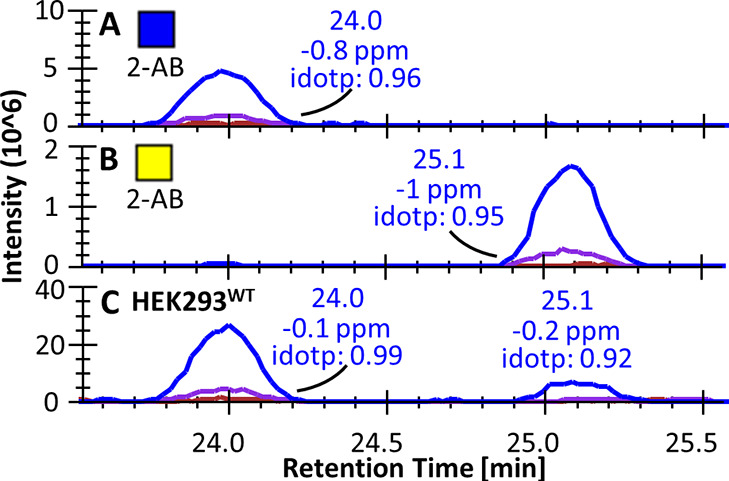
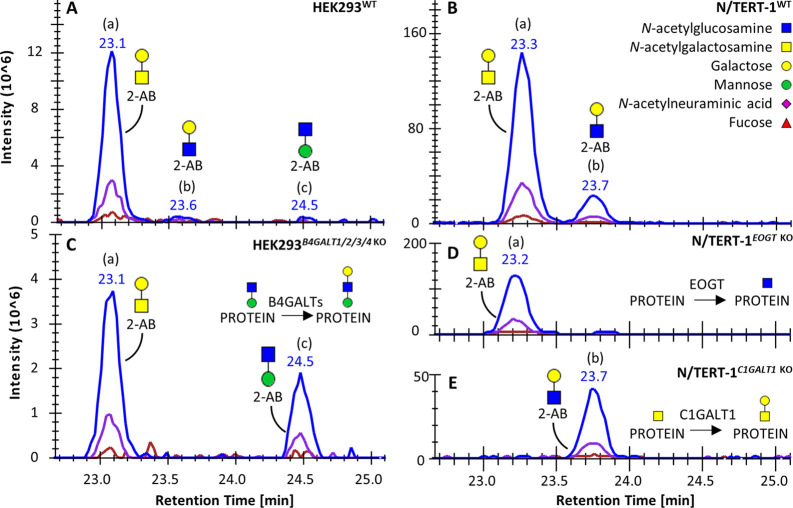
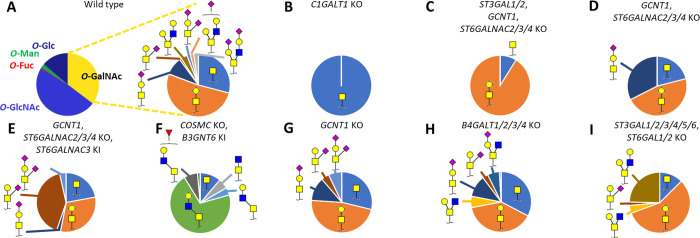
-Glycosylation is an omnipresent modification of the human proteome affecting many cellular functions, including protein cleavage, protein folding, and cellular signaling, interactions, and trafficking. The functions are governed by differentially regulated -glycan types and terminal structures. It is therefore essential to develop analytical methods that facilitate the annotation of -glycans in biological material. While various successful strategies for the in-depth profiling of released -glycans have been reported, these methods are often limitedly accessible to the nonspecialist or challenged by the high abundance of -glycan structural isomers. Here, we developed a high-throughput sample preparation approach for the nonreductive release and characterization of -glycans from human cell material. Reducing-end labeling allowed efficient isomer separation and detection using C18 nanoliquid chromatography coupled to Orbitrap mass spectrometry. Using the method in combination with a library of genetically glycoengineered cells displaying defined -glycan types and structures, we were able to annotate individual -glycan structural isomers from a complex mixture. Applying the method in a model system of human keratinocytes, we found a wide variety of -glycan structures, including -fucose, -glucose, -GlcNAc, and -GalNAc glycosylation, with the latter carrying both elongated core1 and core2 structures and varying numbers of fucoses and sialic acids. The method, including the now well-characterized standards, provides the opportunity to study glycomic changes in human tissue and disease models using rather mainstream analytical equipment.
糖基化是人类蛋白质组中普遍存在的一种修饰方式,影响许多细胞功能,包括蛋白质切割、蛋白质折叠以及细胞信号转导、相互作用和运输。这些功能受不同调节的 -聚糖类型和末端结构控制。因此,开发有助于在生物材料中注释 -聚糖的分析方法至关重要。虽然已经报道了各种成功的释放 -聚糖深度分析策略,但这些方法通常对非专业人员来说难以获得,或者受到 -聚糖结构异构体高丰度的限制。在这里,我们开发了一种高通量的样品制备方法,用于从人细胞材料中非还原释放和表征 -聚糖。还原端标记允许使用 C18 纳流液相色谱与轨道阱质谱联用进行有效的异构体分离和检测。使用该方法结合具有定义的 -聚糖类型和结构的遗传糖基工程细胞文库,我们能够从复杂混合物中注释各个 -聚糖结构异构体。在人角质形成细胞的模型系统中应用该方法,我们发现了广泛的 -聚糖结构,包括 -岩藻糖、-葡萄糖、-GlcNAc 和 -GalNAc 糖基化,后者携带伸长的核心 1 和核心 2 结构以及不同数量的岩藻糖和唾液酸。该方法包括现在已经很好地描述的标准,为使用相当主流的分析设备研究人类组织和疾病模型中的糖组变化提供了机会。