Department of Molecular Machines and Signaling, Max Planck Institute of Biochemistry, Martinsried, Bavaria, Germany.
Department of Molecular Machines and Signaling, Max Planck Institute of Biochemistry, Martinsried, Bavaria, Germany.
Mol Cell. 2022 Apr 21;82(8):1424-1438. doi: 10.1016/j.molcel.2022.02.004. Epub 2022 Mar 4.
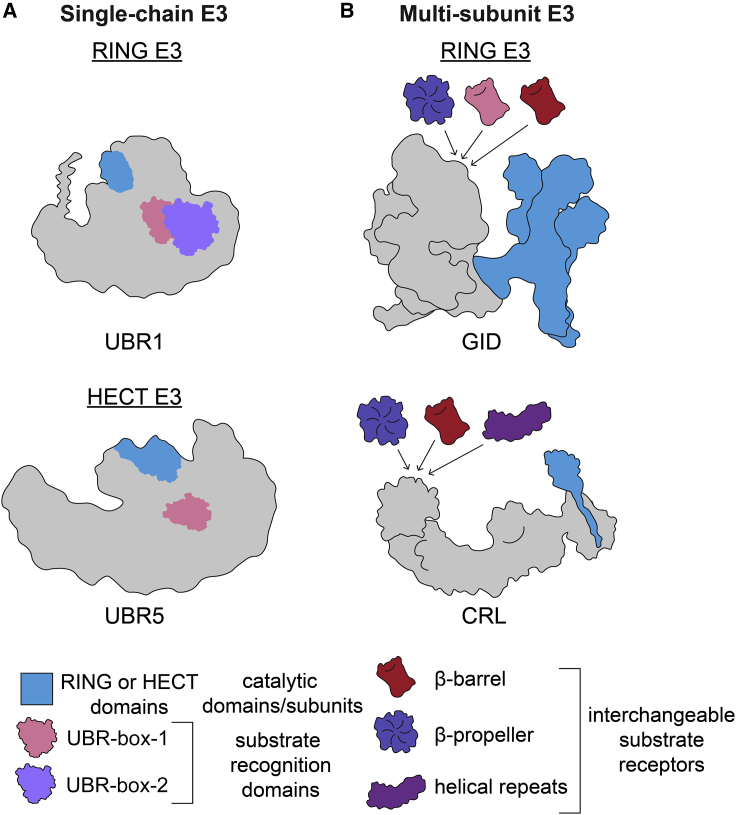
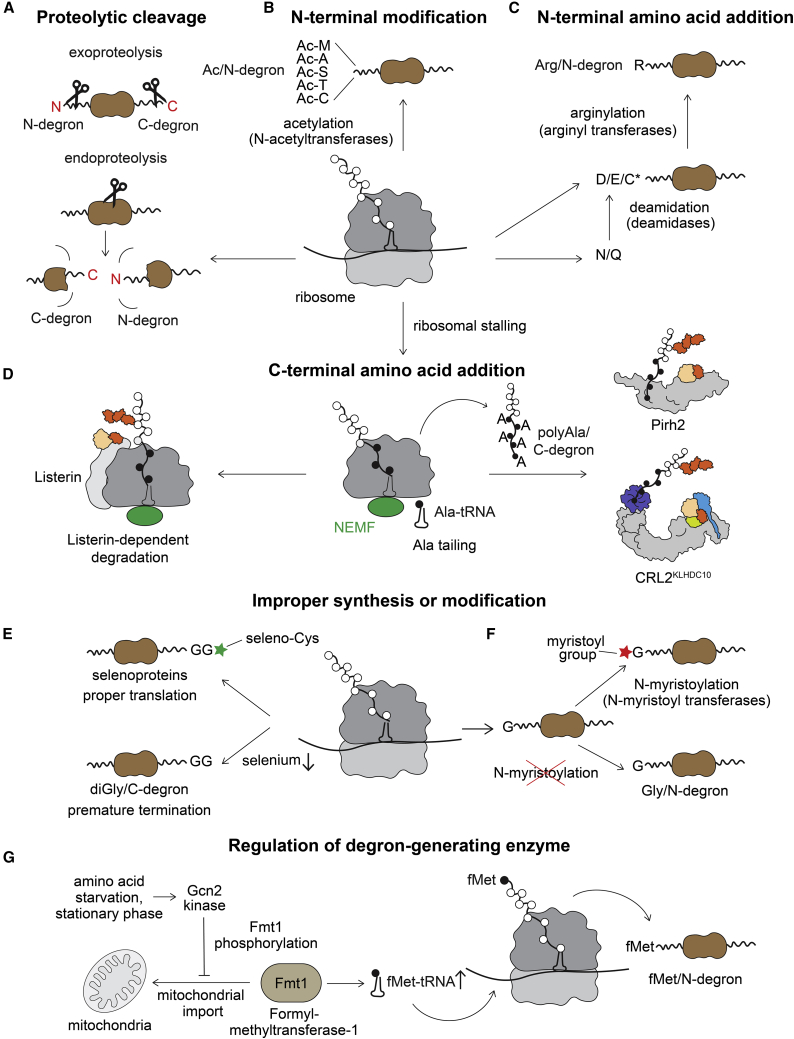
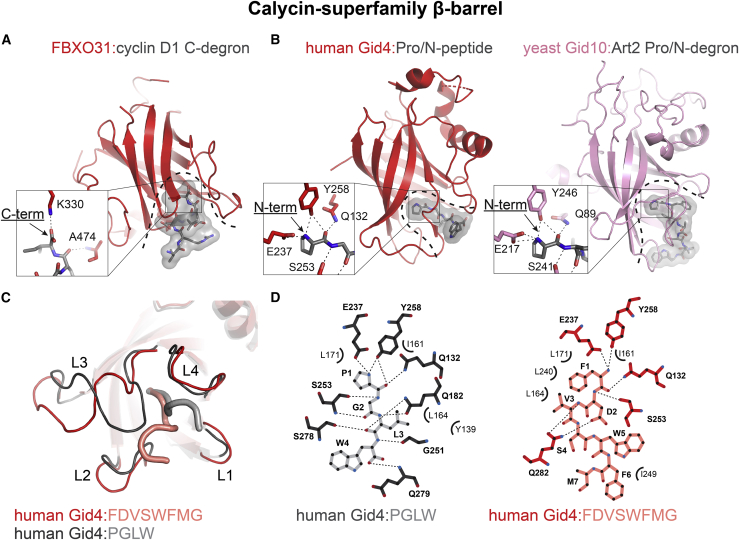
Specificity of eukaryotic protein degradation is determined by E3 ubiquitin ligases and their selective binding to protein motifs, termed "degrons," in substrates for ubiquitin-mediated proteolysis. From the discovery of the first substrate degron and the corresponding E3 to a flurry of recent studies enabled by modern systems and structural methods, it is clear that many regulatory pathways depend on E3s recognizing protein termini. Here, we review the structural basis for recognition of protein termini by E3s and how this recognition underlies biological regulation. Diverse E3s evolved to harness a substrate's N and/or C terminus (and often adjacent residues as well) in a sequence-specific manner. Regulation is achieved through selective activation of E3s and also through generation of degrons at ribosomes or by posttranslational means. Collectively, many E3 interactions with protein N and C termini enable intricate control of protein quality and responses to cellular signals.
真核生物蛋白降解的特异性由 E3 泛素连接酶及其对底物中泛素介导的蛋白水解的“降解基序”的选择性结合决定。从第一个底物降解基序和相应的 E3 的发现,到最近许多依赖于现代系统和结构方法的研究热潮,很明显,许多调控途径依赖于 E3 识别蛋白末端。在这里,我们回顾了 E3 识别蛋白末端的结构基础,以及这种识别如何构成生物调控的基础。不同的 E3 进化为以序列特异性的方式利用底物的 N 和/或 C 末端(通常还有相邻的残基)。通过选择性激活 E3 和在核糖体上产生降解基序或通过翻译后修饰来实现调节。总的来说,许多 E3 与蛋白 N 和 C 末端的相互作用能够实现对蛋白质量和细胞信号响应的复杂控制。