Department of Management Science, Strathclyde Business School, University of Strathclyde, Glasgow, UK.
Department of Management Science, Strathclyde Business School, University of Strathclyde, Glasgow, UK.
Soc Sci Med. 2022 Apr;298:114818. doi: 10.1016/j.socscimed.2022.114818. Epub 2022 Feb 16.
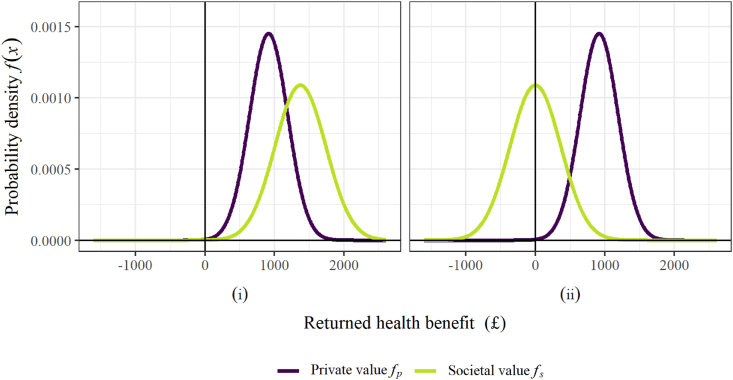
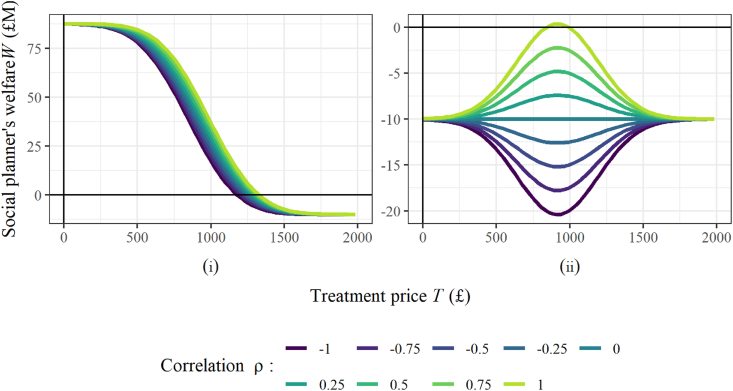
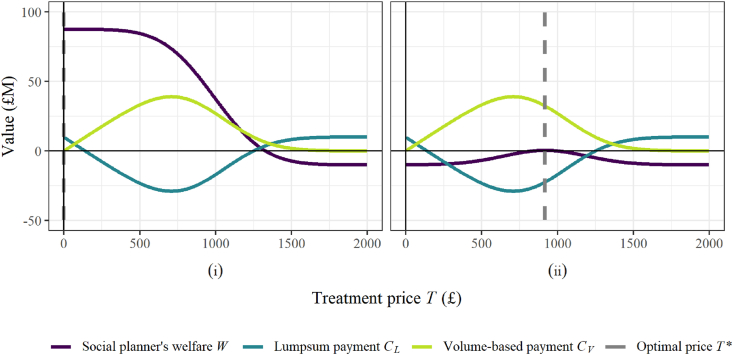
Novel subscription payment schemes are one of the approaches being explored to tackle the threat of antimicrobial resistance. Under these schemes, some or all of the payment is made via a fixed "subscription" payment, which provides a funder unlimited access to the treatment for a specific duration, rather than relying purely on a price per pill. Subscription-based schemes guarantee pharmaceutical firms income that incentivises investment in developing new antibiotics, and can promote responsible stewardship. From the pharmaceutical perspective, revenue is disassociated from sales, removing benefits from push marketing strategies. We investigate this from the funder perspective, and consider that the funder plays a key role in promoting responsible antibiotic stewardship by choosing the price per pill for providers such that this encourages appropriate antibiotic use. This choice determines the payment structure, and we investigate the impact of this choice through the lens of social welfare. We present a mathematical model of subscription payment schemes, explicitly featuring fixed and volume-based payment components for a given treatment price. Total welfare returned at a societal level is then estimated (incorporating financial costs and monetised benefits). We consider a practical application of the model to development of novel antibiotic treatment for Gonorrhoea, and examine the optimal treatment price under different parameterisations. Specifically, we analyse two contrasting scenarios - one where a new antibiotic's prioritised role is reducing transmission, and one where a more pressing requirement is conserving the antibiotic as an effective last defence. Critically, this analysis demonstrates that effective roll-out of a subscription payment scheme for a new antibiotic requires a comprehensive assessment of the benefits gained from treatment. We discuss the insights this work presents on the nature of these payment schemes, and how these insights can enable decision-makers to take the first steps in determining effective structuring of subscription payment schemes.
新型订阅付费方案是应对抗菌药物耐药性威胁的探索方法之一。在这些方案下,部分或全部费用通过固定的“订阅”付款支付,为付费方在特定时间段内提供对治疗的无限制访问,而不是纯粹依赖每片药物的价格。基于订阅的方案保证制药公司的收入,激励其投资开发新的抗生素,并能促进负责任的药物管理。从制药的角度来看,收入与销售脱钩,消除了推动营销战略的好处。我们从付费方的角度研究这一点,并认为付费方通过为提供者选择每片药物的价格,在促进负责任的抗生素管理方面发挥关键作用,从而鼓励适当使用抗生素。这一选择决定了支付结构,我们通过社会福利的视角研究这一选择的影响。我们提出了一个订阅支付方案的数学模型,该模型明确地为给定的治疗价格提供固定和基于数量的支付组件。然后估计社会层面的总福利回报(包括财务成本和货币化收益)。我们考虑了该模型在开发淋病新型抗生素治疗中的实际应用,并在不同参数下考察了最优治疗价格。具体来说,我们分析了两种对比情景——一种是新型抗生素的首要作用是减少传播,另一种是更紧迫的要求是将抗生素作为有效的最后防线来保存。至关重要的是,这种分析表明,新型抗生素订阅付费方案的有效推出需要全面评估治疗带来的收益。我们讨论了这项工作对这些付费方案性质的启示,以及这些见解如何使决策者能够迈出确定订阅付费方案有效结构的第一步。