Department of Anesthesiology, Shanghai Ninth People's Hospital, Shanghai Jiao Tong University School of Medicine, No. 639 Zhizaoju Rd, Shanghai, 200011, People's Republic of China.
State Key Laboratory for Modification of Chemical Fibers and Polymer Materials, College of Materials Science & Engineering, Donghua University, No. 2999 Renmin Rd, Shanghai, 201620, People's Republic of China.
J Nanobiotechnology. 2022 Mar 5;20(1):112. doi: 10.1186/s12951-022-01323-x.
The endotracheal tube (ETT) is an essential medical device to secure the airway patency in patients undergoing mechanical ventilation or general anesthesia. However, long-term intubation eventually leads to complete occlusion, ETTs potentiate biofilm-related infections, such as ventilator-associated pneumonia. ETTs are mainly composed of medical polyvinyl chloride (PVC), which adheres to microorganisms to form biofilms. Thus, a simple and efficient method was developed to fabricate CS-AgNPs@PAAm-Gelatin nanocomposite coating to achieve dual antibacterial and antifouling effects.
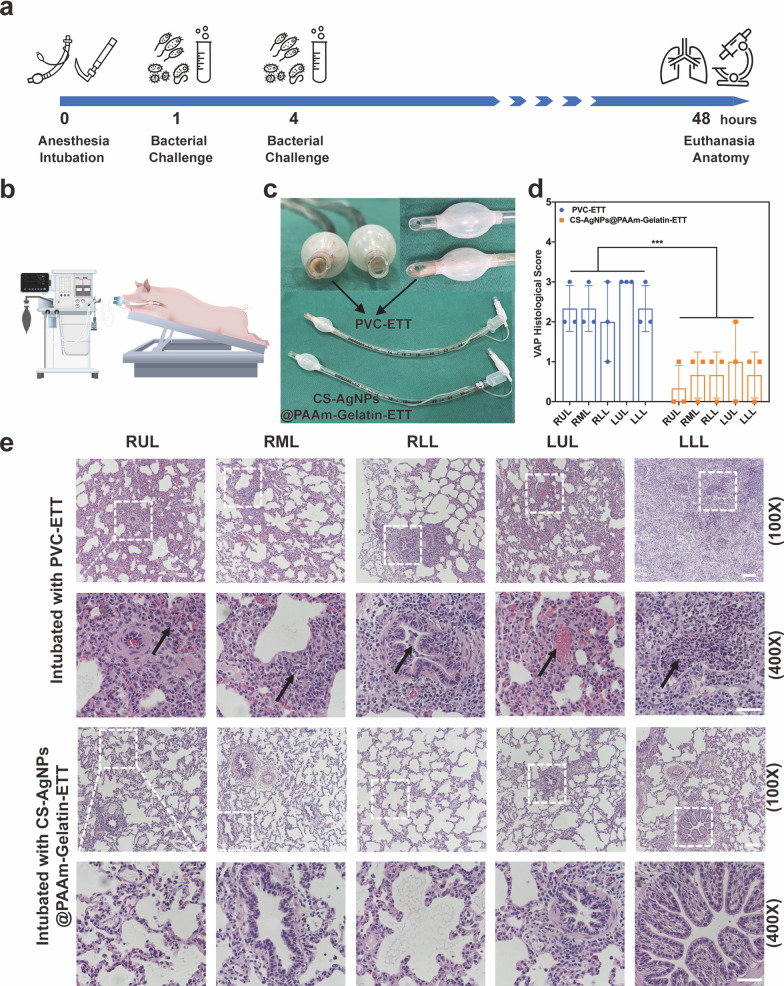
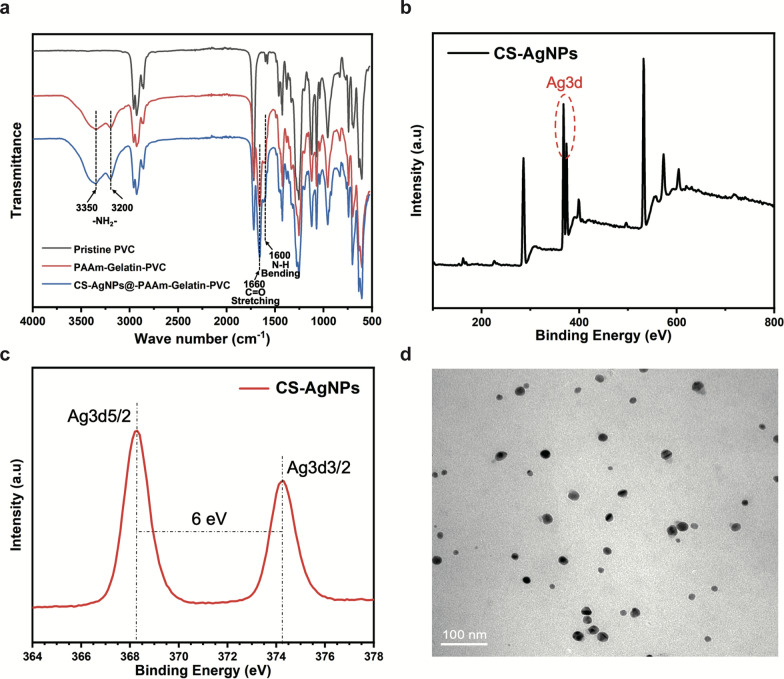
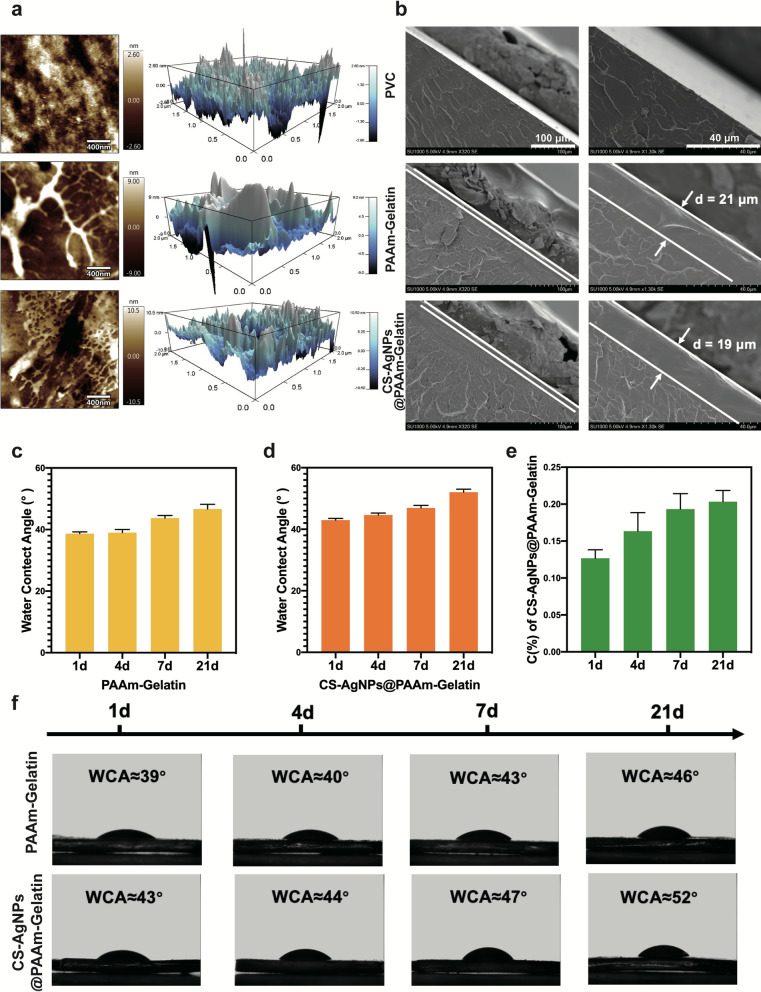
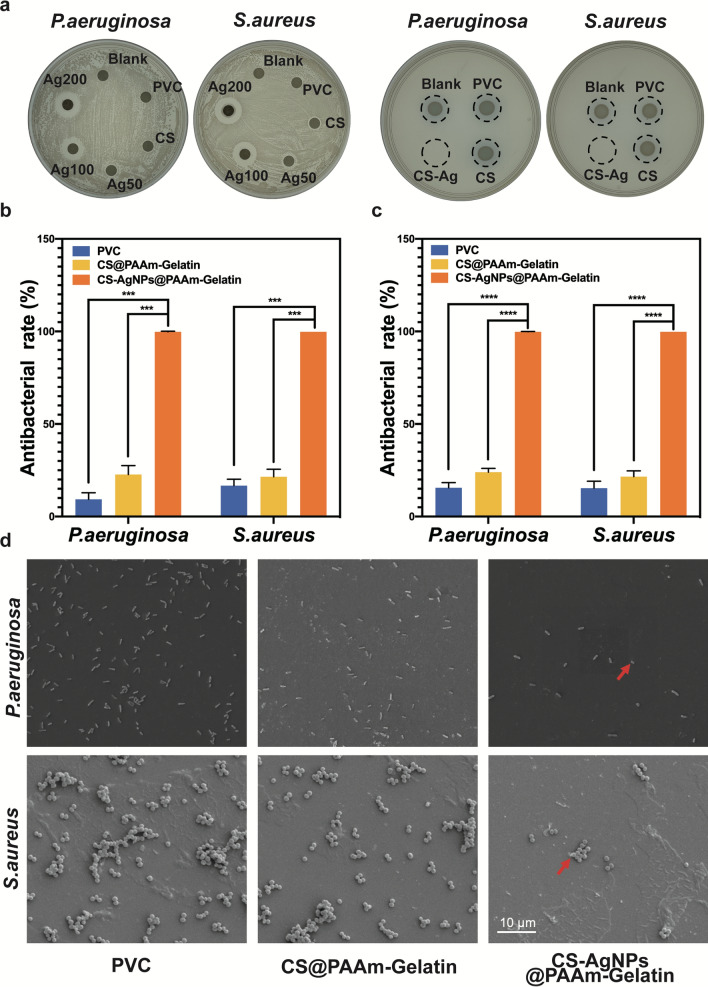
The PAAm-Gelatin (PAAm = polyacrylamide) molecular chain gel has an interpenetrating network with a good hydrophilicity and formed strong covalent bonds with PVC-ETTs, wherein silver nanoparticles were used as antibacterial agents. The CS-AgNPs@PAAm-Gelatin coating showed great resistance and antibacterial effects against Staphylococcus aureus and Pseudomonas aeruginosa. Its antifouling ability was tested using cell, protein, and platelet adhesion assays. Additionally, both properties were comprehensively evaluated using an artificial broncho-lung model in vitro and a porcine mechanical ventilation model in vivo. These remarkable results were further confirmed that the CS-AgNPs@PAAm-Gelatin coating exhibited an excellent antibacterial capacity, an excellent stain resistance, and a good biocompatibility.
The CS-AgNPs@PAAm-Gelatin nanocomposite coating effectively prevents the occlusion and biofilm-related infection of PVC-ETTs by enhancing the antibacterial and antifouling properties, and so has great potential for future clinical applications.
气管内导管(ETT)是在患者接受机械通气或全身麻醉时确保气道通畅的重要医疗器械。然而,长期插管最终会导致完全阻塞,ETT 会加剧生物膜相关感染,如呼吸机相关性肺炎。ETT 主要由医用聚氯乙烯(PVC)组成,它附着在微生物上形成生物膜。因此,开发了一种简单有效的方法来制备 CS-AgNPs@PAAm-Gelatin 纳米复合涂层,以实现双重抗菌和防污效果。
PAAm-Gelatin(PAAm=聚丙烯酰胺)分子链凝胶具有良好的亲水性和互穿网络,并与 PVC-ETT 形成强共价键,其中银纳米粒子用作抗菌剂。CS-AgNPs@PAAm-Gelatin 涂层对金黄色葡萄球菌和铜绿假单胞菌表现出很强的耐抗性和抗菌效果。其防污能力通过细胞、蛋白质和血小板黏附试验进行了测试。此外,还通过体外人工支气管-肺模型和体内猪机械通气模型对这两种性能进行了综合评估。这些显著的结果进一步证实,CS-AgNPs@PAAm-Gelatin 涂层具有出色的抗菌能力、出色的耐污性和良好的生物相容性。
CS-AgNPs@PAAm-Gelatin 纳米复合涂层通过增强抗菌和防污性能,有效防止 PVC-ETT 的阻塞和生物膜相关感染,因此具有很大的临床应用潜力。