Sun Xianhua, Liang Yazhe, Wang Yuan, Zhang Honglian, Zhao Tong, Yao Bin, Luo Huiying, Huang Huoqing, Su Xiaoyun
State Key Laboratory of Animal Nutrition, Institute of Animal Sciences, Chinese Academy of Agricultural Sciences, Beijing, 100193, China.
Institute of Microbiology, Chinese Academy of Sciences, Beijing, 100101, China.
Biotechnol Biofuels Bioprod. 2022 Mar 5;15(1):26. doi: 10.1186/s13068-022-02122-0.
While there is growing interest in developing non-canonical filamentous fungi as hosts for producing secretory proteins, genetic engineering of filamentous fungi for improved expression often relies heavily on the understanding of regulatory mechanisms.
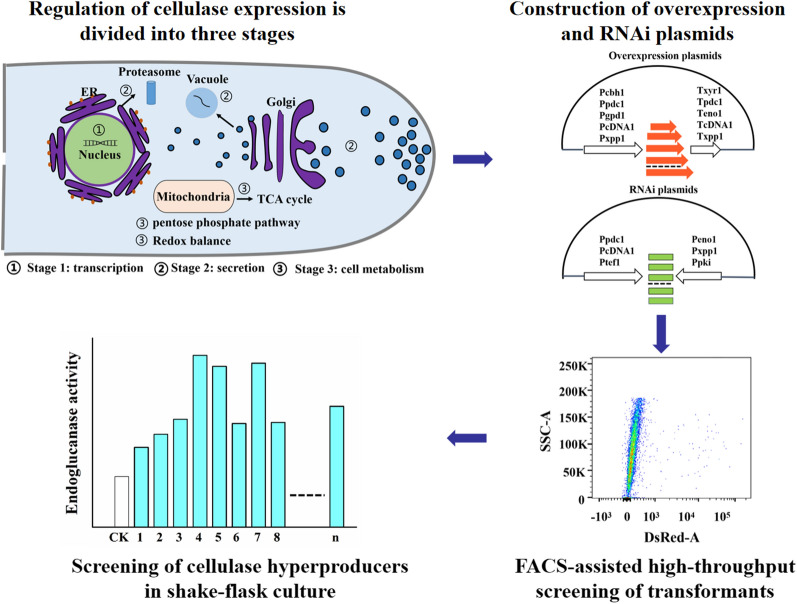
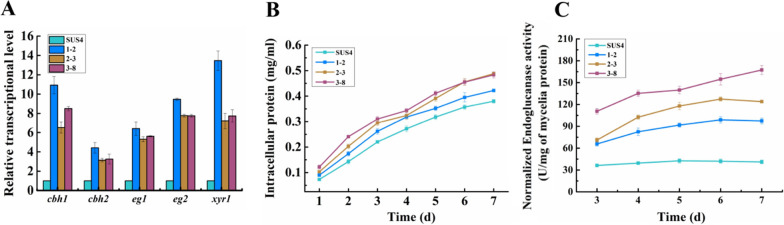
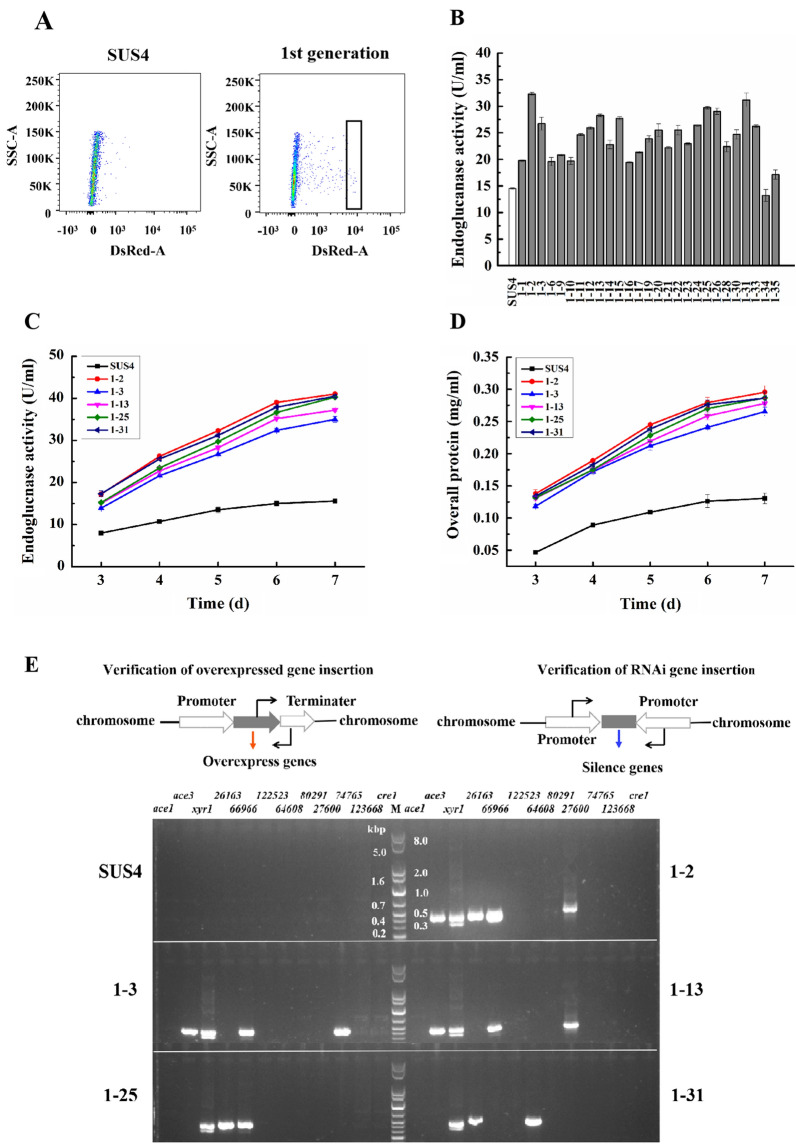
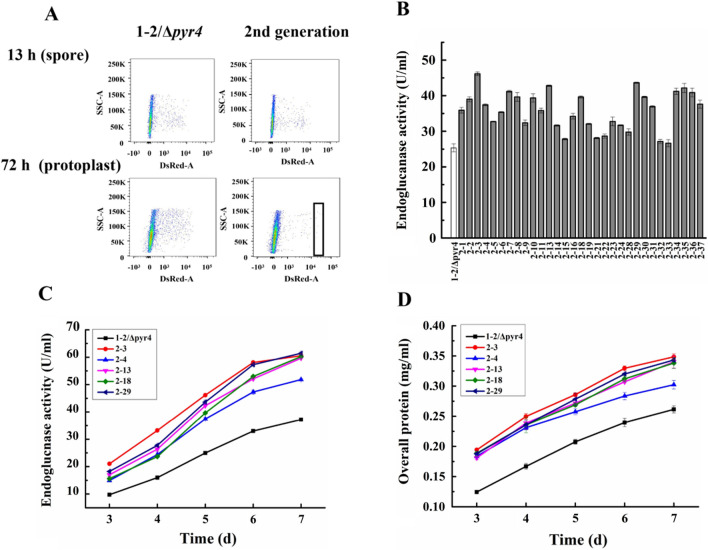
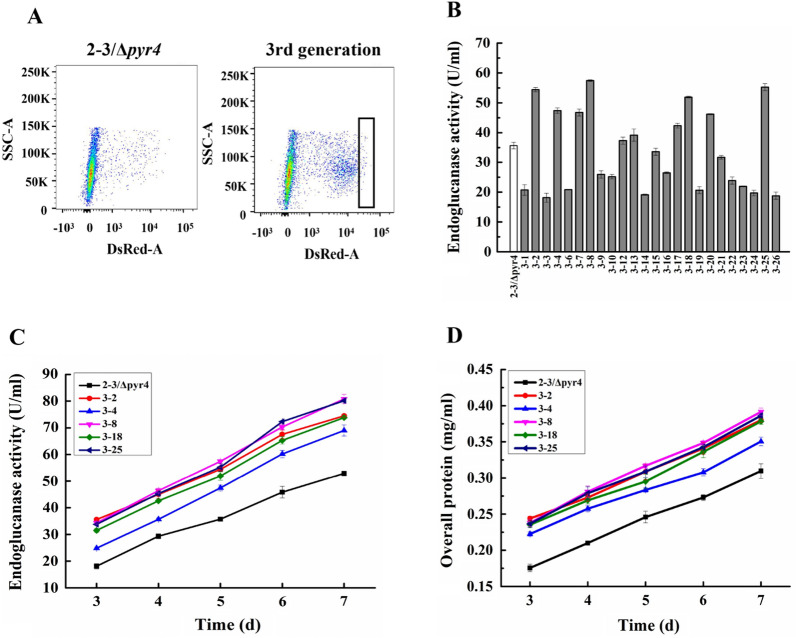
In this study, using the cellulase-producing filamentous fungus Trichoderma reesei as a model system, we designed a semi-rational strategy by arbitrarily dividing the regulation of cellulase production into three main stages-transcription, secretion, and cell metabolism. Selected regulatory or functional genes that had been experimentally verified or predicted to enhance cellulase production were overexpressed using strong inducible or constitutive promoters, while those that would inhibit cellulase production were repressed via RNAi-mediated gene silencing. A T. reesei strain expressing the surface-displayed DsRed fluorescent protein was used as the recipient strain. After three consecutive rounds of engineering, the cellulase activity increased to up to 4.35-fold and the protein concentration increased to up to 2.97-fold in the genetically modified strain.
We demonstrated that, as a proof-of-concept, selected regulatory or functional genes within an arbitrarily defined stage could be pooled to stimulate secretory cellulase production, and moreover, this method could be iteratively used for further improvement. This method is semi-rational and can essentially be used in filamentous fungi with little regulatory information.
虽然人们对开发非传统丝状真菌作为分泌蛋白生产宿主的兴趣日益浓厚,但丝状真菌的基因工程以提高表达通常严重依赖于对调控机制的理解。
在本研究中,以产纤维素酶的丝状真菌里氏木霉为模型系统,我们设计了一种半理性策略,将纤维素酶生产的调控任意分为三个主要阶段——转录、分泌和细胞代谢。使用强诱导型或组成型启动子过表达经实验验证或预测可提高纤维素酶产量的选定调控或功能基因,而那些会抑制纤维素酶生产的基因则通过RNAi介导的基因沉默予以抑制。将表达表面展示DsRed荧光蛋白的里氏木霉菌株用作受体菌株。经过三轮连续工程改造后,转基因菌株中的纤维素酶活性提高到高达4.35倍,蛋白质浓度提高到高达2.97倍。
我们证明,作为概念验证,在任意定义阶段内选定的调控或功能基因可以集中起来刺激分泌性纤维素酶的产生,而且,这种方法可以迭代用于进一步改进。该方法是半理性的,基本上可用于几乎没有调控信息的丝状真菌。