Faculty of Chemistry, Biotechnology, and Food Science, NMBU-Norwegian University of Life Sciences, P.O. Box 5003, 1432 Ås, Norway.
Protein Eng Des Sel. 2023 Jan 21;36. doi: 10.1093/protein/gzad002.
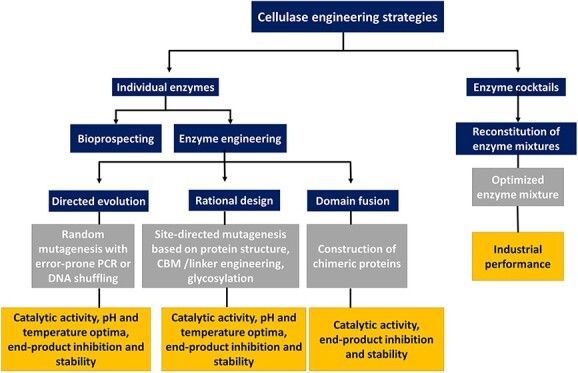
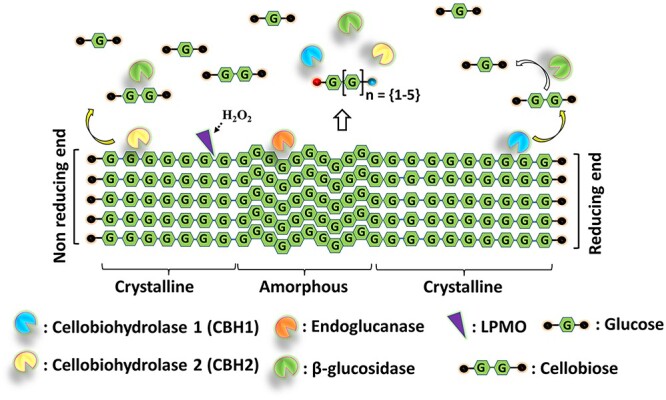
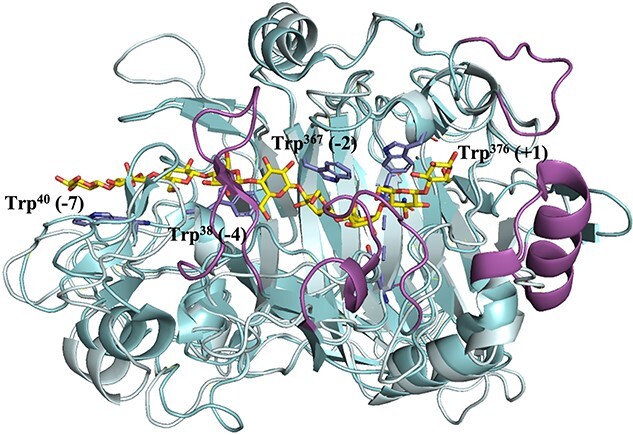
Lignocellulosic biomass is a renewable source of energy, chemicals and materials. Many applications of this resource require the depolymerization of one or more of its polymeric constituents. Efficient enzymatic depolymerization of cellulose to glucose by cellulases and accessory enzymes such as lytic polysaccharide monooxygenases is a prerequisite for economically viable exploitation of this biomass. Microbes produce a remarkably diverse range of cellulases, which consist of glycoside hydrolase (GH) catalytic domains and, although not in all cases, substrate-binding carbohydrate-binding modules (CBMs). As enzymes are a considerable cost factor, there is great interest in finding or engineering improved and robust cellulases, with higher activity and stability, easy expression, and minimal product inhibition. This review addresses relevant engineering targets for cellulases, discusses a few notable cellulase engineering studies of the past decades and provides an overview of recent work in the field.
木质纤维素生物质是一种可再生的能源、化学品和材料来源。该资源的许多应用都需要对其一种或多种聚合成分进行解聚。通过纤维素酶和溶菌多糖单加氧酶等辅助酶将纤维素高效酶解为葡萄糖,是经济上可行地利用这种生物质的前提。微生物产生了非常多样化的纤维素酶,这些酶由糖苷水解酶(GH)催化结构域组成,尽管并非在所有情况下都如此,但还包括底物结合的碳水化合物结合模块(CBMs)。由于酶是一个相当大的成本因素,因此人们非常感兴趣的是寻找或设计具有更高活性和稳定性、易于表达和最小产物抑制的改良和稳健的纤维素酶。本综述讨论了与纤维素酶相关的工程目标,讨论了过去几十年中一些值得注意的纤维素酶工程研究,并概述了该领域的最新工作。