Arnold Robert, Silbert David, Modjesky Heather
Alaska Blind Child Discovery, Alaska Children's Eye & Strabismus, Anchorage, Alaska, USA.
CONESTOGA EYE, Lancaster, PA, USA.
Clin Ophthalmol. 2022 Feb 25;16:489-505. doi: 10.2147/OPTH.S342666. eCollection 2022.
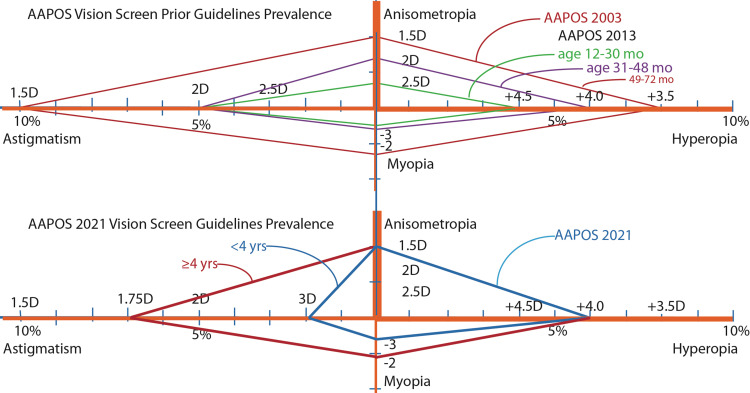
The American Association for Pediatric Ophthalmology and Strabismus (AAPOS) issued a 2021 update of Uniform Validation Guidelines for instrument-based pediatric vision screeners. With each update it is important for each manufacturer to update the Instrument Referral Criteria (IRC) programed into their devices in order to optimize sensitivity and specificity to detect AAPOS criteria.
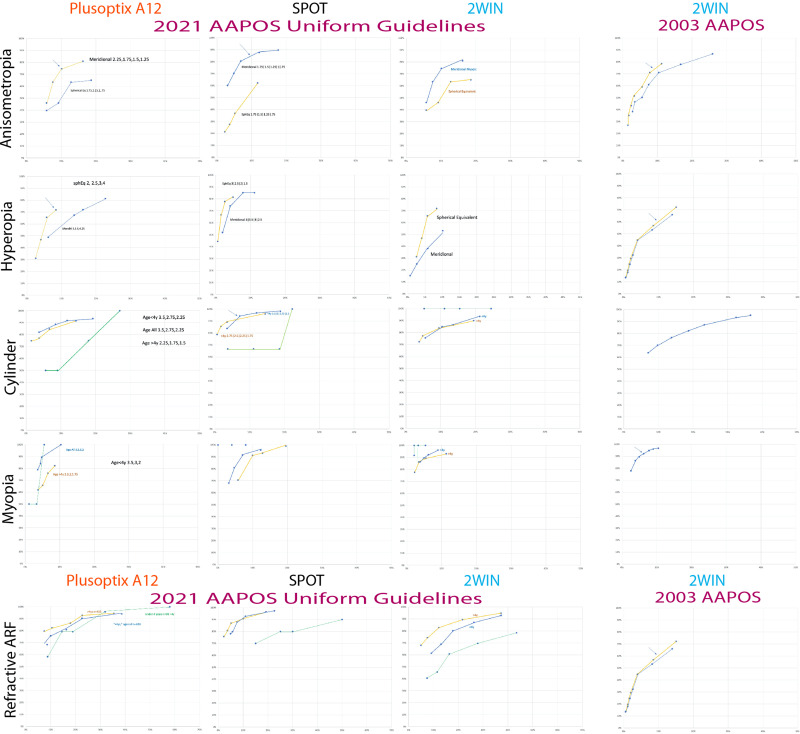
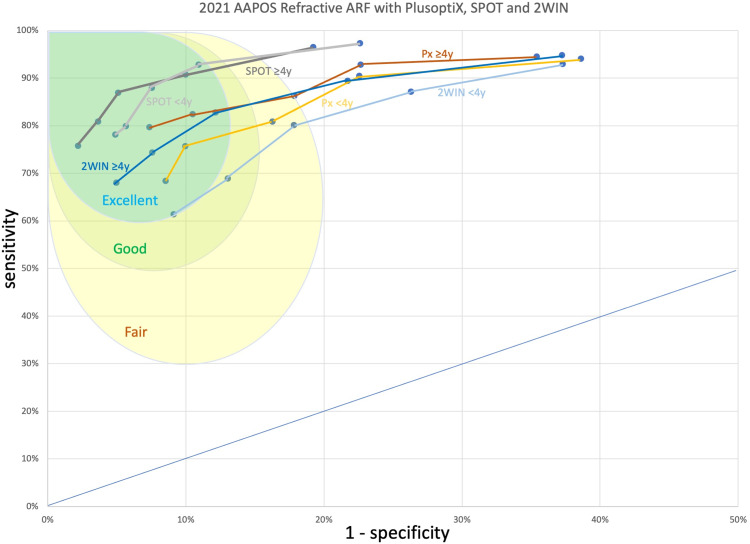
De-identified data comparing photoscreening with simultaneous confirmatory examinations constituted separate cohorts for the development of IRC via receiver operating characteristic (ROC) curves. The refractions of the devices were also compared.
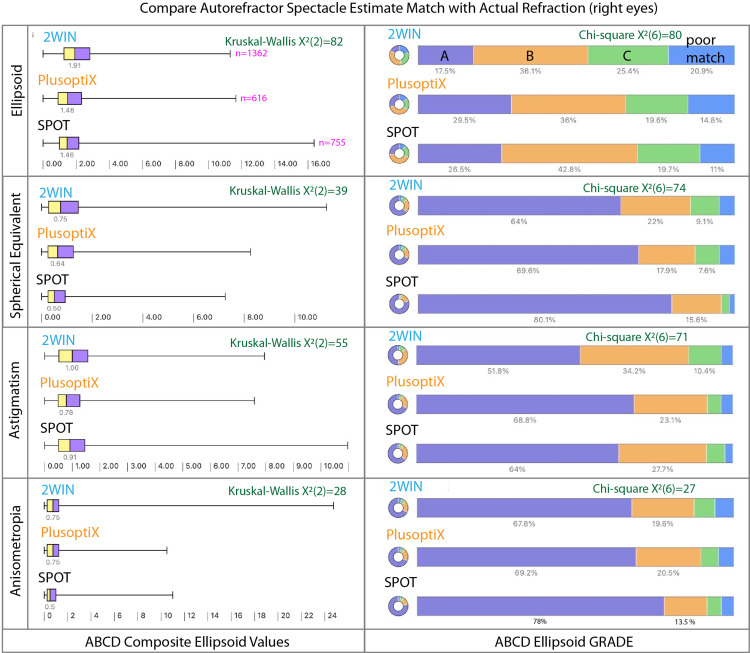
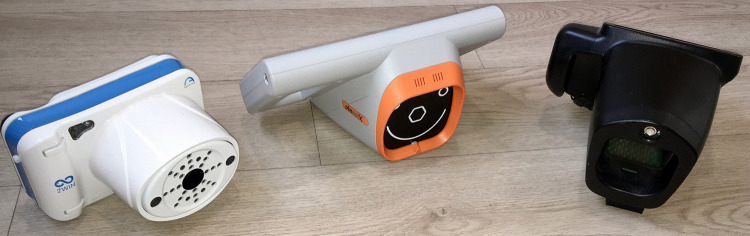
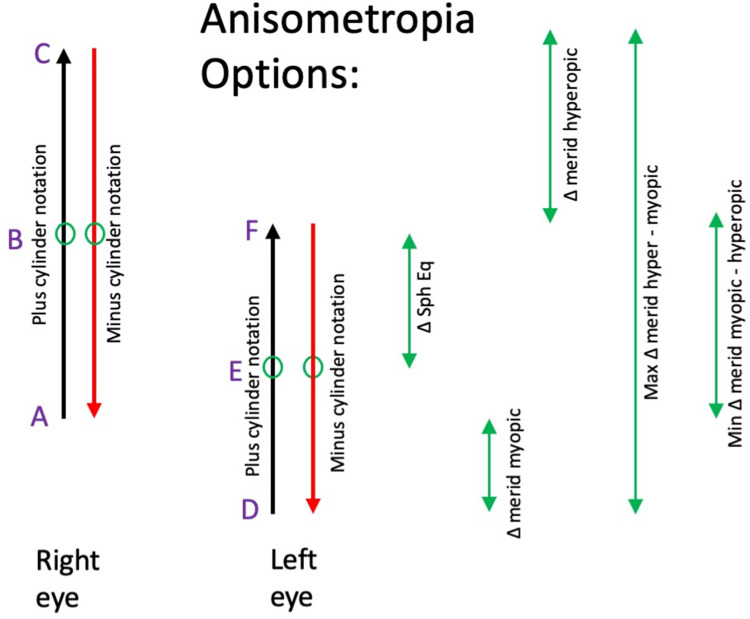
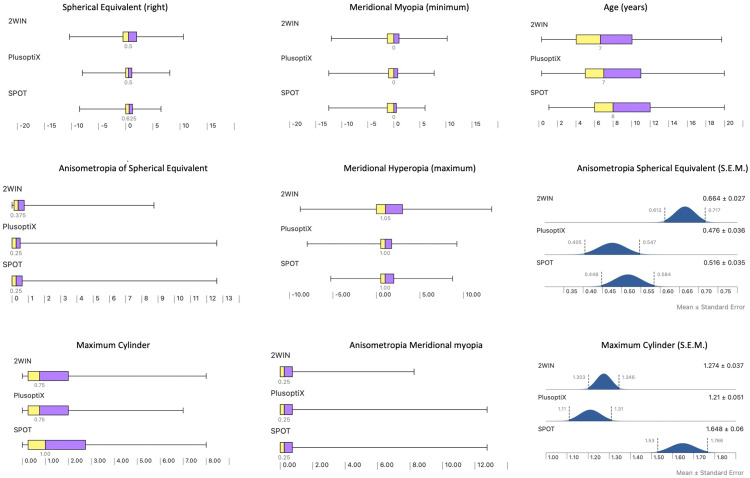
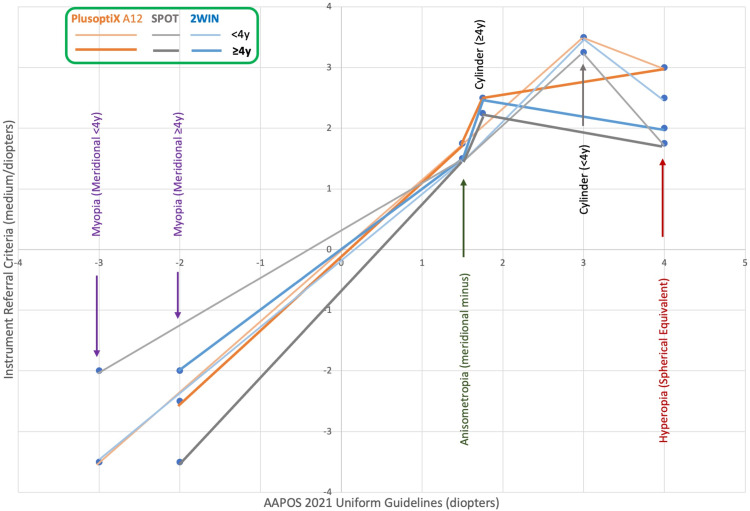
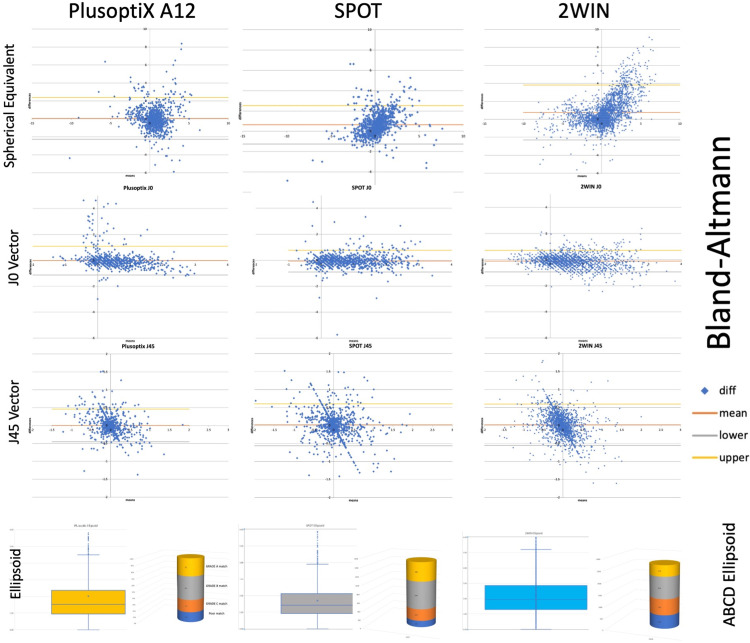
This study defines three sets of refractive IRC (Sensitive, Medium, and Specific) for three leading infrared photoscreening devices, PlusoptiX A12, Welch-Allyn SPOT, and Adaptica 2WIN for children < 4 and ≥ 4 years in order to better target the 2021 AAPOS guidelines. The cohorts were similar but the SPOT group (n=755, mean age 9) was older with more astigmatism and the 2WIN (n=1362, mean age 7) was younger with more hyperopia and anisometropia compared to the cohort for PlusoptiX A12 (n=616, mean age 8). The age-based, medium magnitude IRC for anisometropia, hyperopia, astigmatism and myopia for SPOT were: <4y: 1.5, 1.75, 3.25, 3.5 and ≥4y: 1.5, 1.75, 2.25, 2.0; for PlusoptiX: <4y: 1.75, 3.0, 3.5, 3.5 and ≥4y: 1.75, 3.0, 2.5, 2.5; and for 2WIN: <4y: 1.75, 2.5, 3.5, 3.5 and ≥4y: 1.5, 2.0, 2.5, 2.0. The mean ABCD ellipsoid spectacle matches differed; SPOT: 1.8±1.3 (better) versus PlusoptiX: 1.9±1.6 and 2WIN: 2.2±1.4 (p<0.001).
The 2021 AAPOS exam guidelines foster early specificity before age 4 and sensitivity after age 4. These evidence-based IRC for current SPOT, PlusoptiX, and 2WIN photoscreeners should allow device manufacturers the data necessary to adjust their device IRC to maximize specificity, sensitivity or a medium between the two. This paper provides practical suggestions for better validation. Improved early screening combined with thorough treatment should reduce life-long vision impairment due to amblyopia.
美国小儿眼科与斜视协会(AAPOS)发布了2021年基于仪器的小儿视力筛查仪统一验证指南更新版。每次更新时,各制造商更新其设备中编入的仪器转诊标准(IRC)非常重要,以便优化检测AAPOS标准的敏感性和特异性。
通过将照片筛查与同步确认检查进行比较的去识别数据,构成了通过受试者操作特征(ROC)曲线制定IRC的单独队列。还比较了各设备的验光结果。
本研究为三种主要的红外照片筛查设备PlusoptiX A12、Welch-Allyn SPOT和Adaptica 2WIN定义了三组屈光IRC(敏感型、中等型和特异型),适用于4岁以下和4岁及以上儿童,以便更好地符合2021年AAPOS指南。各队列相似,但与PlusoptiX A12队列(n = 616,平均年龄8岁)相比,SPOT组(n = 755,平均年龄9岁)年龄较大,散光较多;2WIN组(n = 1362,平均年龄7岁)年龄较小,远视和屈光参差较多。SPOT针对4岁以下和4岁及以上儿童的散光、远视、近视的基于年龄的中等程度IRC分别为:1.5、1.75、3.25、3.5和1.5、1.75、2.25、2.0;PlusoptiX为:1.75、3.0、3.5、3.5和1.75、3.0、2.5、2.5;2WIN为:1.75、2.5、3.5、3.5和1.5、2.0、2.5、2.0。平均ABCD椭球眼镜匹配度不同;SPOT为1.8±1.3(更好),而PlusoptiX为1.9±1.6,2WIN为2.2±1.4(p<0.001)。
2021年AAPOS检查指南在4岁前注重早期特异性,4岁后注重敏感性。这些基于证据的当前SPOT、PlusoptiX和2WIN照片筛查仪的IRC应使设备制造商获得调整其设备IRC所需的数据,以最大化特异性、敏感性或两者之间的中等水平。本文提供了更好验证的实用建议。改进早期筛查并结合彻底治疗应可减少因弱视导致的终身视力损害。