Wang Lejun, Wang Ce, Yang Hua, Shao Qineng, Niu Wenxin, Yang Ye, Zheng Fanhui
Sport and Health Research Center, Physical Education Department, Tongji University, Shanghai, China.
Shanghai Yangzhi Rehabilitation Hospital, School of Medicine, Tongji University, Shanghai, China.
Front Hum Neurosci. 2022 Feb 17;16:758891. doi: 10.3389/fnhum.2022.758891. eCollection 2022.
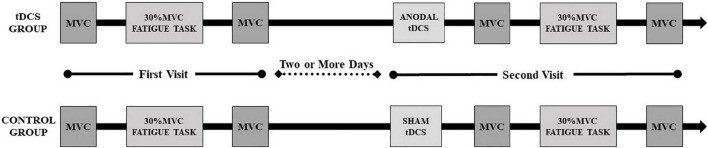
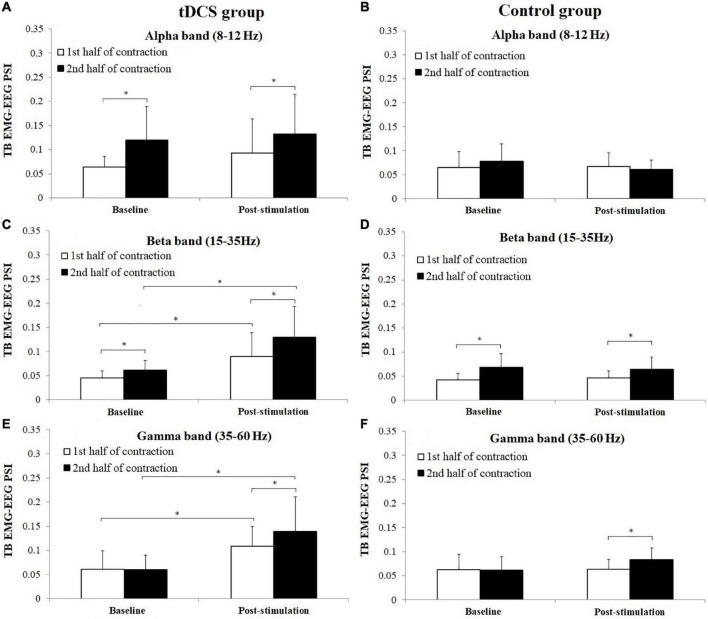
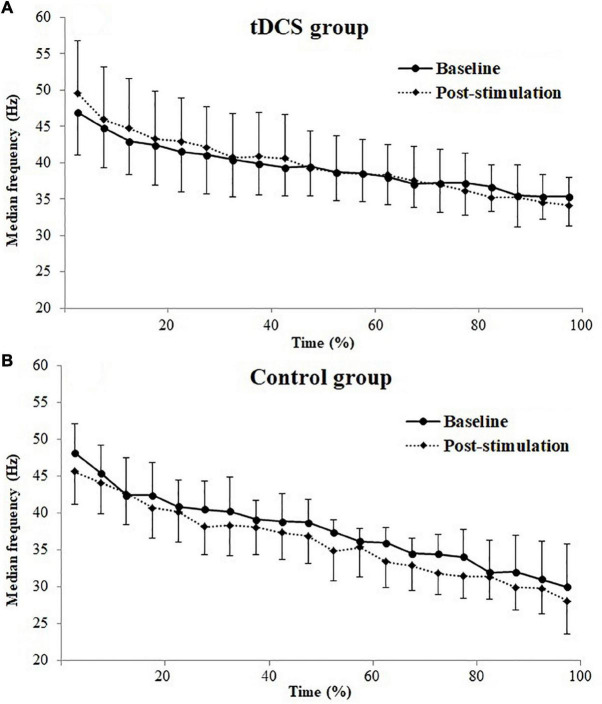
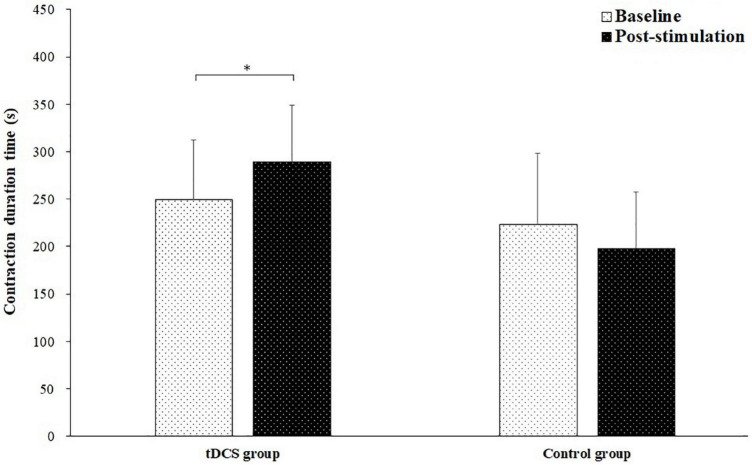
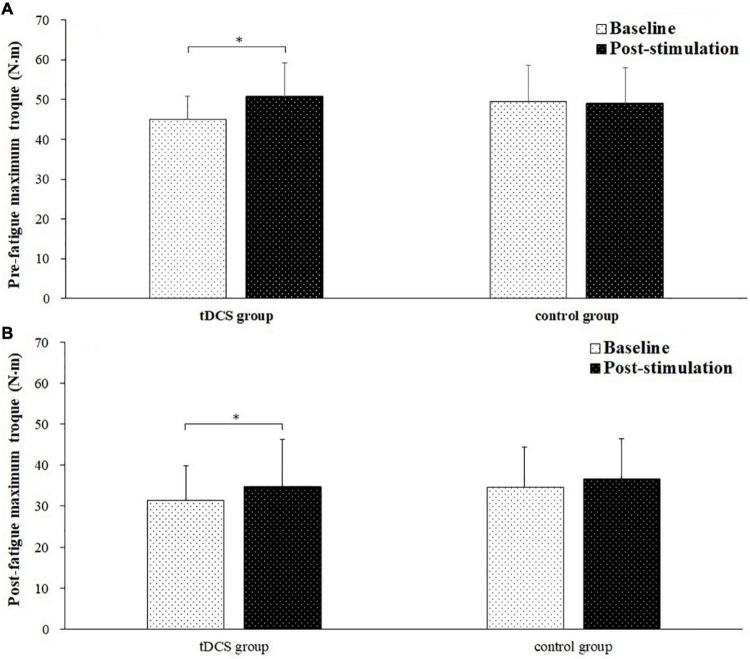
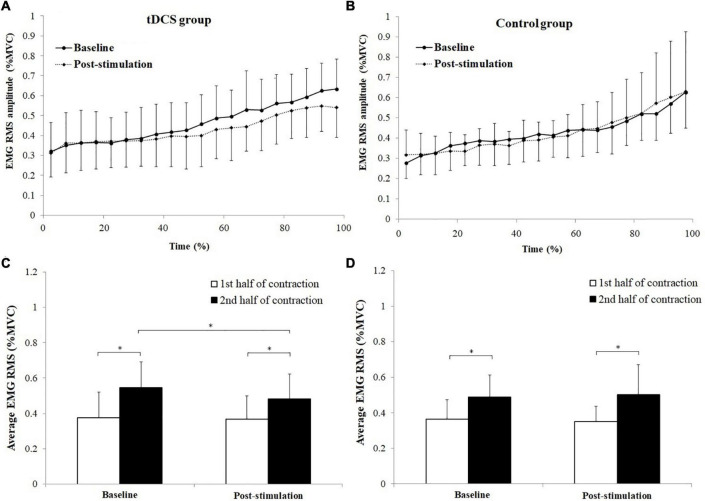
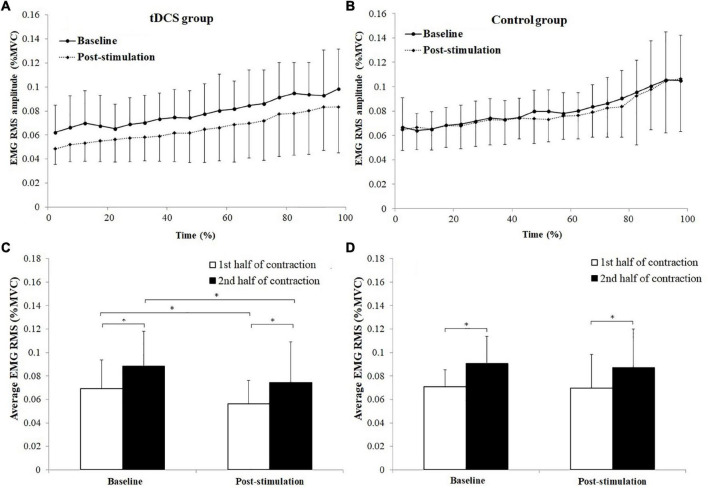
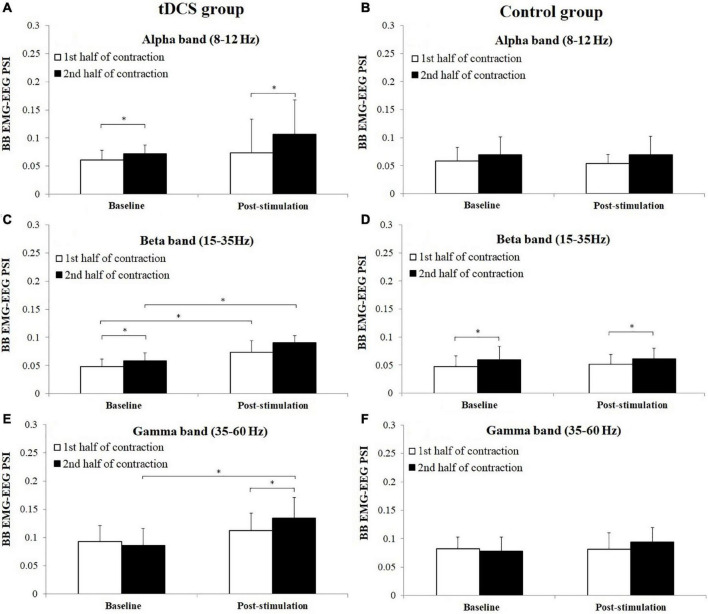
The present study examined the effects of transcranial direct current stimulation (tDCS) using Halo Sport on the time to exhaustion (TTE) in relation with muscle activities and corticomuscular coupling of agonist and antagonist muscles during a sustained isometric fatiguing contraction performed with the elbow flexors. Twenty healthy male college students were randomly assigned to tDCS group and control group. The two group participants performed two experimental sessions which consisted of pre-fatigue isometric maximal voluntary contraction (MVC), sustained submaximal voluntary contractions (30% maximal torque) performed to exhaustion, and post-fatigue MVC with the right elbow flexor muscles. Sham stimulation (90 s) and tDCS (20 min) were applied for control and tDCS group participants 20 min prior to the second session test, respectively. MVC strength in pre- and post-fatigue test, TTE, electroencephalogram (EEG), and electromyography (EMG) of biceps brachii (BB) and triceps brachii (TB) were recorded during the tests. It was found that tDCS using the Halo Sport device significantly increased TTE and thus improved muscular endurance performance. The improvement may be partly related to the improvement of neuromuscular efficiency as reflected by decrease of antagonistic muscle coactivation activities, which may be related to cortical originated central processing mechanism of neuromuscular activities.
本研究探讨了使用Halo Sport经颅直流电刺激(tDCS)对肘关节屈肌进行持续等长疲劳收缩时,与肌肉活动以及主动肌和拮抗肌的皮质-肌肉耦合相关的力竭时间(TTE)的影响。20名健康男性大学生被随机分为tDCS组和对照组。两组参与者进行了两个实验环节,包括疲劳前的等长最大自主收缩(MVC)、进行至力竭的持续次最大自主收缩(最大扭矩的30%)以及右侧肘关节屈肌的疲劳后MVC。分别在第二个环节测试前20分钟,对对照组参与者施加假刺激(90秒),对tDCS组参与者施加tDCS(20分钟)。测试期间记录疲劳前后测试的MVC力量、TTE、肱二头肌(BB)和肱三头肌(TB)的脑电图(EEG)和肌电图(EMG)。结果发现,使用Halo Sport设备进行tDCS可显著增加TTE,从而改善肌肉耐力表现。这种改善可能部分与神经肌肉效率的提高有关,表现为拮抗肌共激活活动的减少,这可能与神经肌肉活动的皮质起源的中枢处理机制有关。