Zoccante Leonardo, Ciceri Marco Luigi, Gozzi Luigi Alberto, Gennaro Gianfranco Di, Zerman Nicoletta
Child and Adolescent Neuropsychiatry Unit, Maternal-Child Integrated Care Department, Integrated University Hospital Verona, Verona, Italy.
Autism Spectrum Disorders Regional Centre of Verona, Verona, Italy.
Front Psychiatry. 2022 Feb 7;12:794516. doi: 10.3389/fpsyt.2021.794516. eCollection 2021.
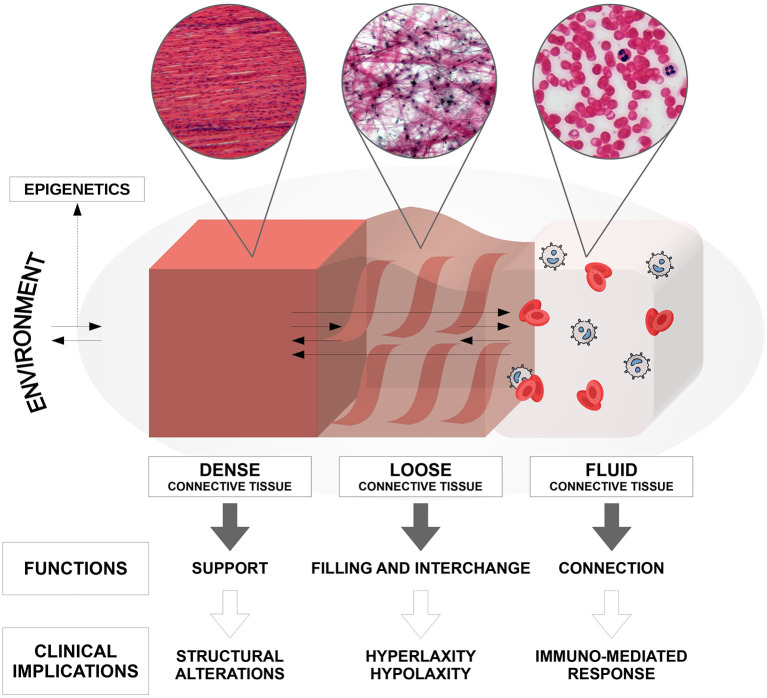
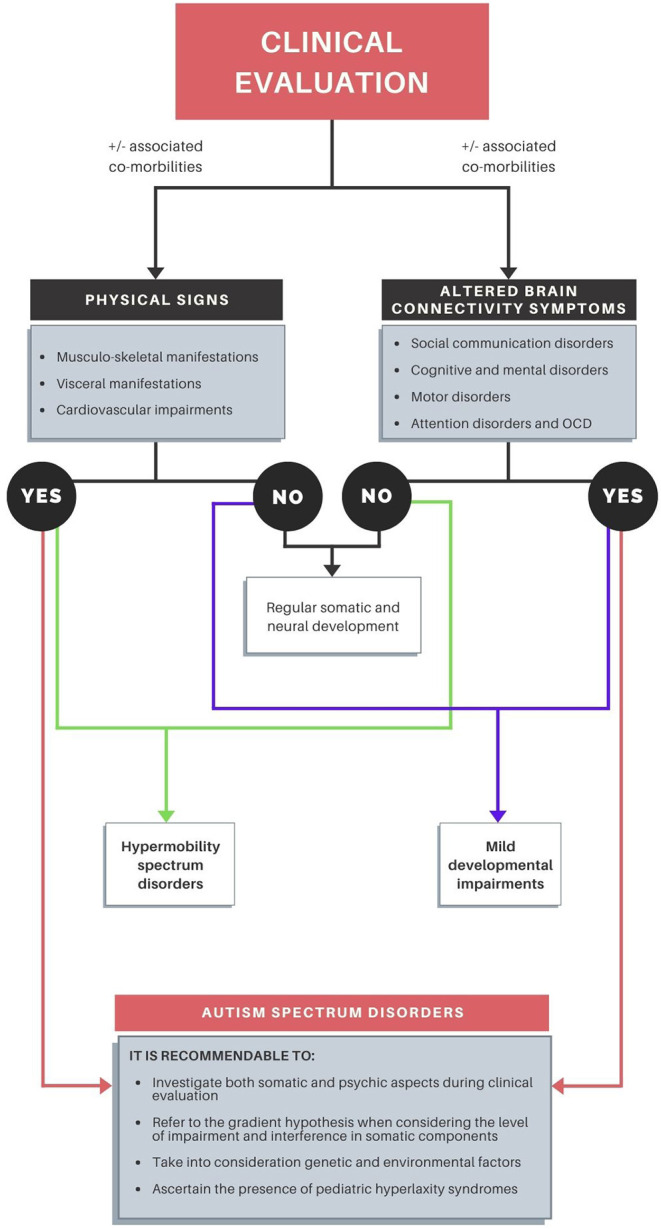
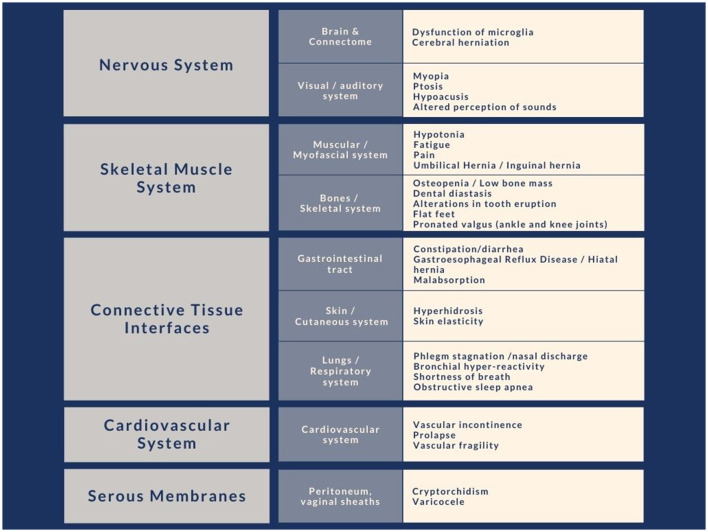
The classical approach to autism spectrum disorders (ASD) is often limited to considering their neuro-functional aspects. However, recent scientific literature has shown that ASDs also affect many body systems and apparatuses such as the immune system, the sensory-motor system, and the gut-brain axis. The connective tissue, a common thread linking all these structures, may have a pathogenetic role in the multisystem involvement of ASD. Depending on its different anatomical sites, the connective tissue performs functions of connection and support; furthermore, it acts as a barrier between the external and internal environments, regulating the interchange between the two and performing immunological surveillance. The connective tissue shares a close relationship with the central nervous system, the musculoskeletal system and the immune system. Alterations in brain connectivity are common to various developmental disorders, including ASD, and for this reason here we put forward the hypothesis that alterations in the physiological activity of microglia could be implicated in the pathogenesis of ASD. Also, muscle hypotonia is likely to clinically correlate with an altered sensoriality and, in fact, discomfort or early muscle fatigue are often reported in ASDs. Furthermore, patients with ASD often suffer from intestinal dysfunctions, malabsorption and leaky gut syndrome, all phenomena that may be linked to reduced intestinal connectivity. In addition, at the cutaneous and subcutaneous levels, ASDs show a greater predisposition to inflammatory events due to the lack of adequate release of anti-inflammatory mediators. Alveolar-capillary dysfunctions have also been observed in ASD, most frequently interstitial inflammations, immune-mediated forms of allergic asthma, and bronchial hyper-reactivity. Therefore, in autism, altered connectivity can result in phenomena of altered sensitivity to environmental stimuli. The following interpretative model, that we define as the "connectivome theory," considers the alterations in connective elements of common mesodermal origin located in the various organs and apparatuses and entails the evaluation and interpretation of ASDs through also highlighting somatic elements. We believe that this broader approach could be helpful for a more accurate analysis, as it is able to enrich clinical evaluation and define more multidisciplinary and personalized interventions.
自闭症谱系障碍(ASD)的传统研究方法通常局限于考虑其神经功能方面。然而,最近的科学文献表明,ASD也会影响许多身体系统和器官,如免疫系统、感觉运动系统和肠脑轴。结缔组织是连接所有这些结构的共同纽带,可能在ASD的多系统受累中具有致病作用。根据其不同的解剖部位,结缔组织发挥连接和支撑功能;此外,它还作为外部和内部环境之间的屏障,调节两者之间的交换并进行免疫监视。结缔组织与中枢神经系统、肌肉骨骼系统和免疫系统有着密切的关系。大脑连接性改变在包括ASD在内的各种发育障碍中很常见,因此我们在此提出假说,即小胶质细胞生理活动的改变可能与ASD的发病机制有关。此外,肌张力减退在临床上可能与感觉改变相关,事实上,ASD患者经常报告不适或早期肌肉疲劳。此外,ASD患者常患有肠道功能障碍、吸收不良和肠漏综合征,所有这些现象都可能与肠道连接性降低有关。此外,在皮肤和皮下层面,由于缺乏足够的抗炎介质释放,ASD患者更容易发生炎症事件。在ASD中还观察到肺泡-毛细血管功能障碍,最常见的是间质性炎症、免疫介导的过敏性哮喘形式和支气管高反应性。因此,在自闭症中,连接性改变可导致对环境刺激的敏感性改变现象。以下解释模型,我们定义为“连接体理论”,考虑位于各个器官和系统中具有共同中胚层起源的结缔组织成分的改变,并通过突出躯体成分来对ASD进行评估和解释。我们认为这种更广泛的方法有助于进行更准确的分析,因为它能够丰富临床评估并确定更多的多学科和个性化干预措施。