Division of Molecular and Cellular Biology, Eunice Kennedy Shriver National Institute of Child Health and Human Development, National Institutes of Health, Bethesda, Maryland, USA.
Division of Preclinical Innovation, National Center for Advancing Translational Sciences, National Institutes of Health, Rockville, Maryland, USA.
mBio. 2022 Apr 26;13(2):e0024022. doi: 10.1128/mbio.00240-22. Epub 2022 Mar 8.
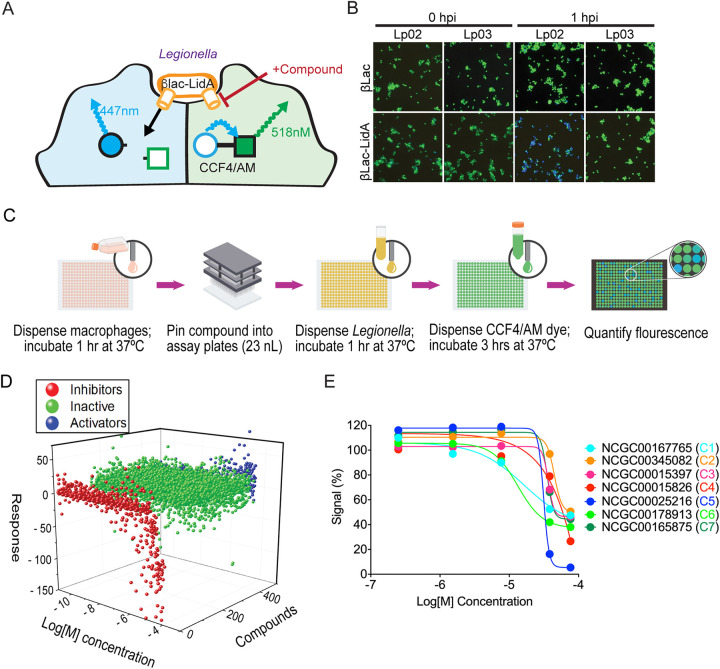
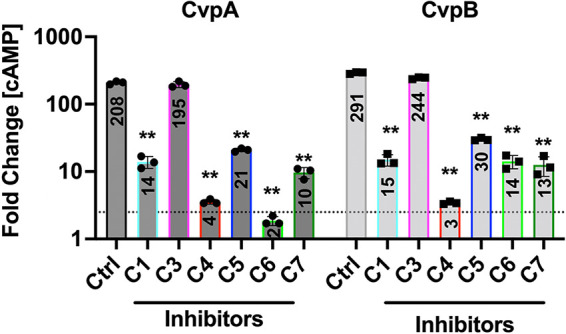
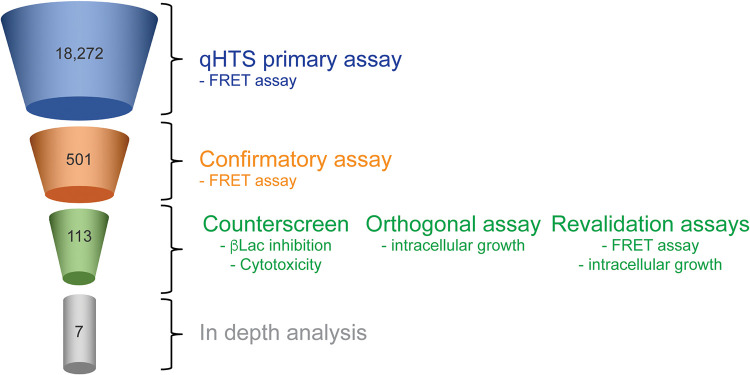
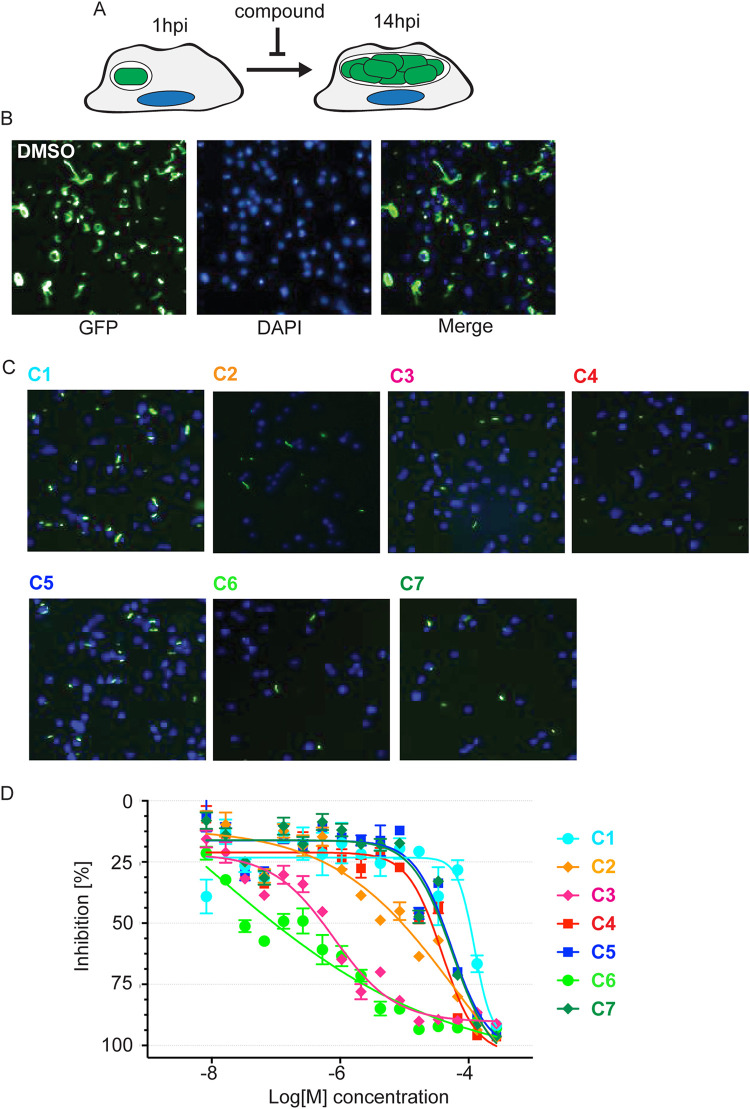
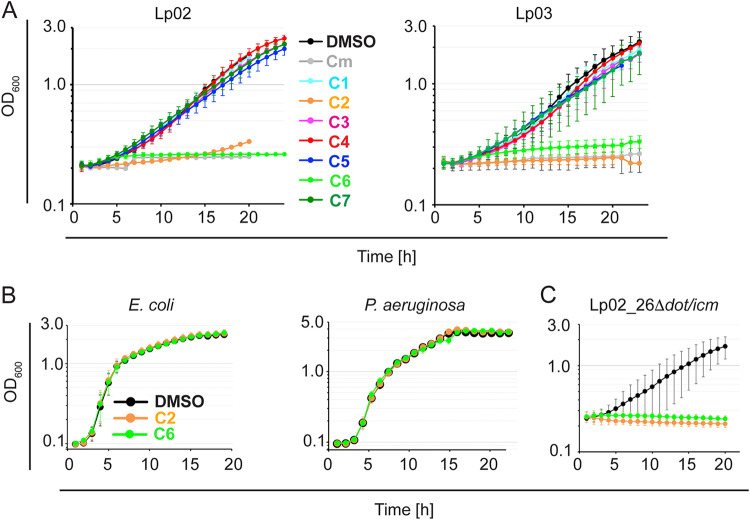
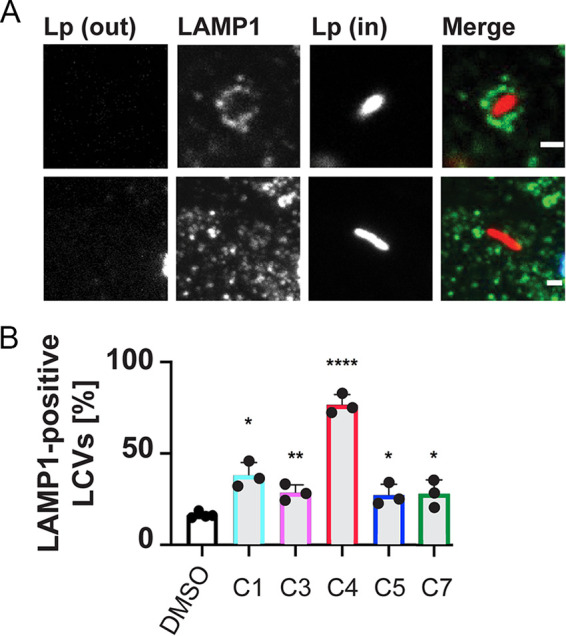
Bacterial type IV secretion systems (T4SSs) are macromolecular machines that translocate effector proteins across multiple membranes into infected host cells. Loss of function mutations in genes encoding protein components of the T4SS render bacteria avirulent, highlighting the attractiveness of T4SSs as drug targets. Here, we designed an automated high-throughput screening approach for the identification of compounds that interfere with the delivery of a reporter-effector fusion protein from Legionella pneumophila into RAW264.7 mouse macrophages. Using a fluorescence resonance energy transfer (FRET)-based detection assay in a bacteria/macrophage coculture format, we screened a library of over 18,000 compounds and, upon vetting compound candidates in a variety of and cell-based secondary screens, isolated several hits that efficiently interfered with biological processes that depend on a functional T4SS, such as intracellular bacterial proliferation or lysosomal avoidance, but had no detectable effect on L. pneumophila growth in culture medium, conditions under which the T4SS is dispensable. Notably, the same hit compounds also attenuated, to varying degrees, effector delivery by the closely related T4SS from Coxiella burnetii, notably without impacting growth of this organism within synthetic media. Together, these results support the idea that interference with T4SS function is a possible therapeutic intervention strategy, and the emerging compounds provide tools to interrogate at a molecular level the regulation and dynamics of these virulence-critical translocation machines. Multi-drug-resistant pathogens are an emerging threat to human health. Because conventional antibiotics target not only the pathogen but also eradicate the beneficial microbiota, they often cause additional clinical complications. Thus, there is an urgent need for the development of "smarter" therapeutics that selectively target pathogens without affecting beneficial commensals. The bacterial type IV secretion system (T4SS) is essential for the virulence of a variety of pathogens but dispensable for bacterial viability in general and can, thus, be considered a pathogen's Achilles heel. By identifying small molecules that interfere with cargo delivery by the T4SS from two important human pathogens, Legionella pneumophila and Coxiella burnetii, our study represents the first step in our pursuit toward precision medicine by developing pathogen-selective therapeutics capable of treating the infections without causing harm to commensal bacteria.
细菌 IV 型分泌系统(T4SS)是一种将效应蛋白跨多种膜转运到感染宿主细胞的大型机器。编码 T4SS 蛋白成分的基因功能丧失突变使细菌失去毒力,这凸显了 T4SS 作为药物靶点的吸引力。在这里,我们设计了一种自动化高通量筛选方法,用于鉴定干扰肺炎军团菌(Legionella pneumophila)向 RAW264.7 小鼠巨噬细胞中报告效应蛋白融合蛋白输送的化合物。我们使用细菌/巨噬细胞共培养格式中的荧光共振能量转移(FRET)检测测定法,筛选了超过 18000 种化合物的文库,并且在各种和细胞的二级筛选中对化合物候选物进行了筛选,分离出了几种有效干扰依赖功能性 T4SS 的生物过程的有效化合物,例如细胞内细菌增殖或溶酶体逃避,但对培养基中肺炎军团菌的生长没有可检测的影响,在这种条件下,T4SS 是可有可无的。值得注意的是,相同的命中化合物也在不同程度上削弱了与柯克斯体(Coxiella burnetii)密切相关的 T4SS 的效应蛋白输送,而不会影响该生物体在合成培养基中的生长。这些结果共同支持了干扰 T4SS 功能是一种可能的治疗干预策略的观点,并且新兴的化合物提供了工具,可以在分子水平上研究这些毒力关键的转运机器的调节和动力学。多药耐药病原体对人类健康构成了新的威胁。由于传统抗生素不仅靶向病原体,而且还根除有益的共生菌群,因此它们经常引起其他临床并发症。因此,迫切需要开发“更智能”的疗法,这些疗法可以选择性地靶向病原体而不影响有益的共生体。细菌 IV 型分泌系统(T4SS)是多种病原体毒力所必需的,但一般来说对细菌的生存能力是可有可无的,因此可以被认为是病原体的阿喀琉斯之踵。通过鉴定两种重要的人类病原体肺炎军团菌(Legionella pneumophila)和柯克斯体(Coxiella burnetii)的 T4SS 从货物输送中干扰的小分子,我们的研究代表了通过开发能够在不伤害共生细菌的情况下治疗感染的病原体选择性疗法来朝着精准医学迈出的第一步。