Department of Veterinary Sciences, University of Wyoming, Laramie, Wyoming, USA.
Department of Microbial Pathogenesis and Immunology, Texas A&M University Health Science Center, Bryan, Texas, USA.
Microbiol Spectr. 2022 Aug 31;10(4):e0248421. doi: 10.1128/spectrum.02484-21. Epub 2022 Aug 1.
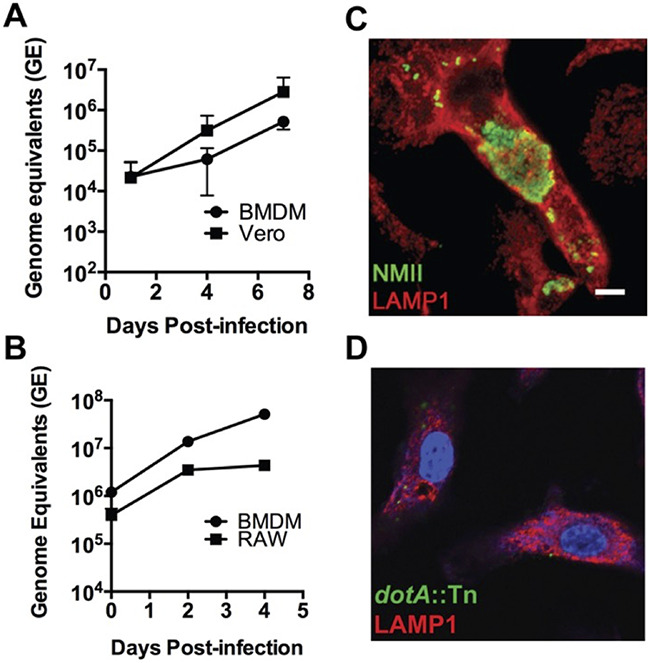
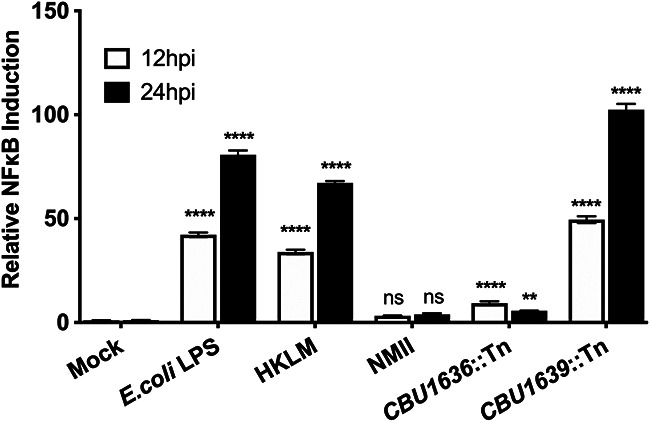
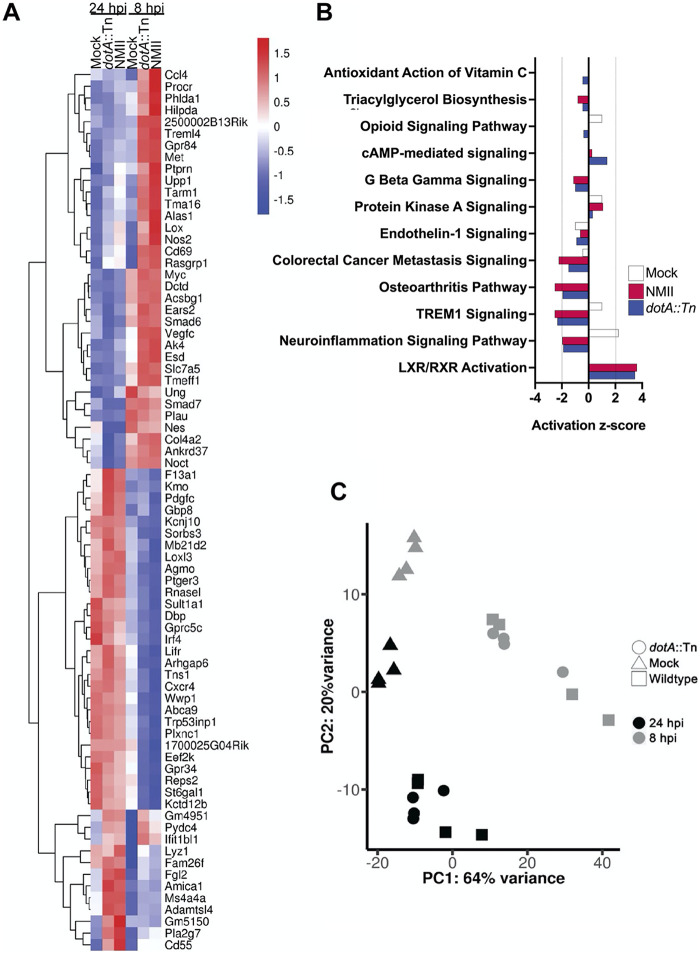
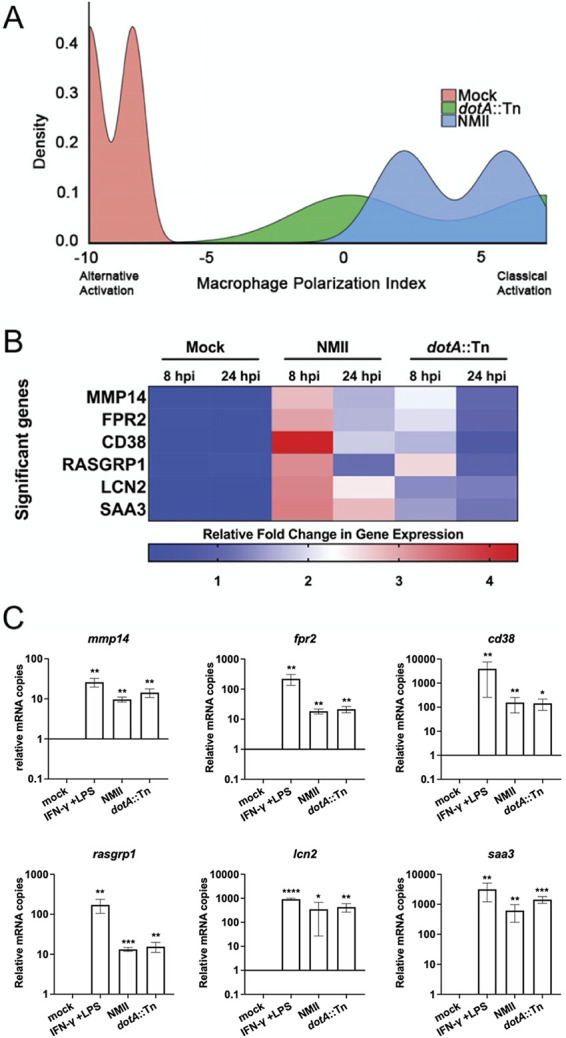
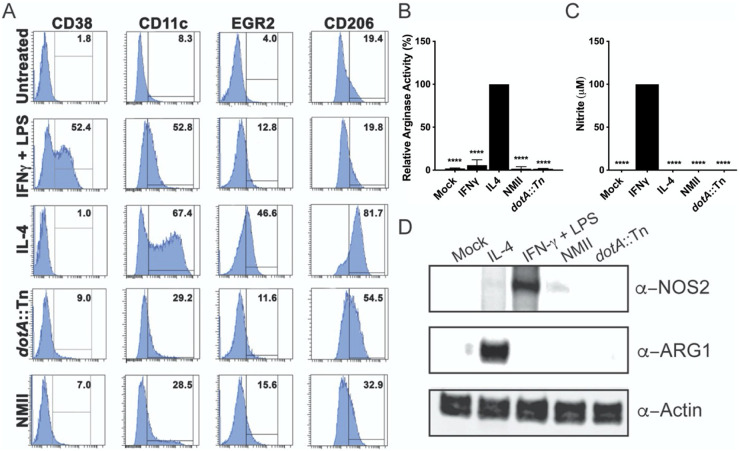
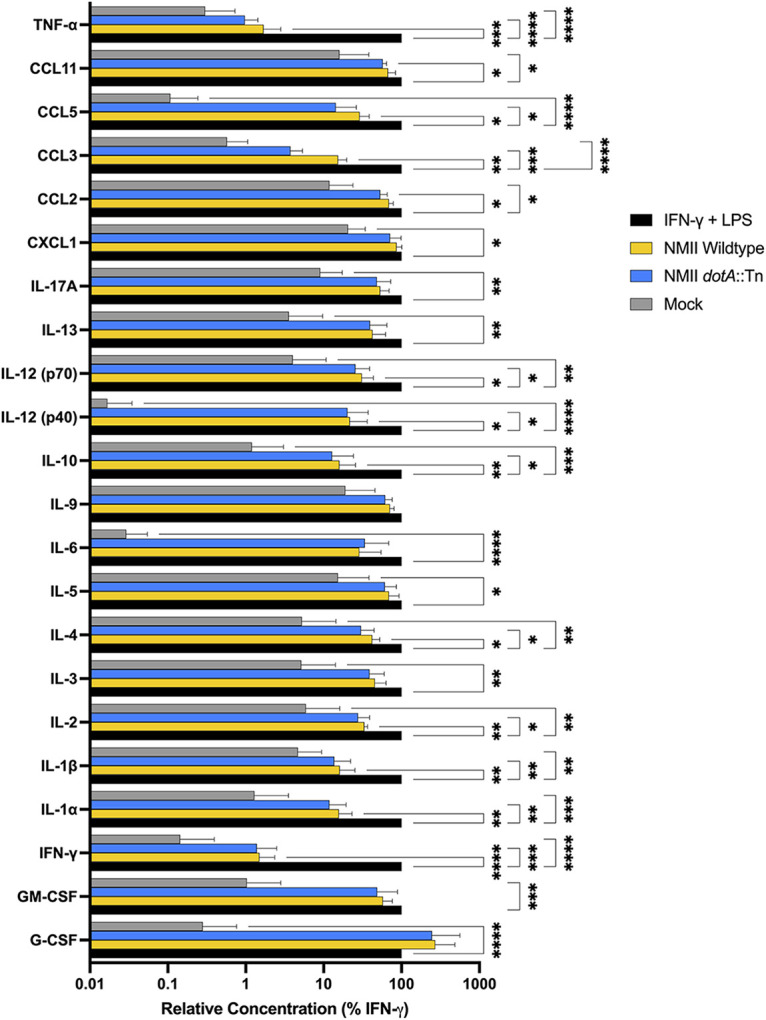
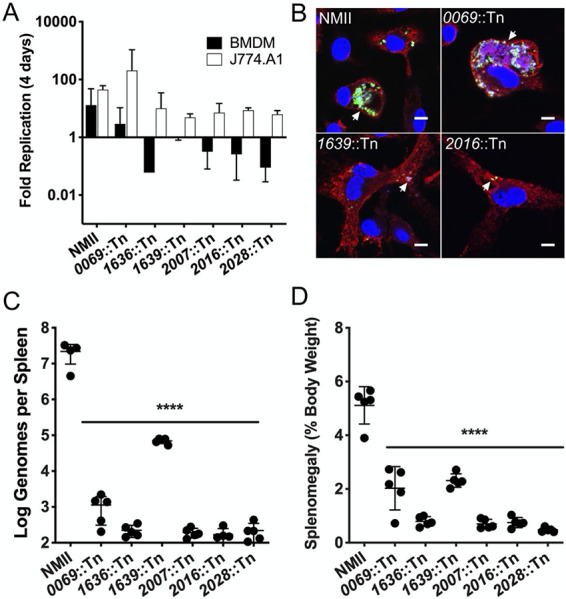
Coxiella burnetii requires a type IVB secretion system (T4SS) to promote intracellular replication and virulence. We hypothesized that employs its T4SS to secrete effectors that enable stealthy colonization of immune cells. To address this, we used RNA sequencing to compare the transcriptional response of murine bone marrow-derived macrophages (BMDM) infected with those of wild-type and a T4SS-null mutant at 8 and 24 h postinfection. We found a T4SS-independent upregulation of proinflammatory transcripts which was consistent with a proinflammatory polarization phenotype. Despite this, infected BMDM failed to completely polarize, as evidenced by modest surface expression of CD38 and CD11c, nitrate production, and reduced proinflammatory cytokine and chemokine secretion compared to positive controls. As these BMDM permitted replication of C. burnetii, we employed them to identify T4SS effectors that are essential in the specific cellular context of a primary macrophage. We found five transposon mutants in T4SS effectors that had a replication defect in BMDM but not J774A.1 cells. The mutants were also attenuated in a SCID mouse model of infection. Among these candidate virulence factors, we found that CBU1639 contributed to the inhibition of macrophage proinflammatory responses to infection. These data demonstrate that while T4SS is dispensable for the stealthy invasion of primary macrophages, has evolved multiple T4SS effectors that specifically target macrophage function to proliferate within that specific cellular context. Coxiella burnetii, the causative agent of Q fever, preferentially infects macrophages of the respiratory tract when causing human disease. This work describes how primary macrophages respond to C. burnetii at the earliest stages of infection, before bacterial replication. We found that while infected macrophages increase expression of proinflammatory genes after bacterial entry, they fail to activate the accompanying antibacterial functions that might ultimately control the infection. This disconnect between initial response and downstream function was not mediated by the bacterium's type IVB secretion system, suggesting that has other virulence factors that dampen host responses early in the infection process. Nevertheless, we were able to identify several type IVB secreted effectors that were specifically required for survival in macrophages and mice. This work is the first to identify type IVB secretion effectors that are specifically required for infection and replication within primary macrophages.
贝氏考克斯氏体需要一种 IVB 型分泌系统(T4SS)来促进细胞内复制和毒力。我们假设 利用其 T4SS 分泌效应物,使免疫细胞能够进行秘密定植。为了解决这个问题,我们使用 RNA 测序比较了感染野生型 和 T4SS 缺失突变体的鼠骨髓来源的巨噬细胞(BMDM)在感染后 8 小时和 24 小时的转录反应。我们发现,尽管存在 T4SS 非依赖性的促炎转录物上调,但这与促炎极化表型一致。尽管如此,感染的 BMDM 未能完全极化,这表现在 CD38 和 CD11c 的表面表达、硝酸盐产生以及与阳性对照相比促炎细胞因子和趋化因子分泌减少。由于这些 BMDM 允许贝氏考克斯氏体复制,我们利用它们来鉴定在原发性巨噬细胞的特定细胞环境中必不可少的 T4SS 效应物。我们在 T4SS 效应物中转座子突变体中发现了五个,它们在 BMDM 中复制缺陷,但在 J774A.1 细胞中没有。这些突变体在感染的 SCID 小鼠模型中也减弱了。在这些候选毒力因子中,我们发现 CBU1639 有助于抑制巨噬细胞对 感染的促炎反应。这些数据表明,尽管 T4SS 对于原发性巨噬细胞的秘密入侵是可有可无的,但 已经进化出多种 T4SS 效应物,这些效应物专门针对巨噬细胞功能,以在特定的细胞环境中增殖。 贝氏考克斯氏体是 Q 热的病原体,在引起人类疾病时优先感染呼吸道的巨噬细胞。这项工作描述了原发性巨噬细胞在细菌复制之前,在感染的最早阶段如何对 C. burnetii 作出反应。我们发现,尽管感染后的巨噬细胞在细菌进入后增加了促炎基因的表达,但它们未能激活伴随的抗菌功能,这些功能最终可能控制感染。这种初始反应和下游功能之间的脱节不是由细菌的 IVB 型分泌系统介导的,这表明 还有其他毒力因子在感染过程的早期抑制宿主反应。尽管如此,我们还是能够鉴定出几种 IVB 型分泌的效应物,这些效应物在巨噬细胞和小鼠中存活是特异性必需的。这项工作是首次鉴定出在原发性巨噬细胞中感染和复制所必需的 IVB 型分泌效应物。