Center for Health Decision Science, Harvard T.H. Chan School of Public Health, 718 Huntington Avenue 2nd Floor, Boston, MA, 02115, USA.
Interfaculty Initiative in Health Policy, Harvard University, Cambridge, 02138, USA.
BMC Med. 2022 Mar 9;20(1):113. doi: 10.1186/s12916-022-02242-2.
Dynamic modeling is commonly used to evaluate direct and indirect effects of interventions on infectious disease incidence. The risk of secondary outcomes (e.g., death) attributable to infection may depend on the underlying disease incidence targeted by the intervention. Consequently, the impact of interventions (e.g., the difference in vaccination and no-vaccination scenarios) on secondary outcomes may not be proportional to the reduction in disease incidence. Here, we illustrate the estimation of the impact of vaccination on measles mortality, where case fatality ratios (CFRs) are a function of dynamically changing measles incidence.
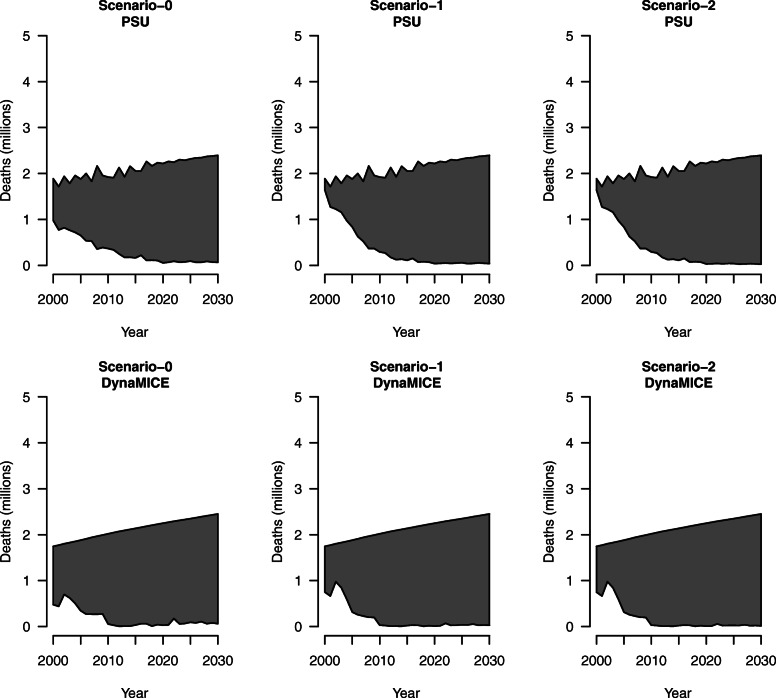
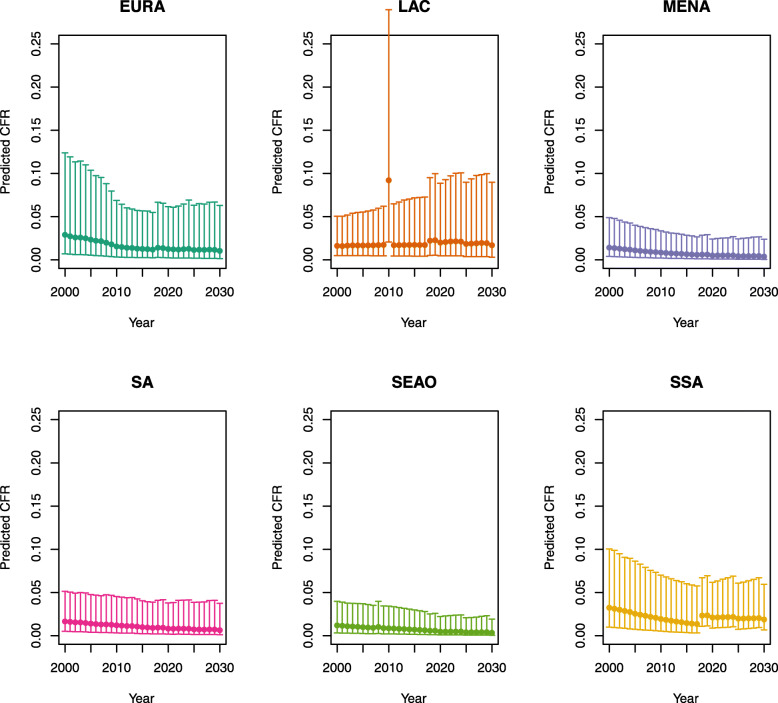
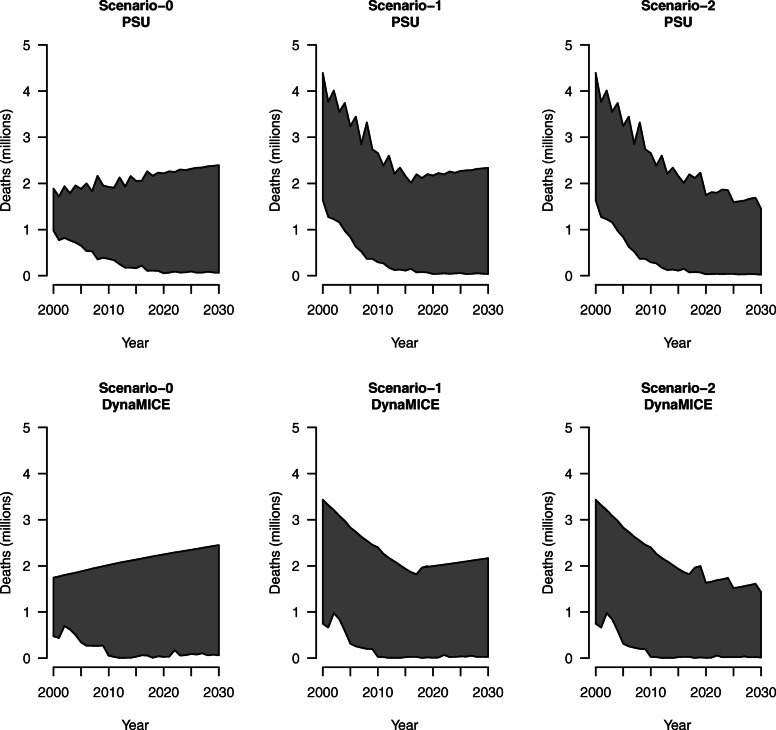
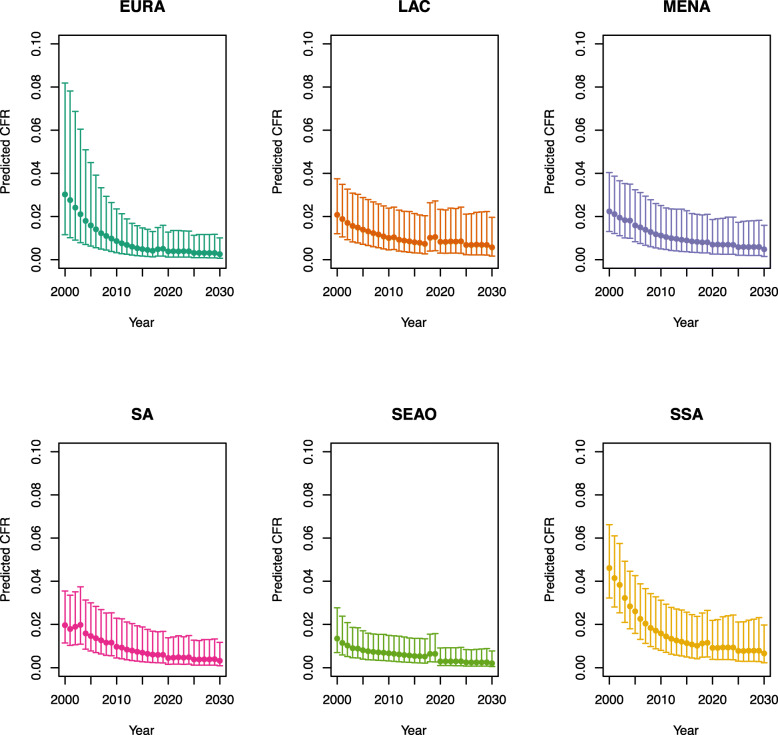
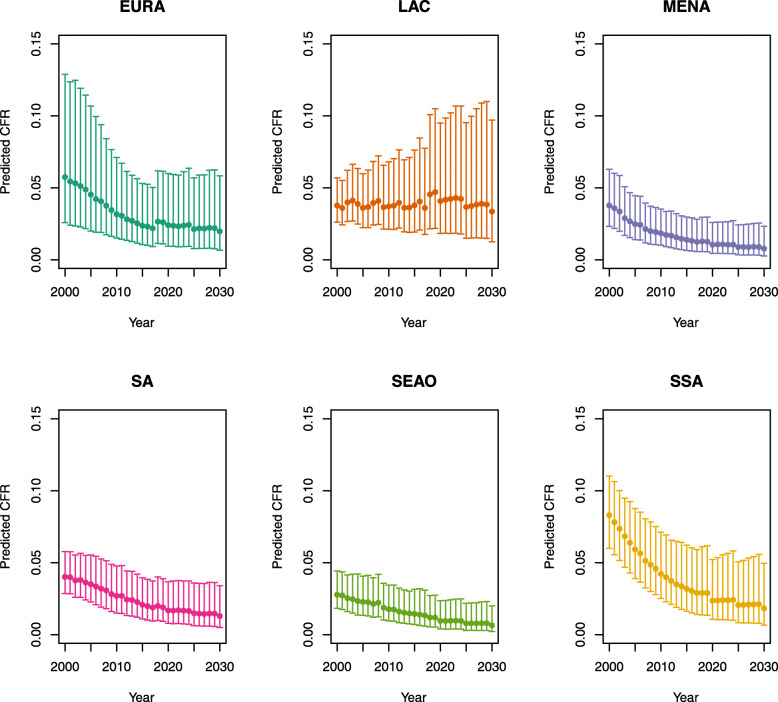
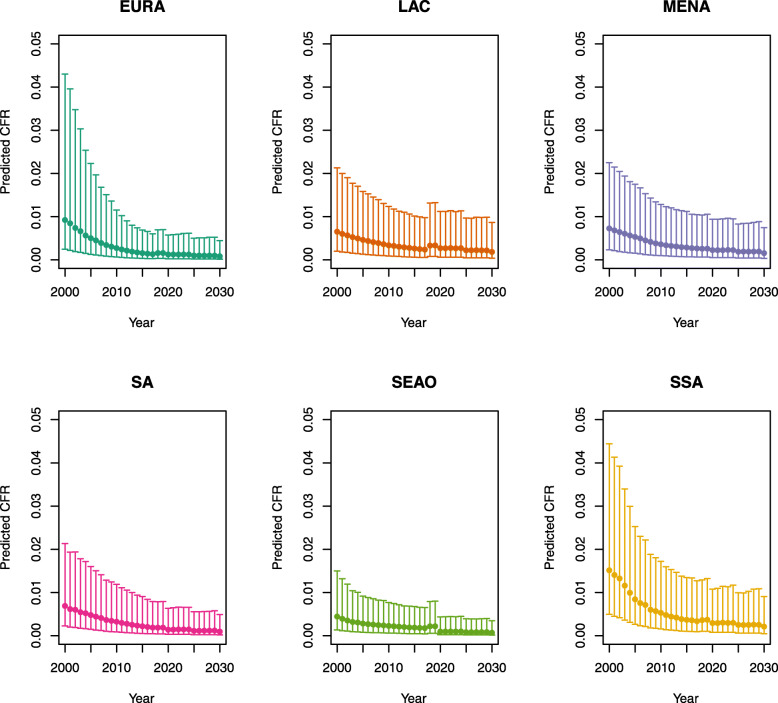
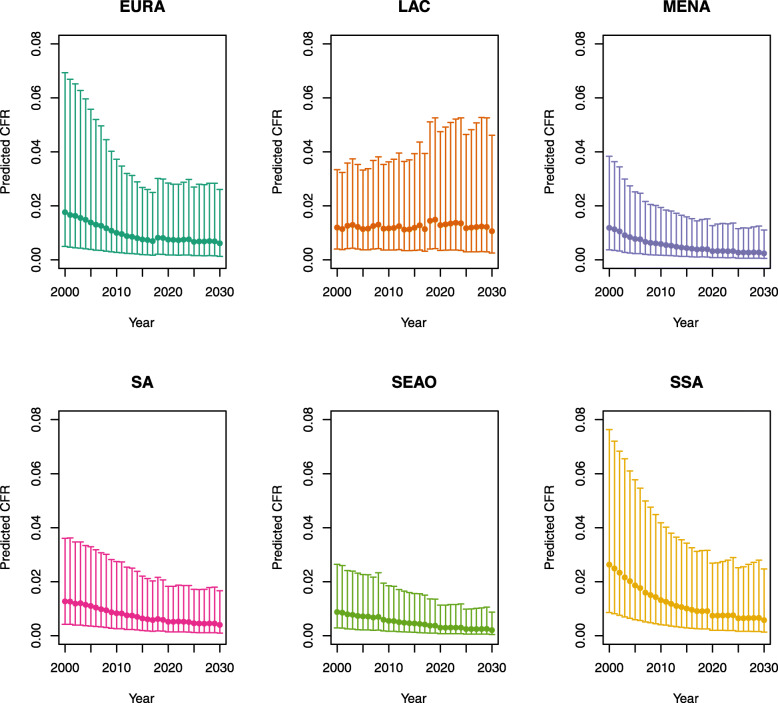
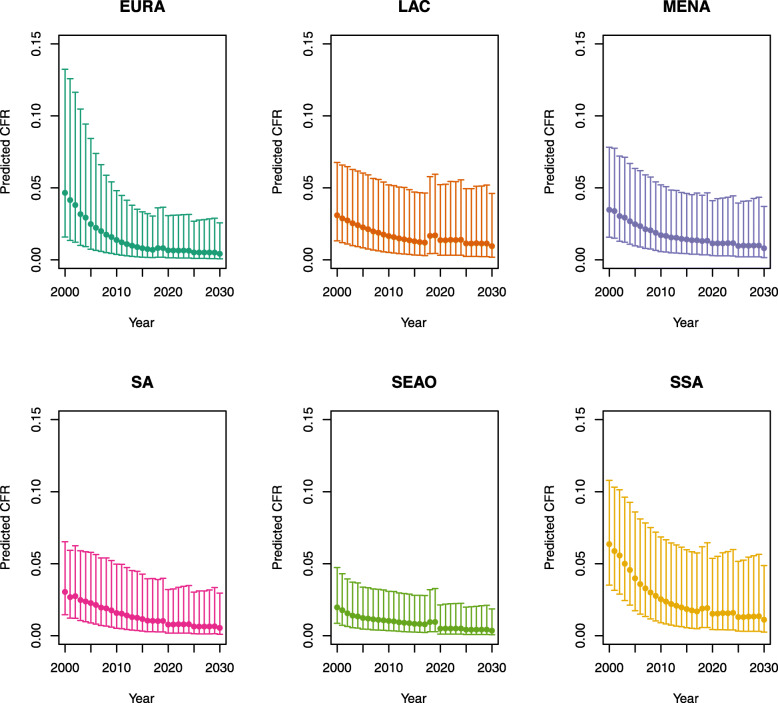
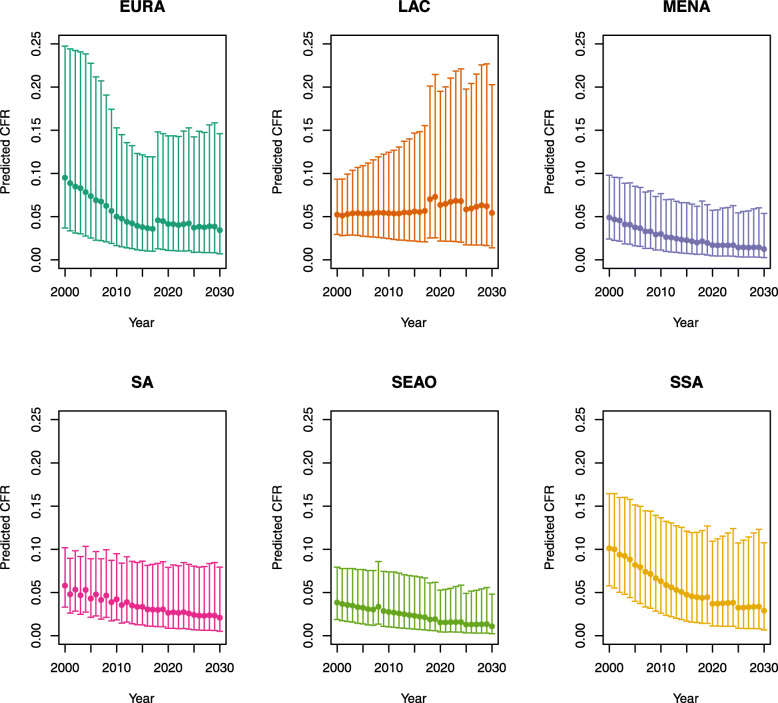
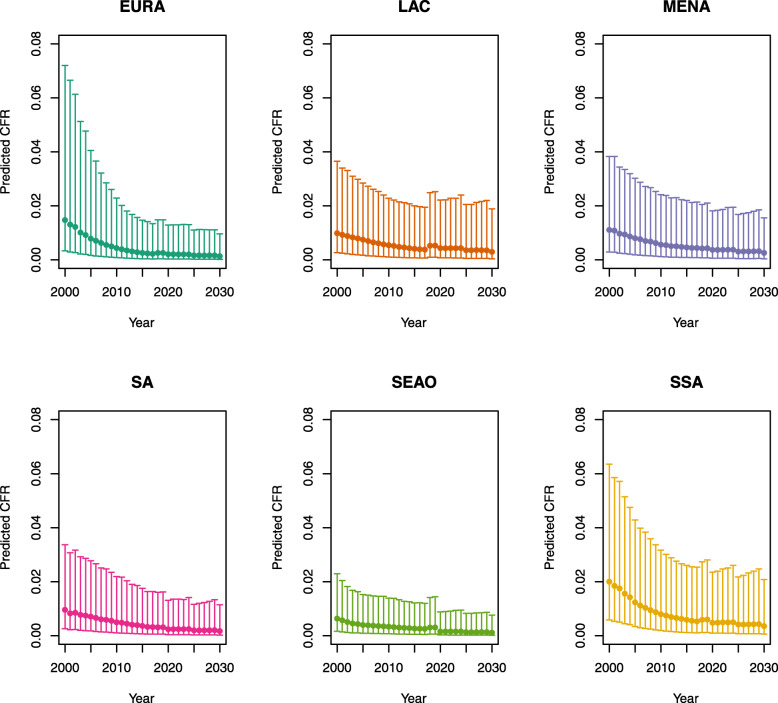
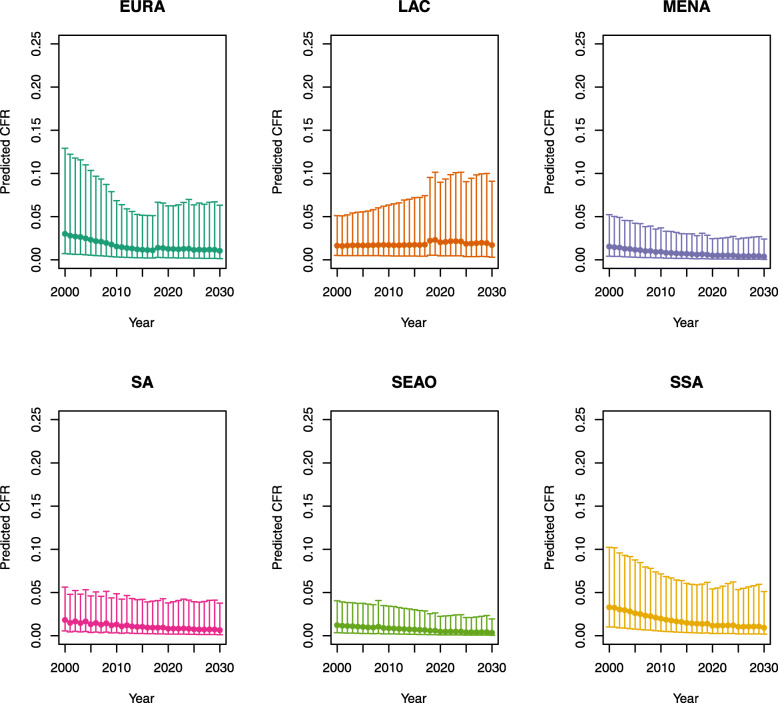
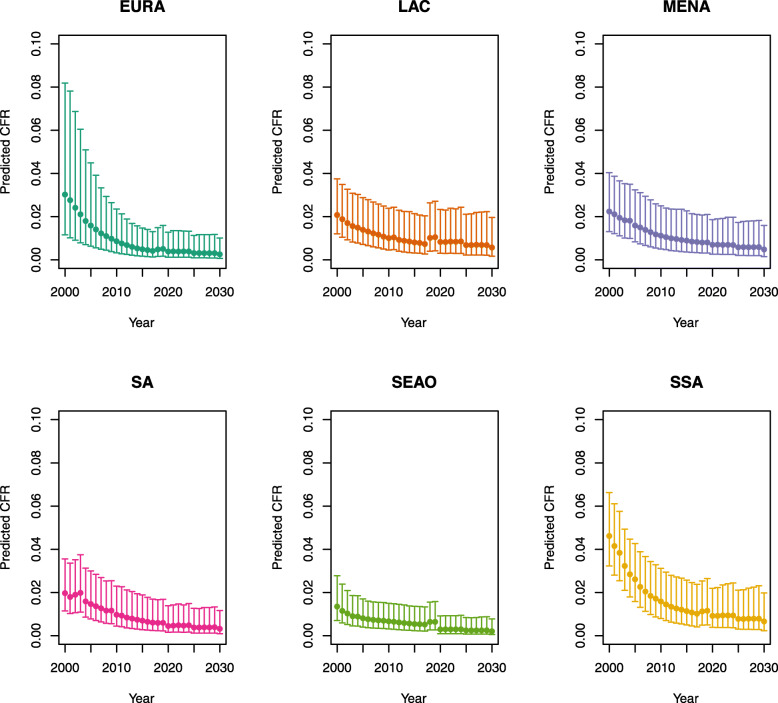
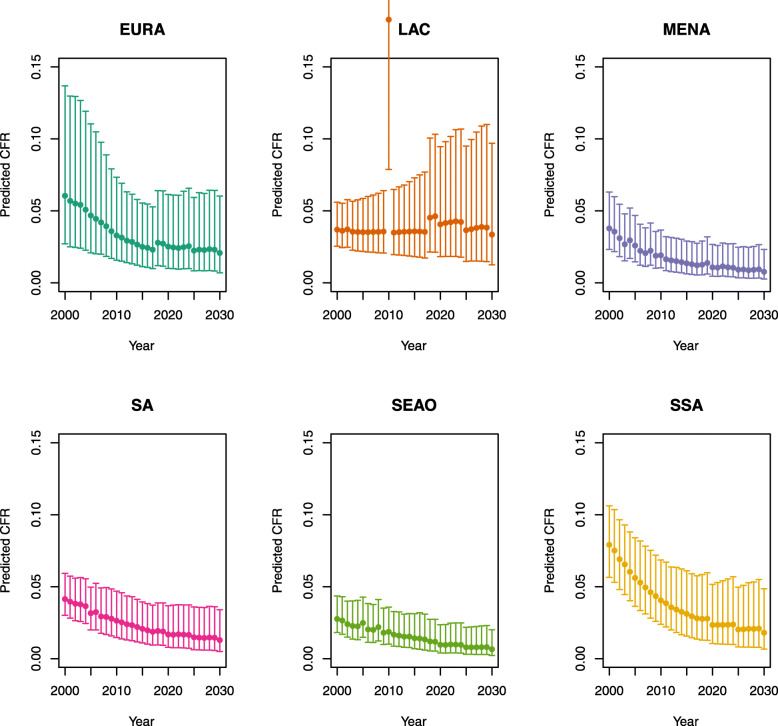
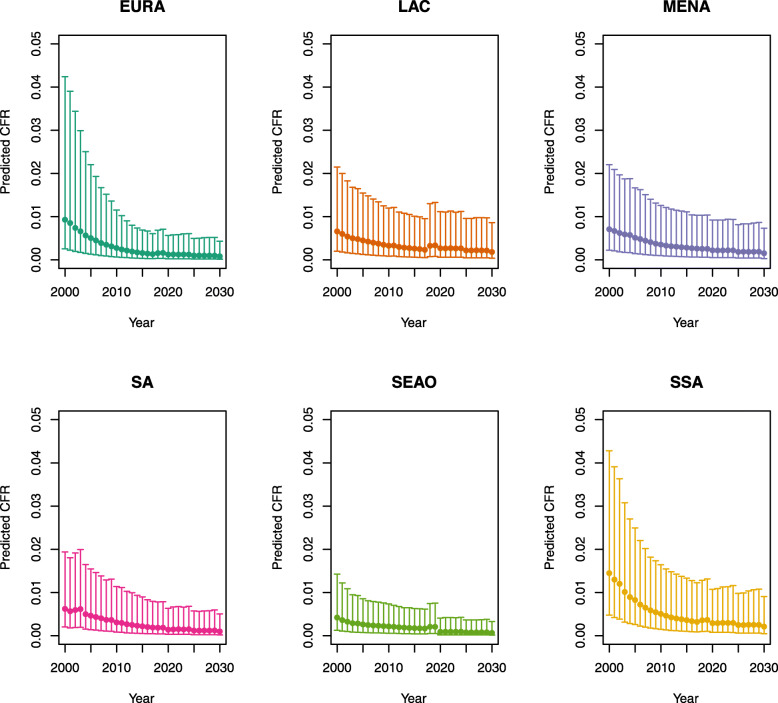
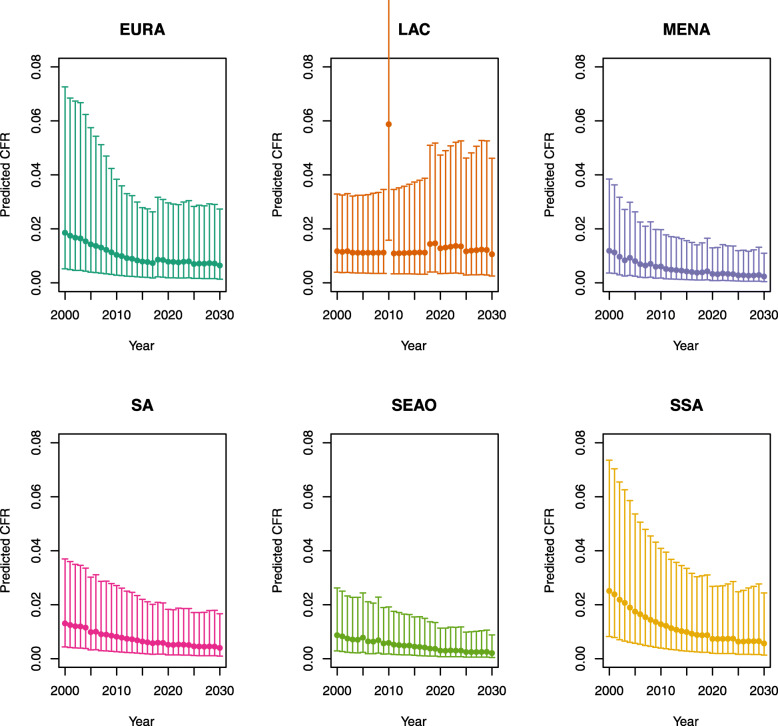
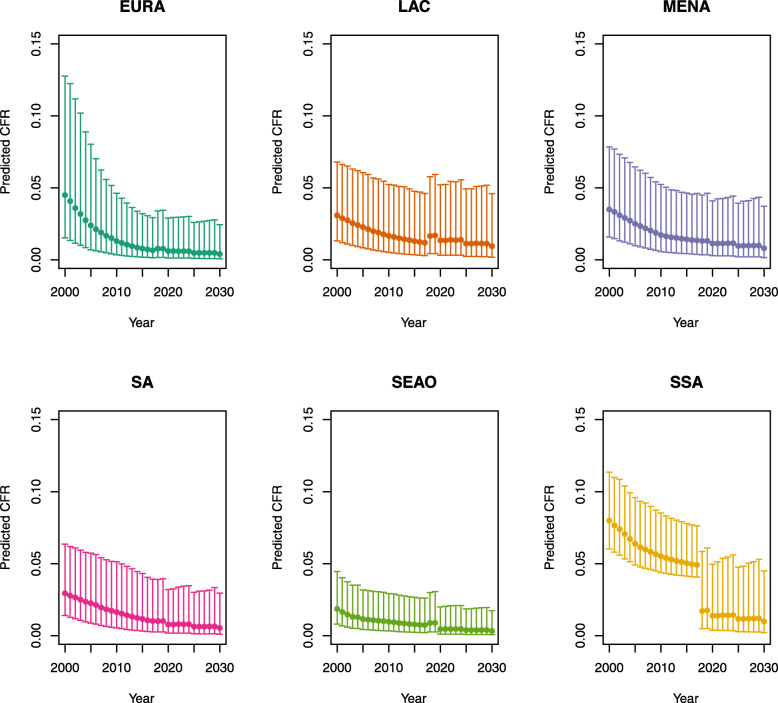
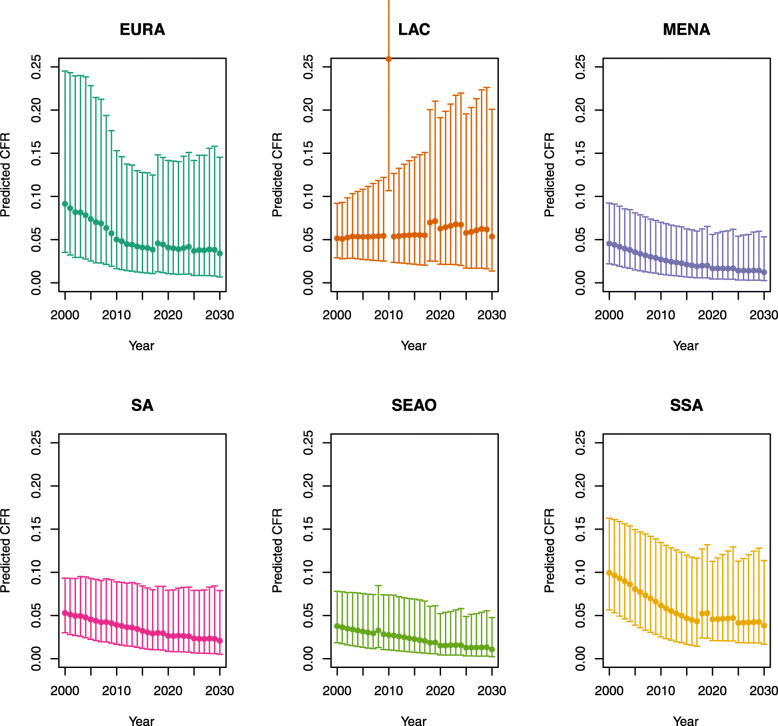
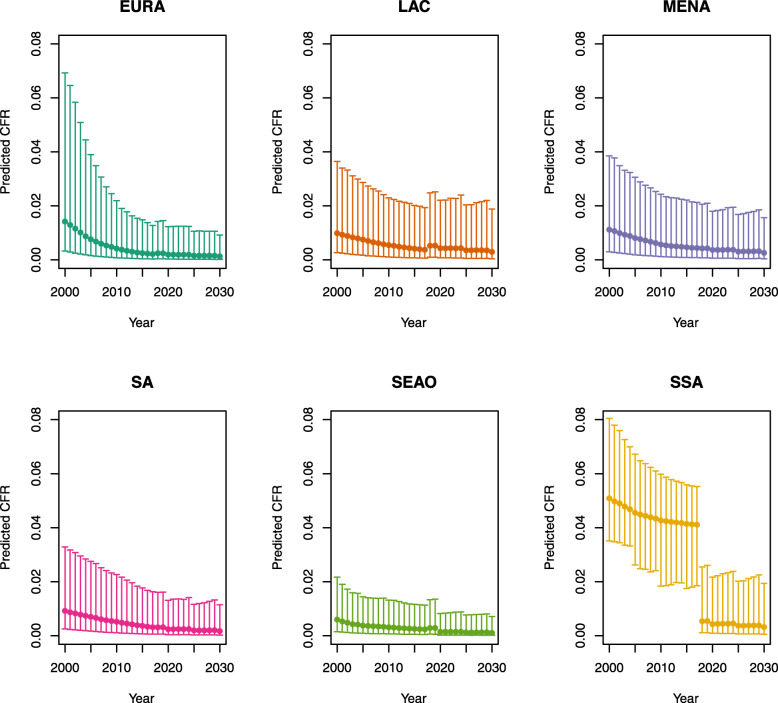
We used a previously published model of measles CFR that depends on incidence and vaccine coverage to illustrate the effects of (1) assuming higher CFR in "no-vaccination" scenarios, (2) time-varying CFRs over the past, and (3) time-varying CFRs in future projections on measles impact estimation. We used modeled CFRs in alternative scenarios to estimate measles deaths from 2000 to 2030 in 112 low- and middle-income countries using two models of measles transmission: Pennsylvania State University (PSU) and DynaMICE. We evaluated how different assumptions on future vaccine coverage, measles incidence, and CFR levels in "no-vaccination" scenarios affect the estimation of future deaths averted by measles vaccination.
Across 2000-2030, when CFRs are separately estimated for the "no-vaccination" scenario, the measles deaths averted estimated by PSU increased from 85.8% with constant CFRs to 86.8% with CFRs varying 2000-2018 and then held constant or 85.9% with CFRs varying across the entire time period and by DynaMICE changed from 92.0 to 92.4% or 91.9% in the same scenarios, respectively. By aligning both the "vaccination" and "no-vaccination" scenarios with time-variant measles CFR estimates, as opposed to assuming constant CFRs, the number of deaths averted in the vaccination scenarios was larger in historical years and lower in future years.
To assess the consequences of health interventions, impact estimates should consider the effect of "no-intervention" scenario assumptions on model parameters, such as measles CFR, in order to project estimated impact for alternative scenarios according to intervention strategies and investment decisions.
动态建模常用于评估干预措施对传染病发病率的直接和间接影响。继发结果(如死亡)的风险可能取决于干预措施针对的基础疾病发病率。因此,干预措施(例如,接种疫苗和不接种疫苗的情况之间的差异)对继发结果的影响可能与疾病发病率的降低不成比例。在这里,我们说明了评估麻疹疫苗接种对麻疹死亡率的影响,其中病死率(CFR)是麻疹发病率动态变化的函数。
我们使用以前发表的麻疹 CFR 模型,该模型取决于发病率和疫苗覆盖率,以说明以下三种情况的影响:(1)在“不接种疫苗”的情况下假设更高的 CFR;(2)过去 CFR 的时变;(3)对未来预测中 CFR 的时变对麻疹影响估计的影响。我们使用替代方案中的模型 CFR 来估计 2000 年至 2030 年 112 个低收入和中等收入国家的麻疹死亡人数,使用两种麻疹传播模型:宾夕法尼亚州立大学(PSU)和 DynaMICE。我们评估了在“不接种疫苗”的情况下,对未来疫苗覆盖率、麻疹发病率和 CFR 水平的不同假设如何影响对麻疹疫苗接种可预防的未来死亡人数的估计。
在 2000 年至 2030 年期间,当 CFR 分别为“不接种疫苗”的情况下进行估计时,PSU 估计的麻疹死亡人数从使用固定 CFR 时的 85.8%增加到 2000-2018 年 CFR 变化时的 86.8%,然后保持不变或整个时间段 CFR 变化时的 85.9%,而 DynaMICE 则从 92.0%分别变为 92.4%或在相同情况下的 91.9%。通过使“疫苗接种”和“不接种疫苗”的情况与时间变化的麻疹 CFR 估计值保持一致,而不是假设固定的 CFR,在历史年份中,疫苗接种方案中的死亡人数减少,而在未来年份中则减少。
为了评估卫生干预措施的后果,影响估计应考虑“无干预”情景假设对模型参数(如麻疹 CFR)的影响,以便根据干预策略和投资决策为替代情景预测估计的影响。