Schotsmans E M J, Busacca G, Lin S C, Vasić M, Lingle A M, Veropoulidou R, Mazzucato C, Tibbetts B, Haddow S D, Somel M, Toksoy-Köksal F, Knüsel C J, Milella M
Laboratoire d'Anthropologie des Populations Passées et Présentes (PACEA), UMR 5199, Université de Bordeaux, Pessac, France.
Centre for Archaeological Science, University of Wollongong, Wollongong, Australia.
Sci Rep. 2022 Mar 8;12(1):4055. doi: 10.1038/s41598-022-07284-3.
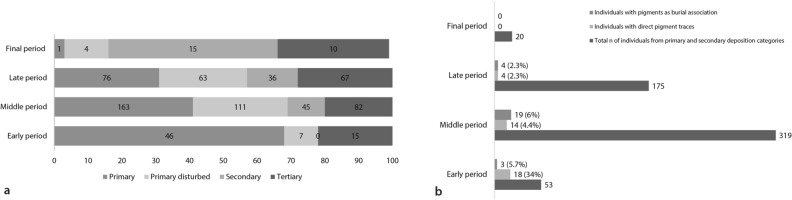
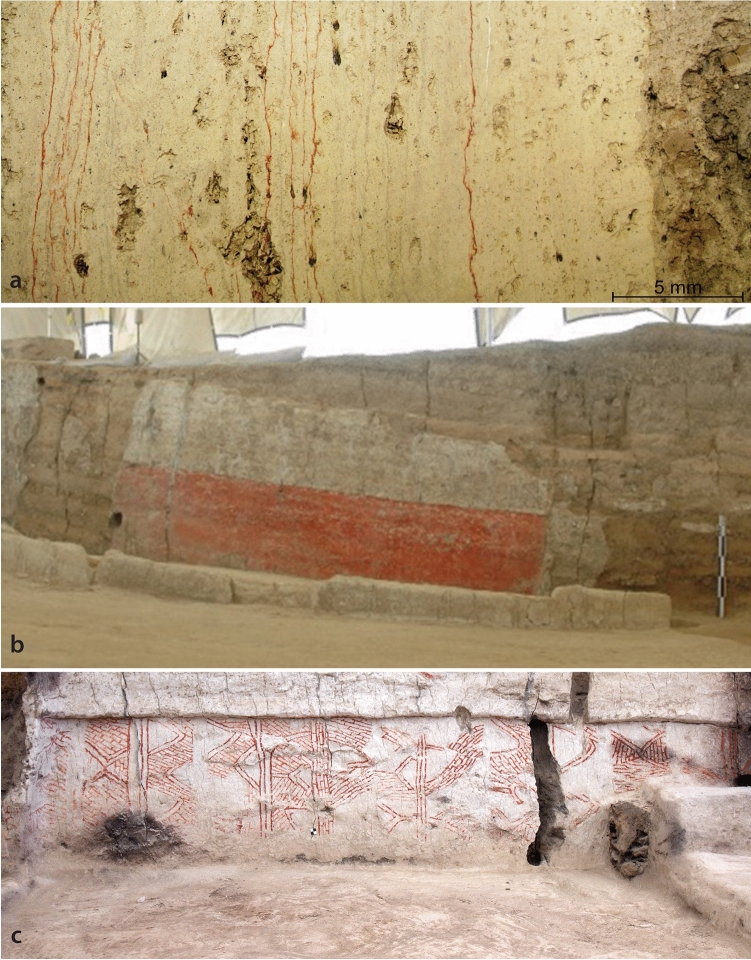
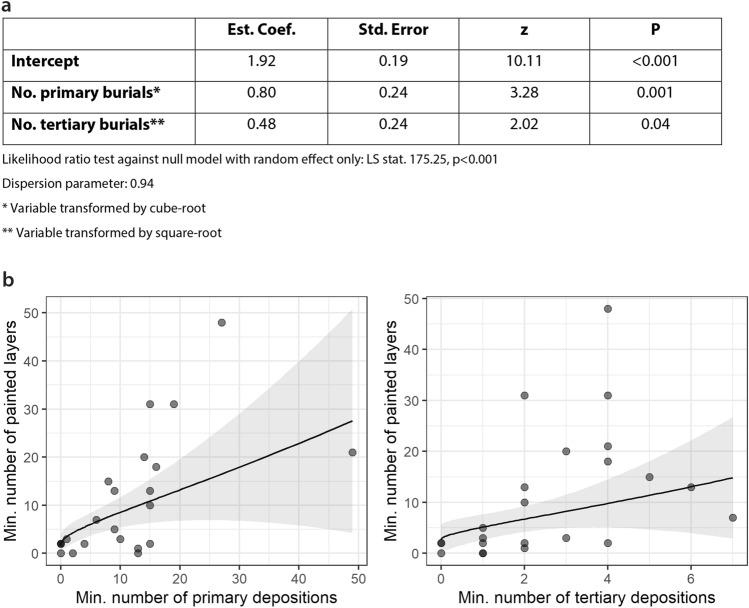
The cultural use of pigments in human societies is associated with ritual activities and the creation of social memory. Neolithic Çatalhöyük (Turkey, 7100-5950 cal BC) provides a unique case study for the exploration of links between pigments in burials, demographic data and colourants in contemporary architectural contexts. This study presents the first combined analysis of funerary and architectural evidence of pigment use in Neolithic Anatolia and discusses the possible social processes underlying the observed statistical patterns. Results reveal that pigments were either applied directly to the deceased or included in the grave as a burial association. The most commonly used pigment was red ochre. Cinnabar was mainly applied to males and blue/green pigment was associated with females. A correlation was found between the number of buried individuals and the number of painted layers in the buildings. Mortuary practices seem to have followed specific selection processes independent of sex and age-at-death of the deceased. This study offers new insights about the social factors involved in pigment use in this community, and contributes to the interpretation of funerary practices in Neolithic Anatolia. Specifically, it suggests that visual expression, ritual performance and symbolic associations were elements of shared long-term socio-cultural practices.
在人类社会中,颜料的文化用途与仪式活动以及社会记忆的构建相关联。新石器时代的恰塔霍裕克(位于土耳其,公元前7100 - 5950年)为探索墓葬中的颜料、人口统计数据与当代建筑环境中的着色剂之间的联系提供了一个独特的案例研究。本研究首次对新石器时代安纳托利亚地区颜料使用的丧葬和建筑证据进行了综合分析,并讨论了观察到的统计模式背后可能的社会过程。结果显示,颜料要么直接涂抹在死者身上,要么作为陪葬品包含在墓穴中。最常用的颜料是赤铁矿。朱砂主要用于男性,而蓝/绿色颜料与女性相关。研究发现建筑物中埋葬个体的数量与彩绘层数之间存在相关性。丧葬习俗似乎遵循了特定的选择过程,与死者的性别和死亡年龄无关。这项研究为该社区颜料使用所涉及的社会因素提供了新的见解,并有助于对新石器时代安纳托利亚地区丧葬习俗的解读。具体而言,它表明视觉表达、仪式表演和象征关联是长期共享的社会文化实践的要素。