Heim Pál Children's Hospital, Department of Infectious Diseases, Budapest, Hungary,
Division of Endocrinology, 2nd Department of Medicine, Health Center, Hungarian Defense Forces, Budapest, Hungary.
Arch Endocrinol Metab. 2022 Mar 8;66(1):118-128. doi: 10.20945/2359-3997000000446.
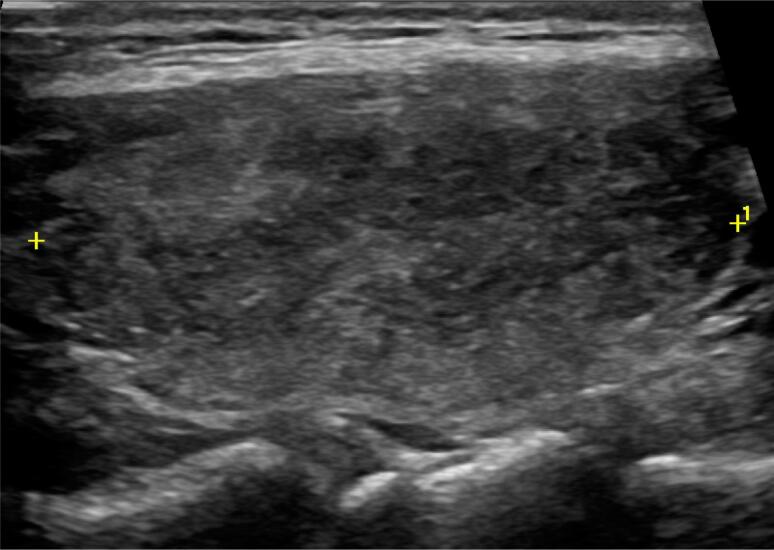
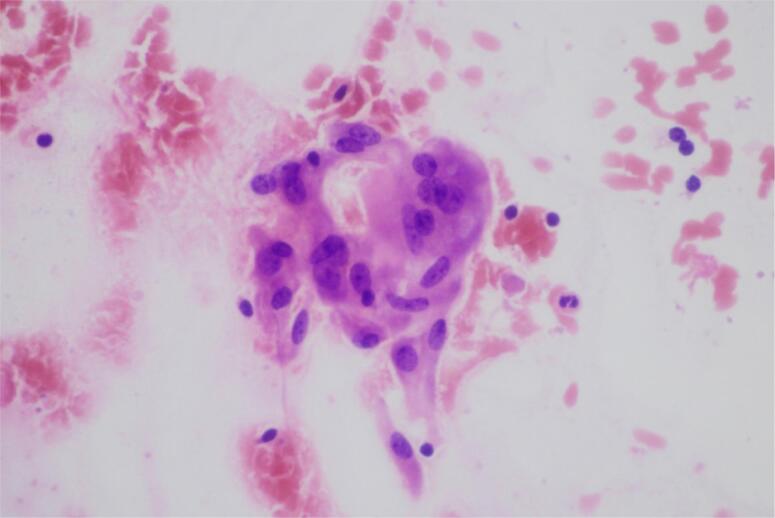
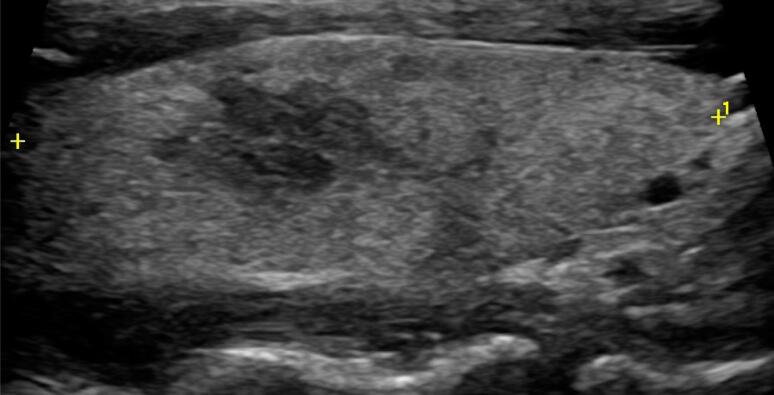
In March 2020, the World Health Organization characterized COVID-19 as a pandemic. By May 2021, 37 cases of subacute thyroiditis (SAT) associated with severe acute respiratory syndrome coronavirus 2 (SARS-CoV-2) had been reported in the literature. We report a patient diagnosed with SAT associated with COVID-19 and review the previously reported cases. A 31-year-old female with no significant previous history developed SAT 5 weeks after SARS-CoV-2 infection. She presented with anterior neck pain and fever. Thyroid function tests revealed hyperthyroidism with slightly increased inflammatory markers. Thyroid ultrasound showed diffuse hypoechoic left lobe and a hypoechoic area in the right lobe. On the fine-needle-aspiration biopsy, large histiocytes, disrupted and normal follicles, and multinucleated giant cells within colloid were seen. Under oral corticosteroid therapy, clinical progression was rapid. Seven weeks later, all thyroid function tests and inflammatory markers normalized. During the recent viral outbreak, clinicians should keep in mind the possibility of SAT after COVID-19, and patients with symptoms of SAT should be tested for SARS-CoV-2.
2020 年 3 月,世界卫生组织将 COVID-19 定性为大流行。到 2021 年 5 月,文献中已经报告了 37 例与严重急性呼吸综合征冠状病毒 2(SARS-CoV-2)相关的亚急性甲状腺炎(SAT)病例。我们报告了一例与 COVID-19 相关的 SAT 患者,并回顾了先前报告的病例。一名 31 岁女性,无明显既往病史,在 SARS-CoV-2 感染后 5 周发生 SAT。她出现前颈部疼痛和发热。甲状腺功能检查显示甲状腺功能亢进,炎症标志物略有升高。甲状腺超声显示左叶弥漫性低回声,右叶有低回声区。在细针抽吸活检中,可见大组织细胞、破坏和正常滤泡以及胶体内的多核巨细胞。口服皮质类固醇治疗后,临床进展迅速。7 周后,所有甲状腺功能检查和炎症标志物均恢复正常。在最近的病毒爆发期间,临床医生应牢记 COVID-19 后发生 SAT 的可能性,出现 SAT 症状的患者应进行 SARS-CoV-2 检测。