Instituto de Medicina Preventiva Veterinaria, Facultad de Ciencias Veterinarias, Universidad Austral de Chile, Valdivia, Los Ríos region, Chile.
Center for Surveillance and Evolution of Infectious Diseases, Universidad Austral de Chile, Valdivia, Los Ríos region, Chile.
PLoS Negl Trop Dis. 2022 Mar 9;16(3):e0010280. doi: 10.1371/journal.pntd.0010280. eCollection 2022 Mar.
Cystic echinococcosis (CE) caused by Echinococcus granulosus sensu lato (s.l.) is a neglected and underdiagnosed parasitic zoonosis that has a significant socioeconomic impact on rural communities relying on livestock farming. CE is endemic across Latin America, including Chile, where the Coquimbo region exhibits a relatively high record of hospital-based human cases and infected animals. However, the incidence of hospitalized CE cases may underestimate the real burden of infection in a population, since the majority of cases never reach medical attention or official disease records.
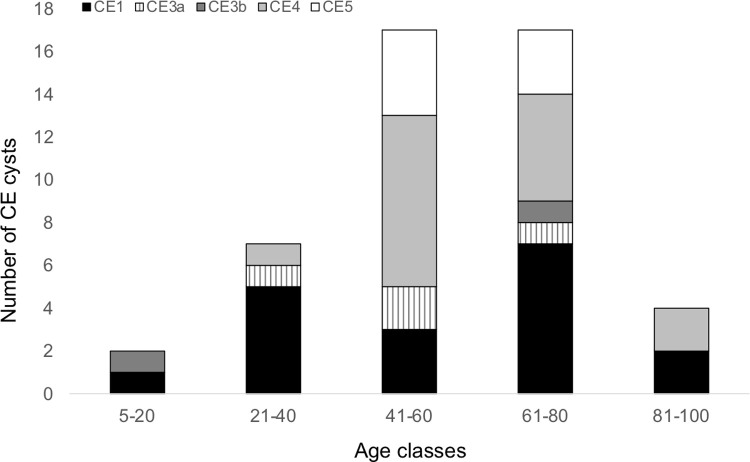
METHODOLOGY/PRINCIPAL FINDINGS: In 2019, a cross-sectional, community-based study was conducted with the objectives of estimating for the first time the prevalence of human abdominal CE using abdominal ultrasound (US) screening in volunteers residing in urban and rural localities of the Monte Patria municipality located in Limarí province, Coquimbo region, Chile, and identifying the risk factors associated with human infection. Pre-screening activities included a 16-h lecture/hands-on training aimed at rural physicians that focused on the diagnosis of CE by US, based on current WHO recommendations. A total of 2,439 (~8% of municipality inhabitants) people from thirteen target localities were screened by abdominal US in June-July 2019. We found an overall CE prevalence of 1.6% (95% CI 1.1-2.2) with a significantly higher likelihood of infection in rural localities, older age classes and people drinking non-potable water; 84.6% of infected volunteers were newly diagnosed with CE. Cysts were either in active or inactive stages in equal proportions; active cysts were detected in all age classes, while 95.7% of inactive cysts occurred in >40 years-old subjects.
CONCLUSIONS/SIGNIFICANCE: This is the first US survey aimed at detecting human infection caused by Echinococcus granulosus s.l. in Chile. Our findings indicate a high CE prevalence in the area, and contribute to define the demographic and behavioral risk factors promoting the transmission of the parasitic infection within target communities. Our results support the implementation of cost-effective strategies for the diagnosis, treatment and control of CE, and the need to improve the epidemiological surveillance system in Chile.
由细粒棘球绦虫亚种(s.l.)引起的包虫病(CE)是一种被忽视和诊断不足的寄生虫性人畜共患病,对依赖畜牧业的农村社区具有重大的社会经济影响。CE 在拉丁美洲各地流行,包括智利,其中科金博地区的医院报告的人类病例和感染动物数量相对较高。然而,住院 CE 病例的发生率可能低估了人群中感染的真实负担,因为大多数病例从未得到医疗关注或官方疾病记录。
方法/主要发现:2019 年,我们进行了一项横断面、基于社区的研究,目的是首次使用腹部超声(US)筛查估算居住在智利科金博大区利马里省蒙特帕特里亚市城乡居民中人类腹部 CE 的患病率,并确定与人类感染相关的危险因素。预筛查活动包括针对农村医生的为期 16 小时的讲座/实践培训,重点是根据世界卫生组织的最新建议通过 US 诊断 CE。2019 年 6 月至 7 月,我们对来自 13 个目标地点的 2439 人(约占该市居民的 8%)进行了腹部 US 筛查。我们发现,CE 的总患病率为 1.6%(95%CI 1.1-2.2),农村地区、较老的年龄组和饮用非饮用水的人群感染的可能性显著更高;84.6%的受感染志愿者是新诊断的 CE 患者。囊肿处于活动或非活动阶段的比例相等;所有年龄组均发现活动囊肿,而 95.7%的非活动囊肿发生在>40 岁的人群中。
结论/意义:这是智利首次旨在检测细粒棘球绦虫亚种引起的人类感染的 US 调查。我们的研究结果表明,该地区的 CE 患病率很高,并有助于确定促进目标社区内寄生虫感染传播的人口统计学和行为危险因素。我们的研究结果支持实施具有成本效益的策略来诊断、治疗和控制 CE,并需要改善智利的流行病学监测系统。