Department of Developmental Genetics (H.E.-S., R.M.-J., D.Y.R.S.), Max Planck Institute for Heart and Lung Research, Bad Nauheim, Germany.
German Centre for Cardiovascular Research (DZHK) Partner Site Rhine-Main (H.E.-S., S.G., D.Y.R.S.), Max Planck Institute for Heart and Lung Research, Bad Nauheim, Germany.
Circ Res. 2022 Apr;130(7):1014-1029. doi: 10.1161/CIRCRESAHA.121.319929. Epub 2022 Mar 10.
Ischemic heart disease following the obstruction of coronary vessels leads to the death of cardiac tissue and the formation of a fibrotic scar. In contrast to adult mammals, zebrafish can regenerate their heart after injury, enabling the study of the underlying mechanisms. One of the earliest responses following cardiac injury in adult zebrafish is coronary revascularization. Defects in this process lead to impaired cardiomyocyte repopulation and scarring. Hence, identifying and investigating factors that promote coronary revascularization holds great therapeutic potential.
We used wholemount imaging, immunohistochemistry and histology to assess various aspects of zebrafish cardiac regeneration. Deep transcriptomic analysis allowed us to identify targets and potential effectors of Vegfc (vascular endothelial growth factor C) signaling. We used newly generated loss- and gain-of-function genetic tools to investigate the role of Emilin2a (elastin microfibril interfacer 2a) and Cxcl8a (chemokine (C-X-C) motif ligand 8a)-Cxcr1 (chemokine (C-X-C) motif receptor 1) signaling in cardiac regeneration.
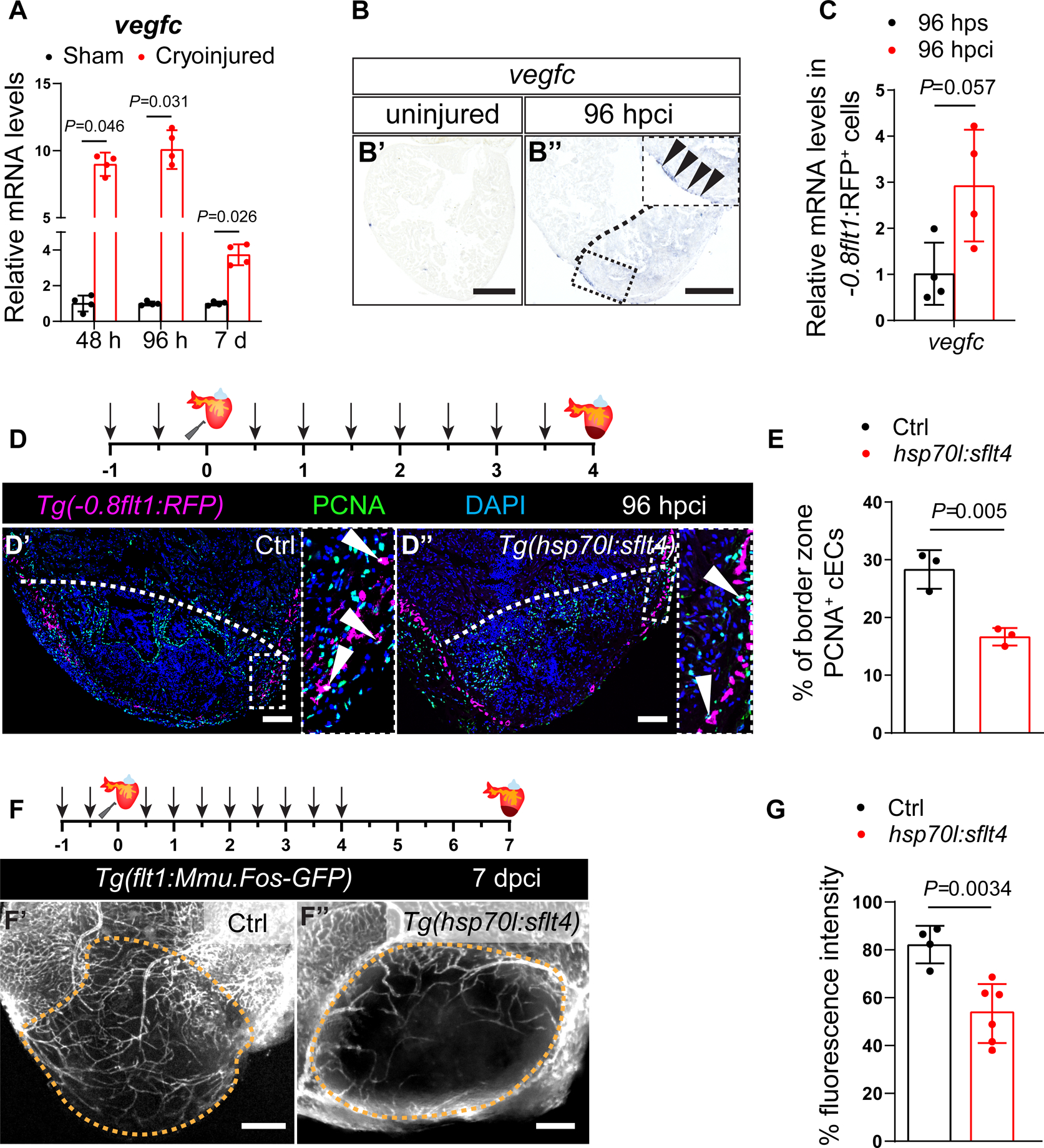
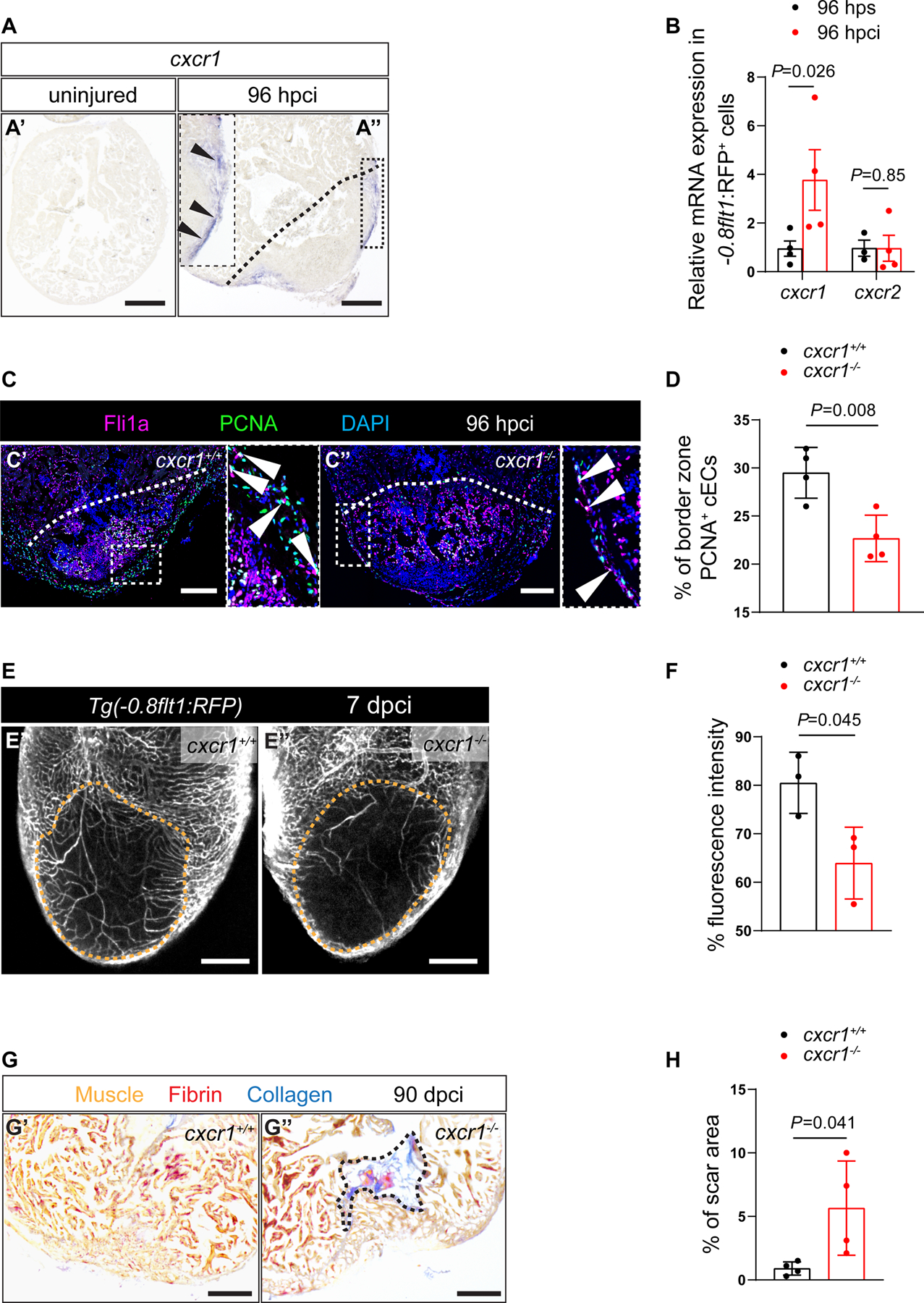
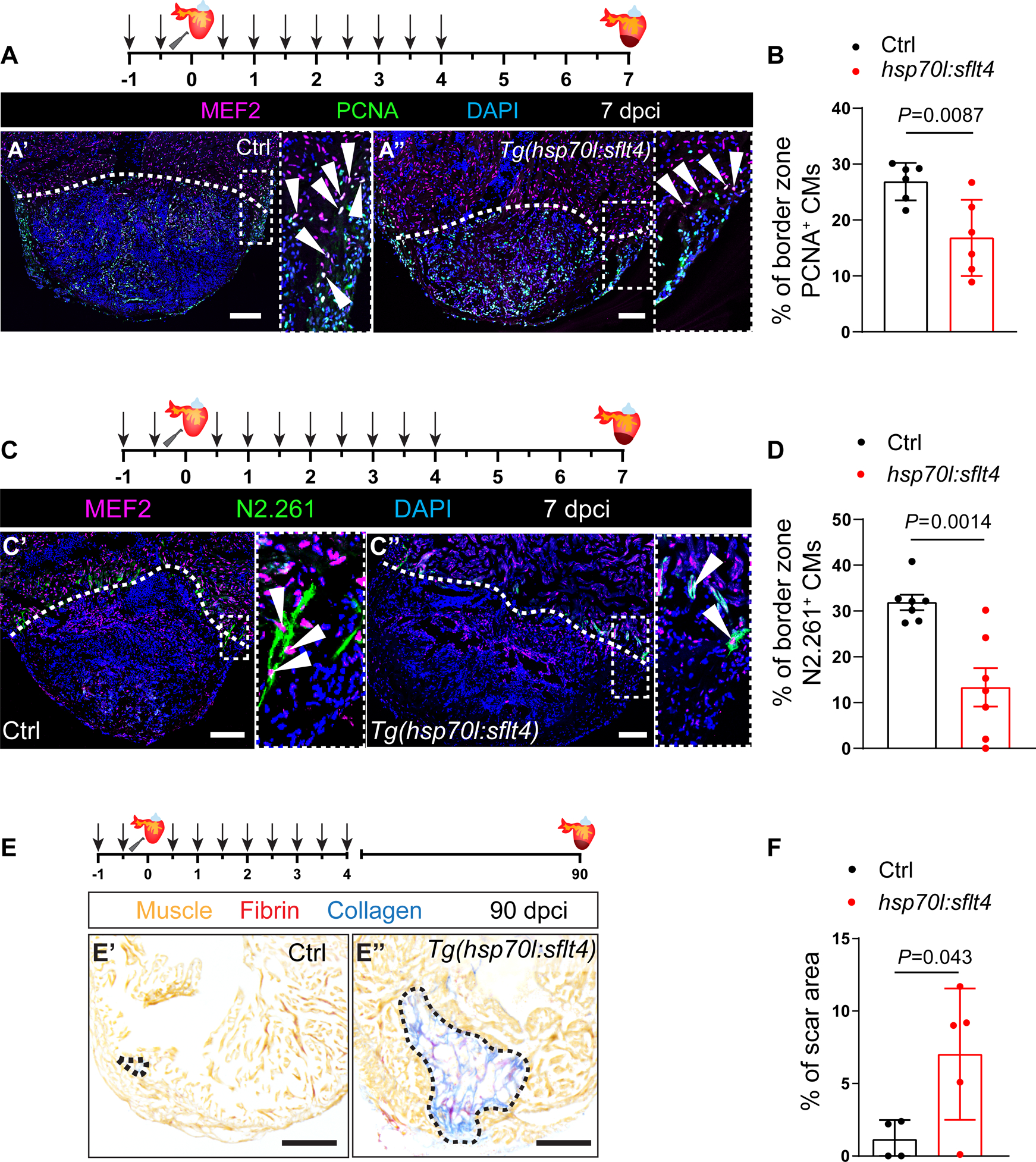
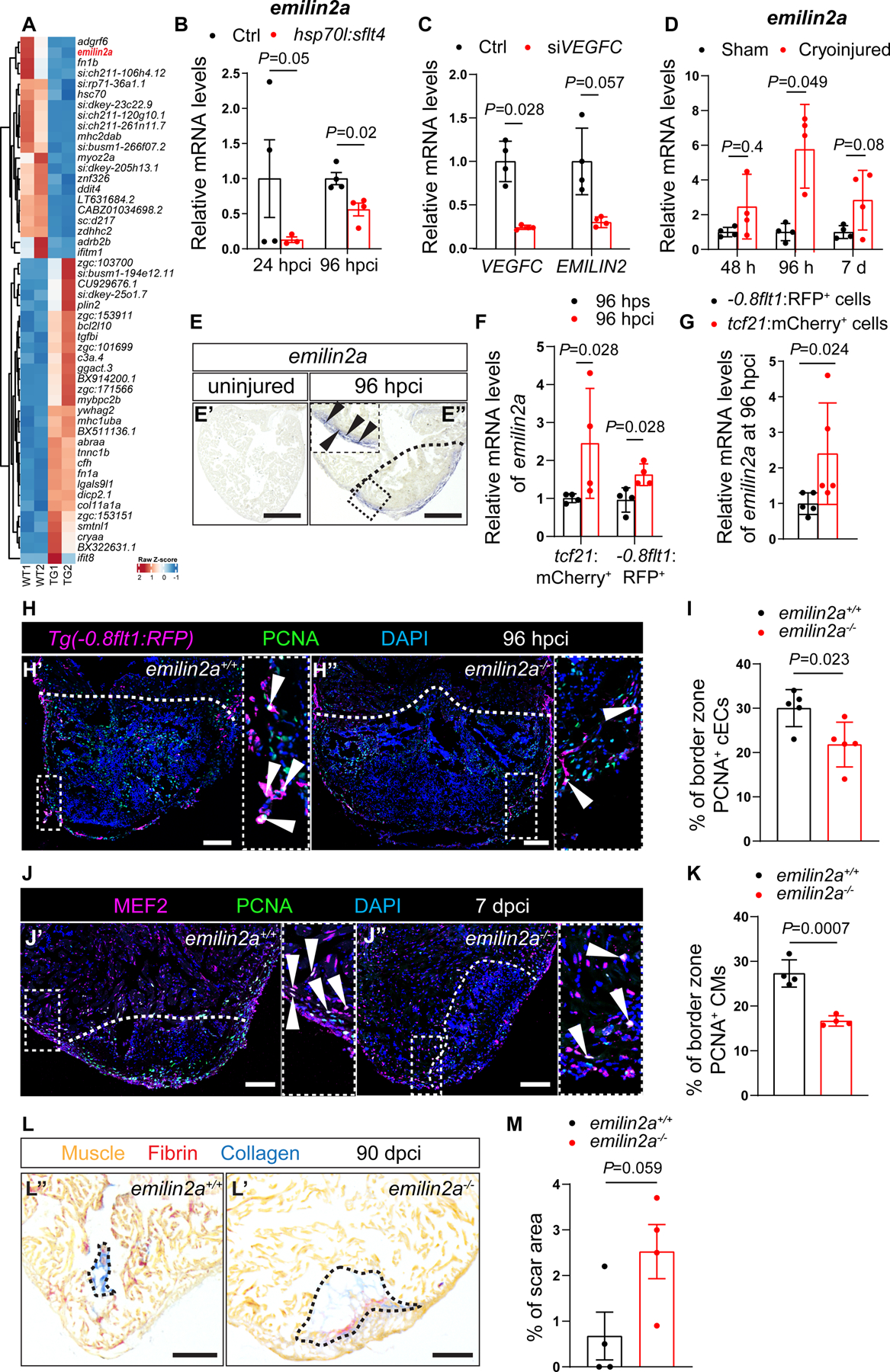
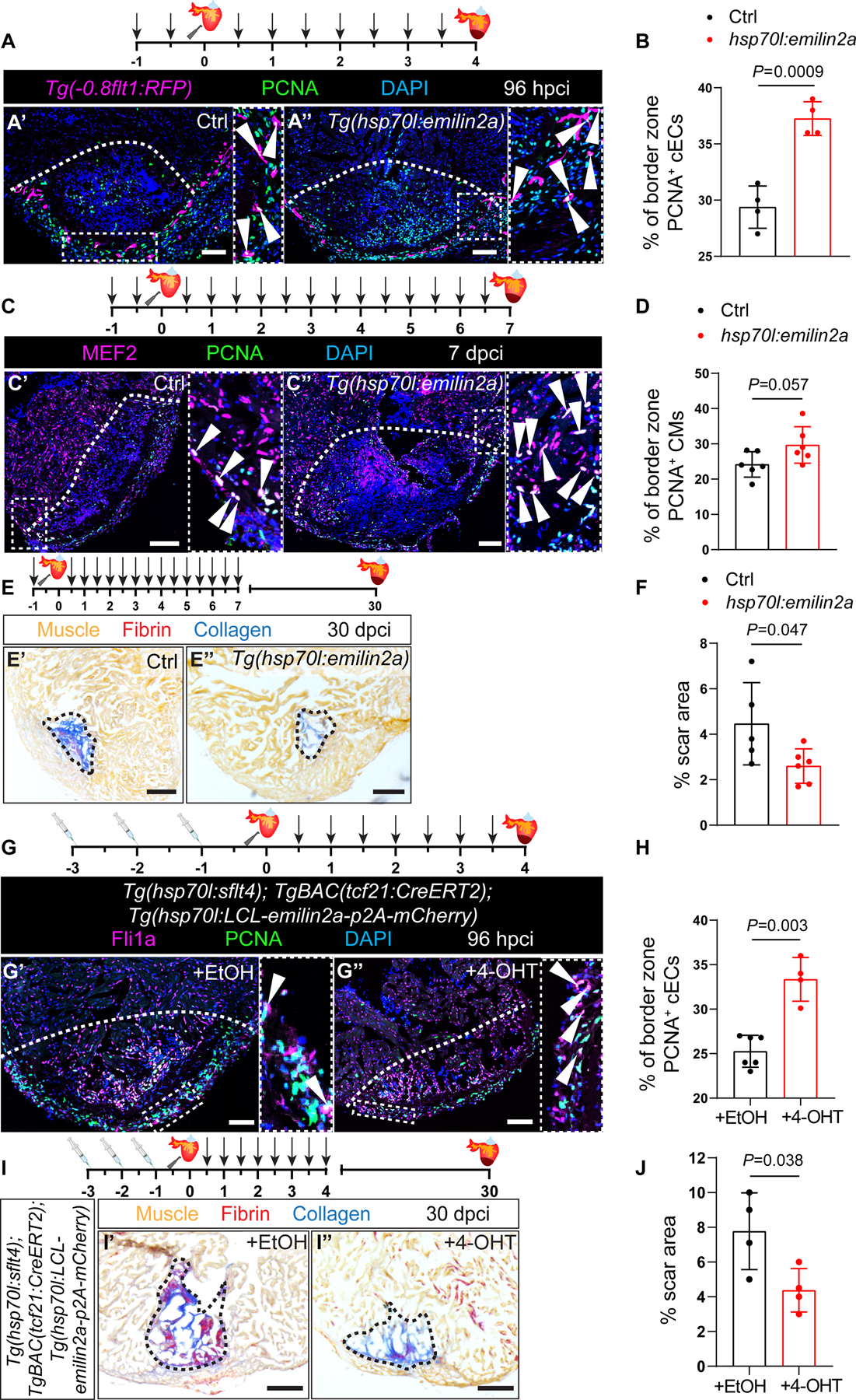
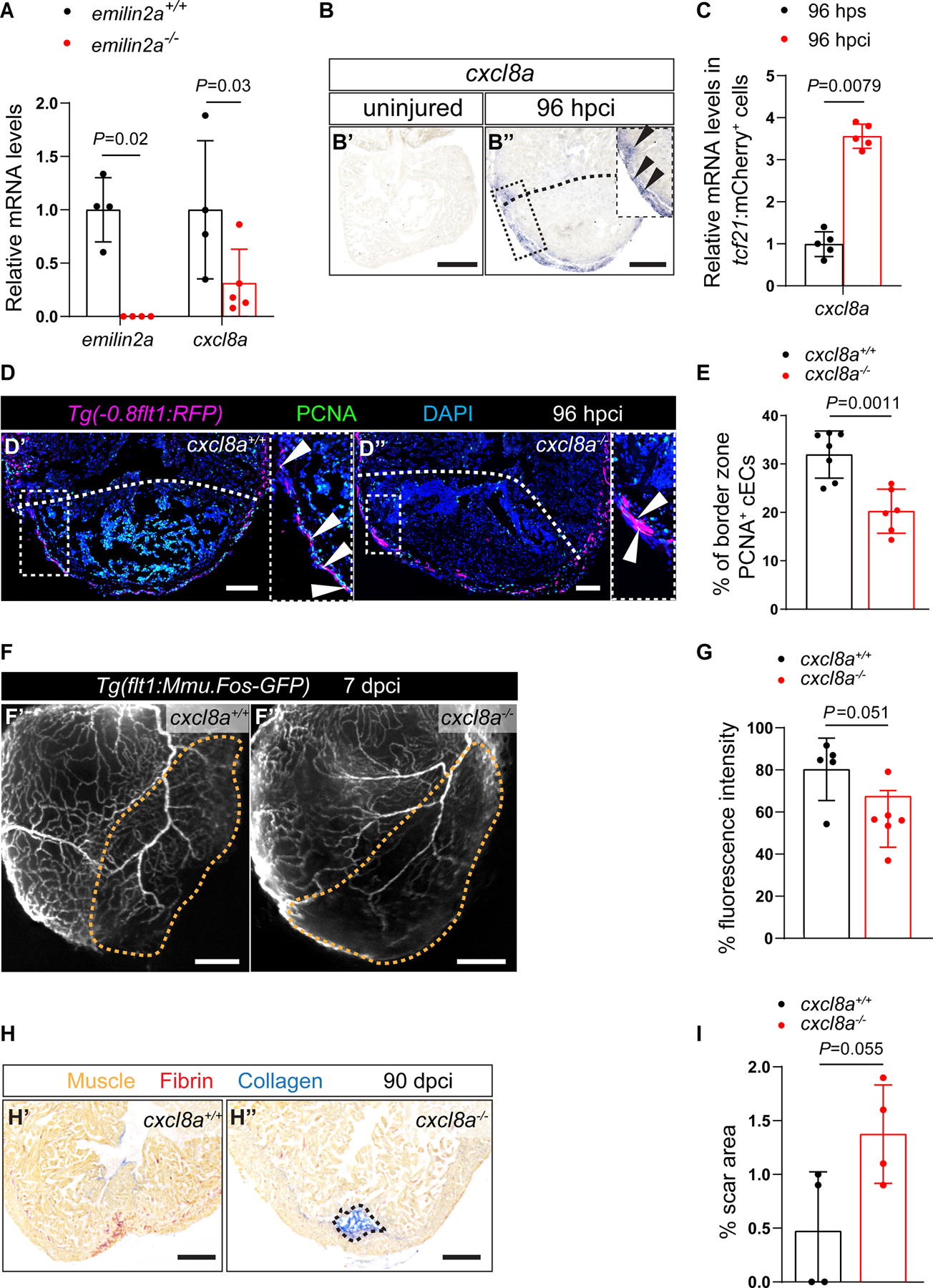
We first show that regenerating coronary endothelial cells upregulate upon cardiac injury in adult zebrafish and that Vegfc signaling is required for their proliferation during regeneration. Notably, blocking Vegfc signaling also significantly reduces cardiomyocyte dedifferentiation and proliferation. Using transcriptomic analyses, we identified as a target of Vegfc signaling and found that manipulation of expression can modulate coronary revascularization as well as cardiomyocyte proliferation. Mechanistically, Emilin2a induces the expression of the chemokine gene in epicardium-derived cells, while , the Cxcl8a receptor gene, is expressed in coronary endothelial cells. We further show that Cxcl8a-Cxcr1 signaling is also required for coronary endothelial cell proliferation during cardiac regeneration.
These data show that after cardiac injury, coronary endothelial cells upregulate to promote coronary network reestablishment and cardiac regeneration. Mechanistically, Vegfc signaling upregulates epicardial and expression to promote cardiac regeneration. These studies aid in understanding the mechanisms underlying coronary revascularization in zebrafish, with potential therapeutic implications to enhance revascularization and regeneration in injured human hearts.
冠状动脉阻塞导致心肌组织死亡和形成纤维疤痕,从而引发缺血性心脏病。与成年哺乳动物不同,斑马鱼受伤后可以再生心脏,这使其成为研究潜在机制的理想模型。成年斑马鱼心脏损伤后的最早反应之一是冠状动脉再血管化。该过程中的缺陷会导致心肌细胞再增殖和疤痕形成受损。因此,鉴定和研究促进冠状动脉再血管化的因素具有很大的治疗潜力。
我们使用全胚胎成像、免疫组织化学和组织学来评估斑马鱼心脏再生的各个方面。深度转录组分析使我们能够鉴定 Vegfc(血管内皮生长因子 C)信号的靶标和潜在效应物。我们使用新生成的基因敲除和过表达遗传工具来研究 Emilin2a(弹性微纤维界面蛋白 2a)和 Cxcl8a(趋化因子(C-X-C)基序配体 8a)-Cxcr1(趋化因子(C-X-C)基序受体 1)信号在心脏再生中的作用。
我们首先表明,再生的冠状动脉内皮细胞在成年斑马鱼的心脏损伤后上调 ,并且 Vegfc 信号对于它们在再生过程中的增殖是必需的。值得注意的是,阻断 Vegfc 信号也显著减少了心肌细胞去分化和增殖。通过转录组分析,我们鉴定出 作为 Vegfc 信号的靶标,并发现 表达的操纵可以调节冠状动脉再血管化以及心肌细胞增殖。在机制上,Emilin2a 诱导心外膜衍生细胞中趋化因子基因 的表达,而 ,即 Cxcl8a 受体基因,则在冠状动脉内皮细胞中表达。我们进一步表明,Cxcl8a-Cxcr1 信号在心脏再生过程中也需要冠状动脉内皮细胞增殖。
这些数据表明,心脏损伤后,冠状动脉内皮细胞上调 以促进冠状动脉网络重建和心脏再生。在机制上,Vegfc 信号上调心外膜 和 的表达以促进心脏再生。这些研究有助于理解斑马鱼冠状动脉再血管化的机制,具有增强受损人心肌再血管化和再生的潜在治疗意义。