Caron Barthelemy, Patin Etienne, Rotival Maxime, Charbit Bruno, Albert Matthew L, Quintana-Murci Lluis, Duffy Darragh, Rausell Antonio
Université de Paris, INSERM UMR1163, Imagine Institute, Clinical Bioinformatics Laboratory, F-75006, Paris, France.
Human Evolutionary Genetics Unit, Institut Pasteur, UMR2000, CNRS, Université de Paris, F-75015, Paris, France.
Genome Med. 2022 Mar 9;14(1):28. doi: 10.1186/s13073-022-01032-y.
Blood plasma proteins play an important role in immune defense against pathogens, including cytokine signaling, the complement system, and the acute-phase response. Recent large-scale studies have reported genetic (i.e., protein quantitative trait loci, pQTLs) and non-genetic factors, such as age and sex, as major determinants to inter-individual variability in immune response variation. However, the contribution of blood-cell composition to plasma protein heterogeneity has not been fully characterized and may act as a mediating factor in association studies.
Here, we evaluated plasma protein levels from 400 unrelated healthy individuals of western European ancestry, who were stratified by sex and two decades of life (20-29 and 60-69 years), from the Milieu Intérieur cohort. We quantified 229 proteins by Luminex in a clinically certified laboratory and their levels of variation were analyzed together with 5.2 million single-nucleotide polymorphisms. With respect to non-genetic variables, we included 254 lifestyle and biochemical factors, as well as counts of seven circulating immune cell populations measured by hemogram and standardized flow cytometry.
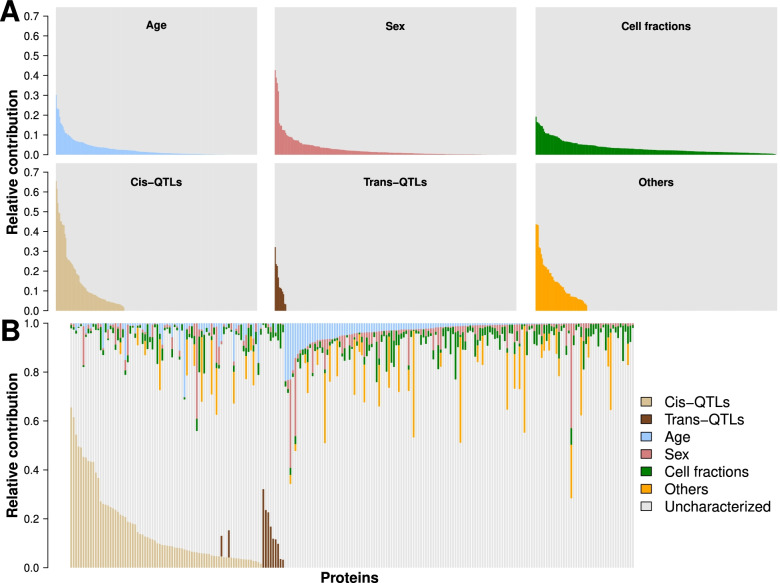
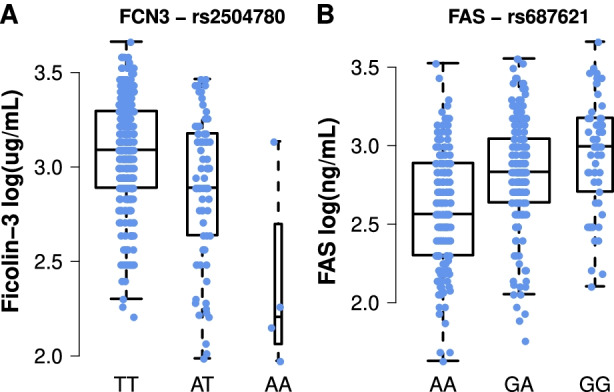
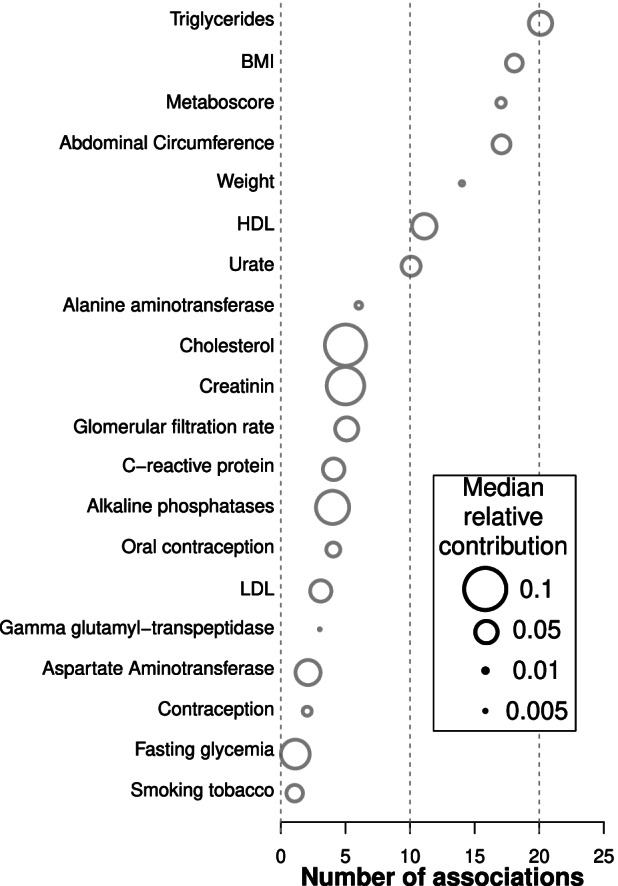
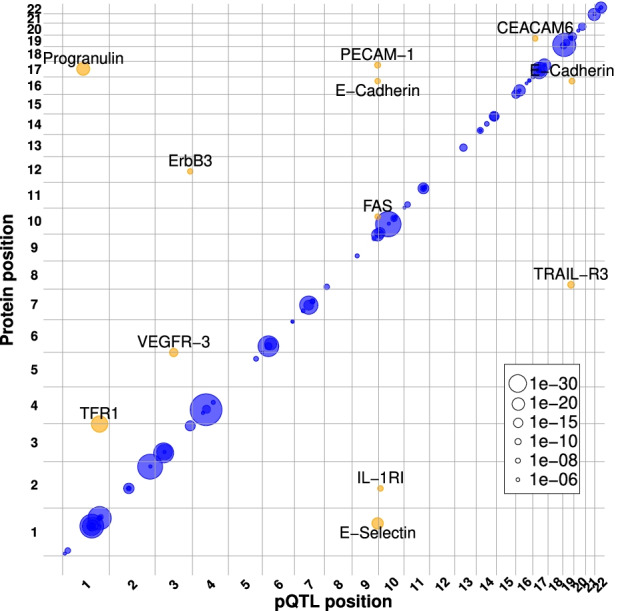
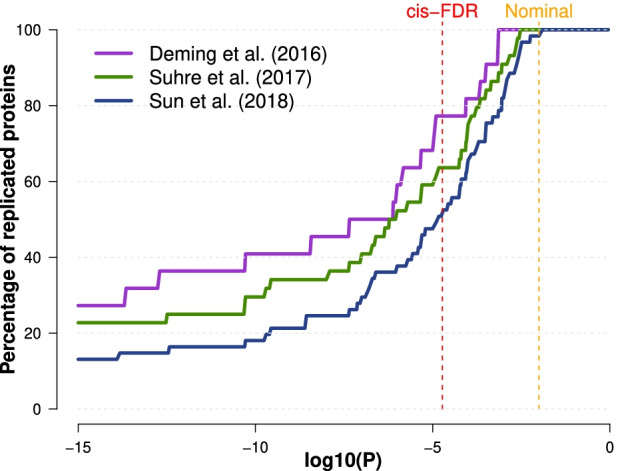
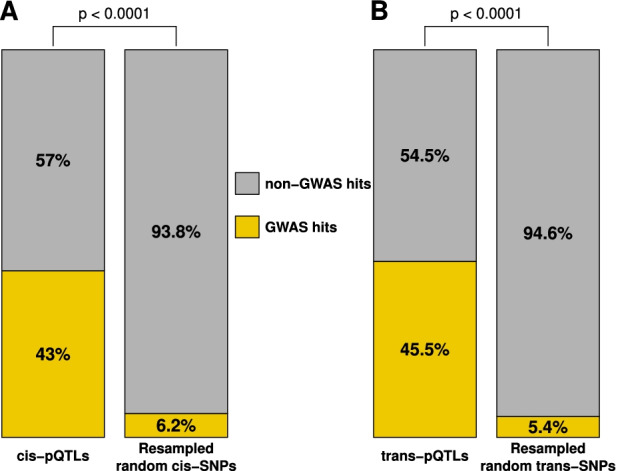
Collectively, we found 152 significant associations involving 49 proteins and 20 non-genetic variables. Consistent with previous studies, age and sex showed a global, pervasive impact on plasma protein heterogeneity, while body mass index and other health status variables were among the non-genetic factors with the highest number of associations. After controlling for these covariates, we identified 100 and 12 pQTLs acting in cis and trans, respectively, collectively associated with 87 plasma proteins and including 19 novel genetic associations. Genetic factors explained the largest fraction of the variability of plasma protein levels, as compared to non-genetic factors. In addition, blood-cell fractions, including leukocytes, lymphocytes, monocytes, neutrophils, eosinophils, basophils, and platelets, had a larger contribution to inter-individual variability than age and sex and appeared as confounders of specific genetic associations. Finally, we identified new genetic associations with plasma protein levels of five monogenic Mendelian disease genes including two primary immunodeficiency genes (Ficolin-3 and FAS).
Our study identified novel genetic and non-genetic factors associated to plasma protein levels which may inform health status and disease management.
血浆蛋白在抵抗病原体的免疫防御中发挥着重要作用,包括细胞因子信号传导、补体系统和急性期反应。最近的大规模研究报告称,遗传因素(即蛋白质定量性状位点,pQTLs)和非遗传因素,如年龄和性别,是免疫反应个体间差异的主要决定因素。然而,血细胞组成对血浆蛋白异质性的贡献尚未得到充分表征,并且可能在关联研究中作为中介因素。
在此,我们评估了来自“内环境”队列的400名西欧血统的无亲缘关系健康个体的血浆蛋白水平,这些个体按性别和两个十年年龄段(20 - 29岁和60 - 69岁)进行分层。我们在一家临床认证实验室通过Luminex技术对229种蛋白质进行了定量,并将其水平变化与520万个单核苷酸多态性一起进行分析。关于非遗传变量,我们纳入了254种生活方式和生化因素,以及通过血常规和标准化流式细胞术测量的七种循环免疫细胞群体的计数。
总体而言,我们发现了152个显著关联,涉及49种蛋白质和20个非遗传变量。与先前研究一致,年龄和性别对血浆蛋白异质性显示出全面、普遍的影响,而体重指数和其他健康状况变量是关联数量最多的非遗传因素之一。在控制这些协变量后,我们分别鉴定出100个顺式作用和12个反式作用的pQTLs,它们共同与87种血浆蛋白相关,包括19个新的遗传关联。与非遗传因素相比,遗传因素解释了血浆蛋白水平变异的最大部分。此外,血细胞成分,包括白细胞、淋巴细胞、单核细胞、中性粒细胞、嗜酸性粒细胞、嗜碱性粒细胞和血小板,对个体间变异的贡献比年龄和性别更大,并且表现为特定遗传关联的混杂因素。最后,我们确定了与五个单基因孟德尔疾病基因的血浆蛋白水平的新遗传关联,其中包括两个原发性免疫缺陷基因(纤维胶凝蛋白-3和FAS)。
我们的研究确定了与血浆蛋白水平相关的新的遗传和非遗传因素,这可能为健康状况和疾病管理提供信息。