Department of Pediatric Oncology, Dana-Farber Cancer Institute, Boston, Massachusetts, USA.
Dana-Farber/Boston Children's Cancer and Blood Disorders Center, Boston Children's Hospital, Boston, Massachusetts, USA.
J Immunother Cancer. 2022 Mar;10(3). doi: 10.1136/jitc-2021-003402.
Oncogenes act in a cell-intrinsic way to promote tumorigenesis. Whether oncogenes also have a cell-extrinsic effect on suppressing the immune response to cancer is less well understood.
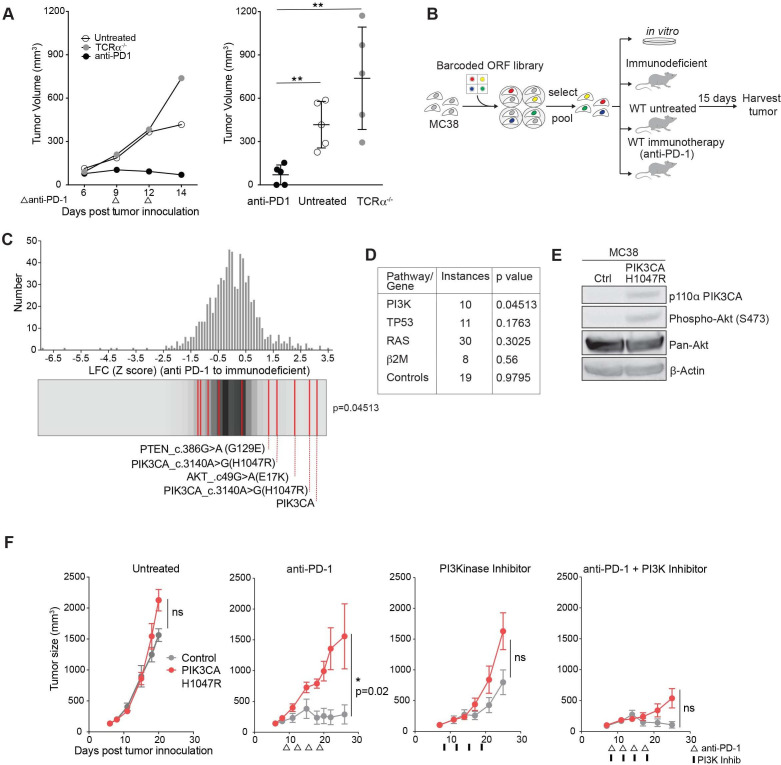
We use an expression screen of known cancer-associated somatic mutations in mouse syngeneic tumor models treated with checkpoint blockade to identify oncogenes that promote immune evasion. We then validated candidates from this screen and analyzed the tumor immune microenvironment of tumors expressing mutant protein to identify mechanisms of immune evasion.
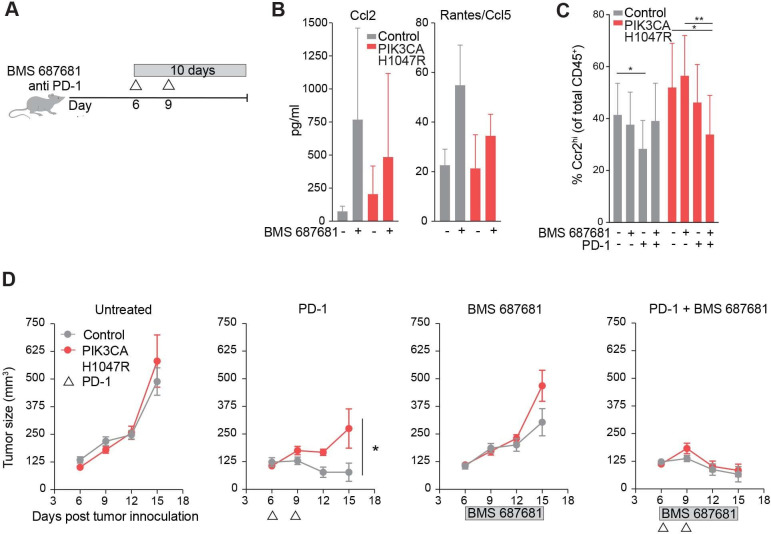
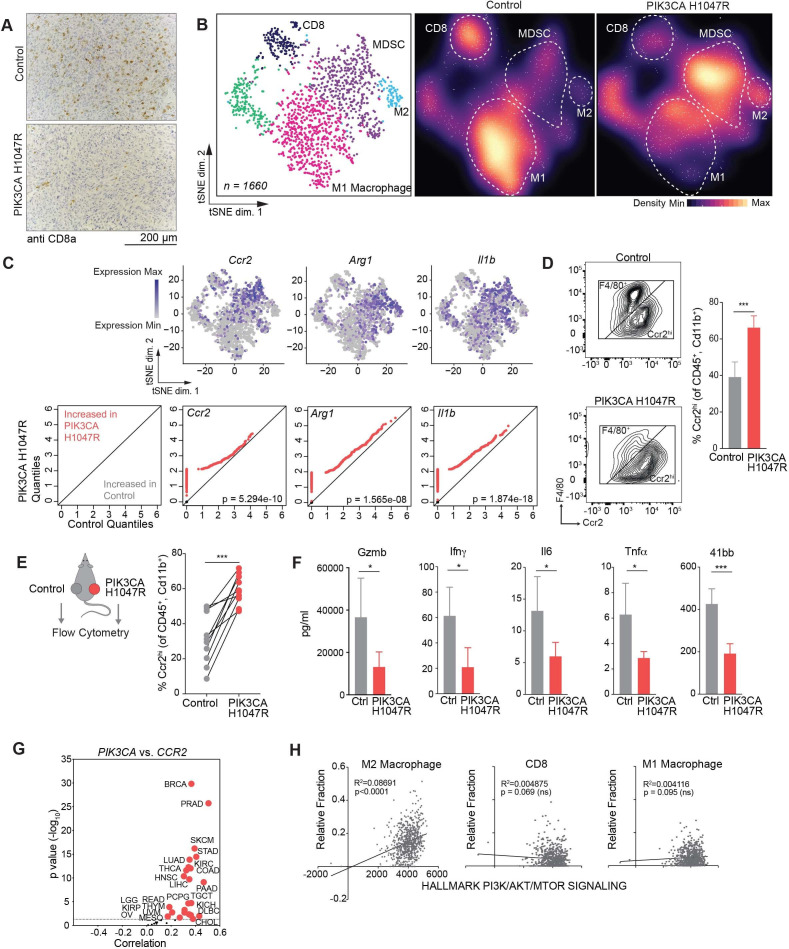
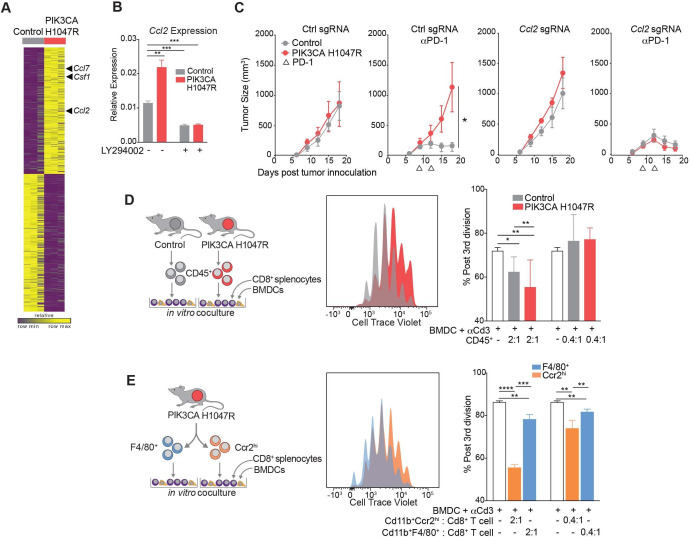
We found that expression of a catalytically active mutation in phospho-inositol 3 kinase (PI3K), c.3140A>G (H1047R) confers a selective growth advantage to tumors treated with immunotherapy that is reversed by pharmacological PI3K inhibition. PIK3CA H1047R-expression in tumors decreased the number of CD8 T cells but increased the number of inhibitory myeloid cells following immunotherapy. Inhibition of myeloid infiltration by pharmacological or genetic modulation of Ccl2 in PIK3CA H1047R tumors restored sensitivity to programmed cell death protein 1 (PD-1) checkpoint blockade.
PI3K activation enables tumor immune evasion by promoting an inhibitory myeloid microenvironment. Activating mutations in PI3K may be useful as a biomarker of poor response to immunotherapy. Our data suggest that some oncogenes promote tumorigenesis by enabling tumor cells to avoid clearance by the immune system. Identification of those mechanisms can advance rational combination strategies to increase the efficacy of immunotherapy.
癌基因通过内在细胞方式发挥作用,促进肿瘤发生。癌基因是否对抑制癌症的免疫反应也具有外在细胞效应,人们对此了解较少。
我们使用一种已知的致癌体细胞突变的表达筛选方法,在接受检查点阻断治疗的小鼠同源肿瘤模型中,鉴定出促进免疫逃逸的癌基因。然后,我们对该筛选中的候选基因进行了验证,并分析了表达突变蛋白的肿瘤的肿瘤免疫微环境,以确定免疫逃逸的机制。
我们发现,磷酸肌醇 3 激酶(PI3K)c.3140A>G(H1047R)的催化活性突变的表达赋予了对免疫治疗有选择性生长优势的肿瘤,而这种优势可以通过药理学 PI3K 抑制来逆转。在接受免疫治疗后,肿瘤中表达 PIK3CA H1047R 会减少 CD8 T 细胞的数量,但会增加抑制性髓样细胞的数量。通过药理学或基因修饰 Ccl2 抑制 PIK3CA H1047R 肿瘤中的髓样细胞浸润,可以恢复程序性细胞死亡蛋白 1(PD-1)检查点阻断的敏感性。
PI3K 激活通过促进抑制性髓样微环境使肿瘤逃避免疫。PI3K 的激活突变可能是免疫治疗反应不良的有用生物标志物。我们的数据表明,一些癌基因通过使肿瘤细胞逃避免疫系统清除来促进肿瘤发生。识别这些机制可以推进合理的联合治疗策略,以提高免疫治疗的疗效。