State Key Laboratory of Food Nutrition and Safety, Key Laboratory of Industrial Fermentation Microbiology, College of Biotechnology, Tianjin University of Science and Technology, Tianjin, 300457, China.
State Key Laboratory of Core Technology in Innovative Chinese Medicine, Tasly Pharmaceutical Group Co., Ltd., Tianjin, 300410, China.
Sci Rep. 2022 Mar 9;12(1):3833. doi: 10.1038/s41598-022-07652-z.
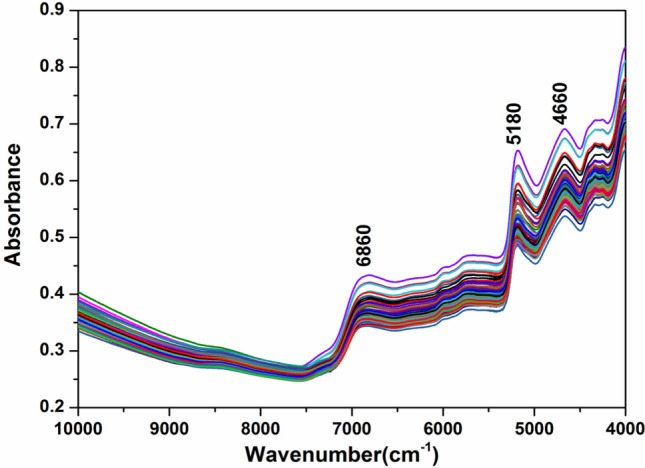
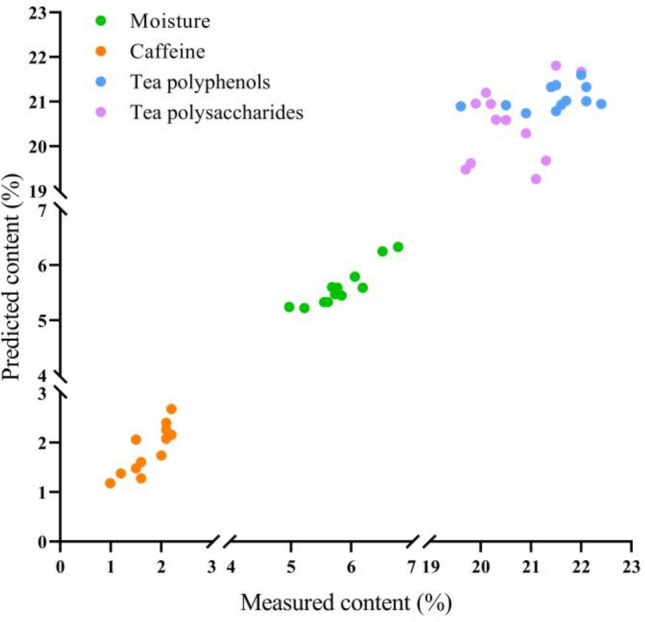
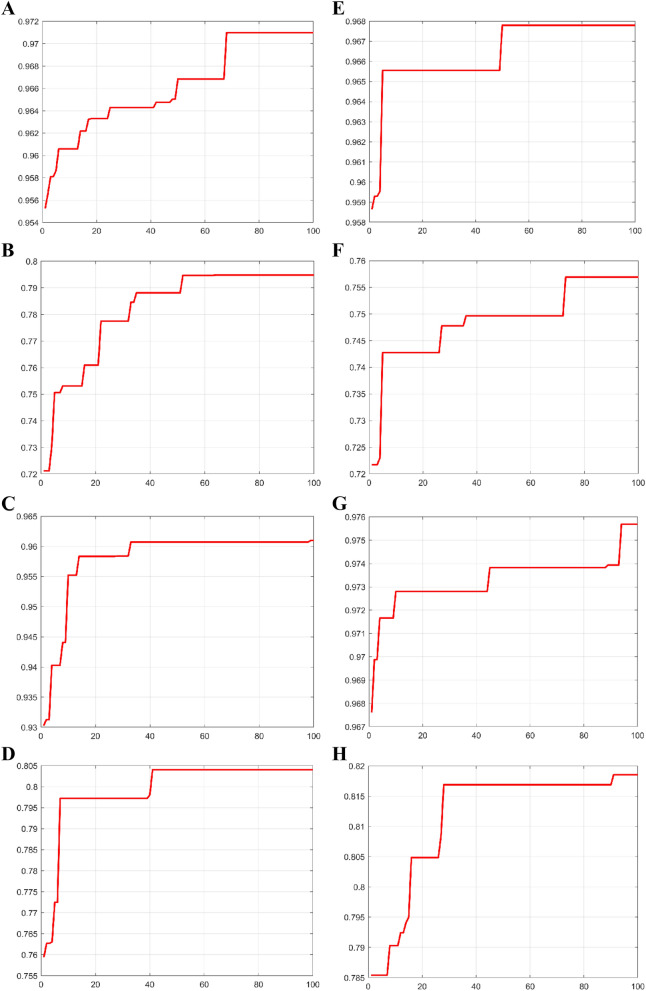
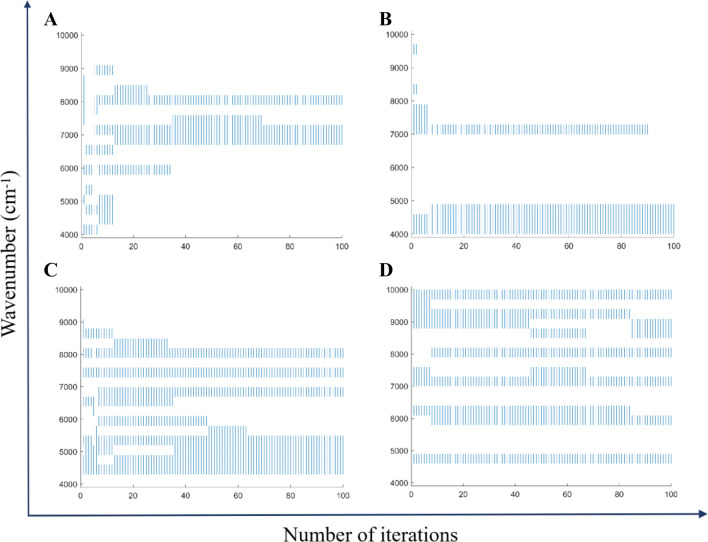
The traditional method for analyzing the content of instant tea has disadvantages such as complicated operation and being time-consuming. In this study, a method for the rapid determination of instant tea components by near-infrared (NIR) spectroscopy was established and optimized. The NIR spectra of 118 instant tea samples were used to evaluate the modeling and prediction performance of a combination of binary particle swarm optimization (BPSO) with support vector regression (SVR), BPSO with partial least squares (PLS), and SVR and PLS without BPSO. Under optimal conditions, Rp for moisture, caffeine, tea polyphenols, and tea polysaccharides were 0.9678, 0.9757, 0.7569, and 0.8185, respectively. The values of SEP were less than 0.9302, and absolute values of Bias were less than 0.3667. These findings indicate that machine learning can be used to optimize the detection model of instant tea components based on NIR methods to improve prediction accuracy.
传统的速溶茶成分分析方法存在操作复杂、耗时等缺点。本研究建立并优化了一种基于近红外(NIR)光谱快速测定速溶茶成分的方法。使用 118 个速溶茶样品的 NIR 光谱评估了二进制粒子群优化(BPSO)与支持向量回归(SVR)、BPSO 与偏最小二乘(PLS)以及无 BPSO 的 SVR 和 PLS 的组合的建模和预测性能。在最佳条件下,水分、咖啡因、茶多酚和茶多糖的 Rp 值分别为 0.9678、0.9757、0.7569 和 0.8185。SEP 的值小于 0.9302,偏差的绝对值小于 0.3667。这些结果表明,机器学习可用于优化基于 NIR 方法的速溶茶成分检测模型,以提高预测精度。