Brazilian Center for Research in Energy and Materials (CNPEM), Brazilian Biosciences National Laboratory (LNBio), 10000 Giuseppe Maximo Scolfaro St., Campinas, São Paulo, 13083-100, Brazil.
Department of Structural and Functional Biology, State University of Campinas, Campinas, São Paulo, Brazil.
Sci Rep. 2022 Mar 9;12(1):4168. doi: 10.1038/s41598-022-08076-5.
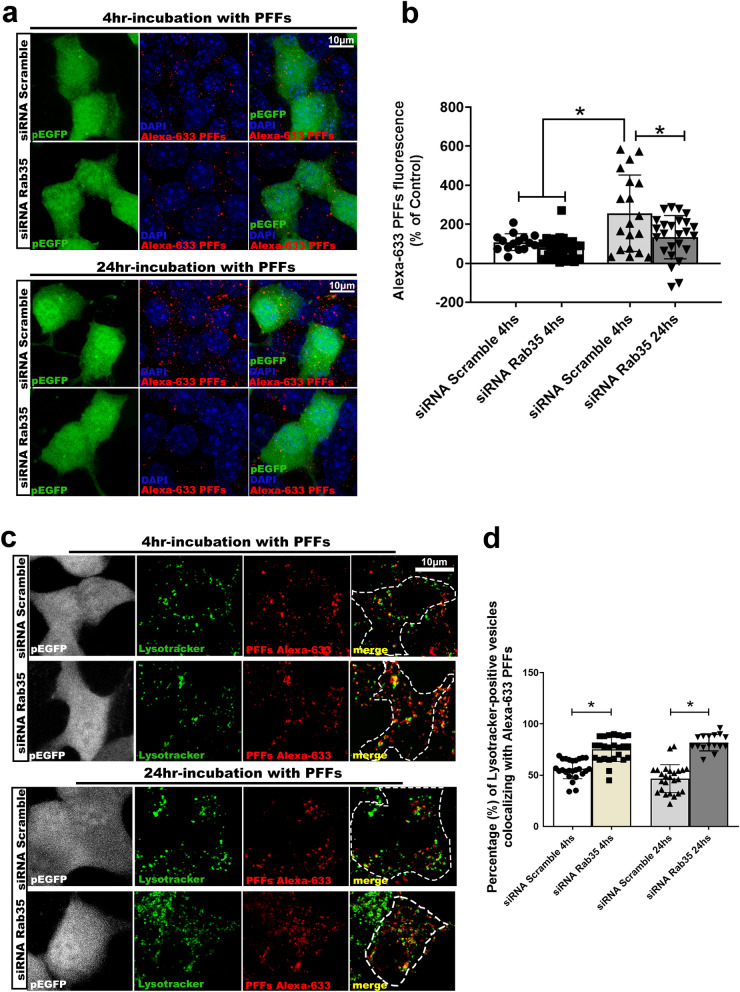
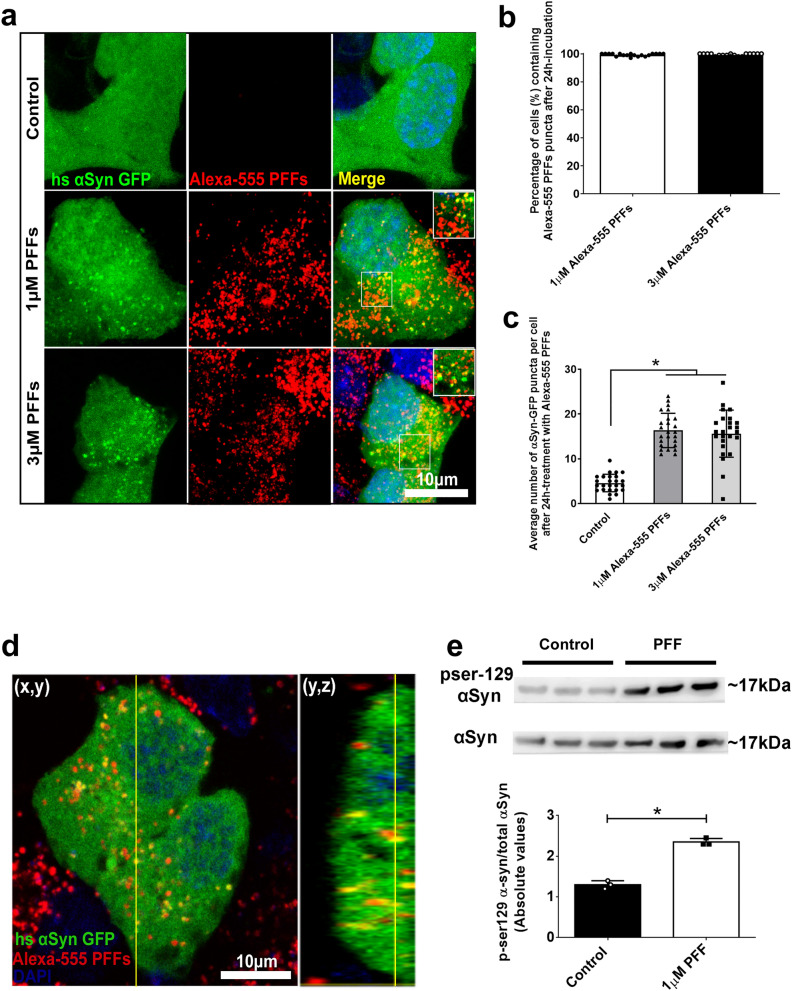
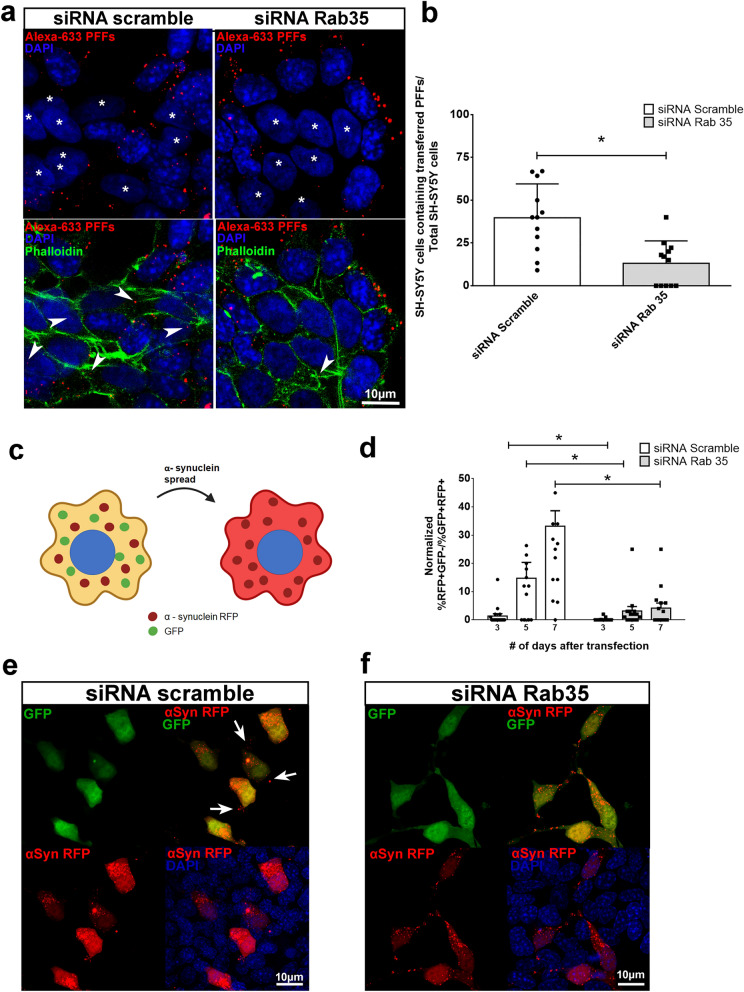
Parkinson's disease (PD) is a neurodegenerative condition featured by motor dysfunction, death of midbrain dopaminergic neurons and accumulation of α-synuclein (αSyn) aggregates. Growing evidence suggests that PD diagnosis happens late in the disease progression and that the pathology may originate much earlier in the enteric nervous system (ENS) before advancing to the brain, via autonomic fibers. It was recently described that a specific cell type from the gut epithelium named enteroendocrine cells (EECs) possess many neuron-like properties including αSyn expression. By facing the gut lumen and being directly connected with αSyn-containing enteric neurons in a synaptic manner, EECs form a neural circuit between the gastrointestinal tract and the ENS, thereby being a possible key player in the outcome of PD in the gut. We have characterized the progression and the cellular mechanisms involved in αSyn pre-formed fibrils (PFFs) transfer from EECs to neuronal cells. We show that brain organoids efficiently internalize αSyn PFF seeds which triggers the formation of larger intracellular inclusions. In addition, in the enteroendocrine cell line STC-1 and in the neuronal cell line SH-SY5Y, αSyn PFFs induced intracellular calcium (Ca) oscillations on an extracellular Ca source-dependent manner and triggered αSyn fibrils internalization by endocytosis. We characterized the spread of αSyn PFFs from enteroendocrine to neuronal cells and showed that this process is dependent on physical cell-to-cell contact and on Rab35 GTPase. Lastly, inhibition of Rab35 increases the clearance of αSyn fibrils by redirecting them to the lysosomal compartment. Therefore, our results reveal mechanisms that contribute to the understanding of how seeded αSyn fibrils promote the progression of αSyn pathology from EECs to neuronal cells shifting the focus of PD etiology to the ENS.
帕金森病(PD)是一种神经退行性疾病,其特征为运动功能障碍、中脑多巴胺能神经元死亡和α-突触核蛋白(αSyn)聚集物的积累。越来越多的证据表明,PD 的诊断发生在疾病进展的晚期,并且病理学可能在自主纤维将其传播到大脑之前,在肠神经系统(ENS)中更早地起源。最近有人描述,一种来自肠道上皮的特定细胞类型,即肠内分泌细胞(EEC),具有许多类似神经元的特性,包括αSyn 的表达。通过面对肠道腔并以突触方式与含有αSyn 的肠内神经元直接连接,EEC 形成了胃肠道和 ENS 之间的神经回路,从而成为 PD 在肠道中结果的一个可能关键因素。我们已经描述了 αSyn 预形成纤维(PFF)从 EEC 转移到神经元细胞的进展和细胞机制。我们表明,脑类器官有效地内化了αSyn PFF 种子,从而引发了更大的细胞内包含物的形成。此外,在肠内分泌细胞系 STC-1 和神经元细胞系 SH-SY5Y 中,αSyn PFF 以细胞外钙源依赖的方式诱导细胞内钙离子(Ca)振荡,并通过胞吞作用触发αSyn 纤维内化。我们描述了 αSyn PFF 从肠内分泌细胞到神经元细胞的传播,并表明该过程依赖于物理细胞间接触和 Rab35 GTPase。最后,Rab35 的抑制通过将其重定向到溶酶体区室来增加αSyn 纤维的清除。因此,我们的结果揭示了有助于理解种子化的αSyn 纤维如何促进αSyn 病理学从 EEC 向神经元细胞的进展的机制,从而将 PD 病因学的重点转移到 ENS。