Lucas Rudolf, Hadizamani Yalda, Enkhbaatar Perenlei, Csanyi Gabor, Caldwell Robert W, Hundsberger Harald, Sridhar Supriya, Lever Alice Ann, Hudel Martina, Ash Dipankar, Ushio-Fukai Masuko, Fukai Tohru, Chakraborty Trinad, Verin Alexander, Eaton Douglas C, Romero Maritza, Hamacher Jürg
Vascular Biology Center, Augusta University, Augusta, GA, United States.
Department of Pharmacology and Toxicology, Augusta University, Augusta, GA, United States.
Front Physiol. 2022 Feb 21;12:793251. doi: 10.3389/fphys.2021.793251. eCollection 2021.
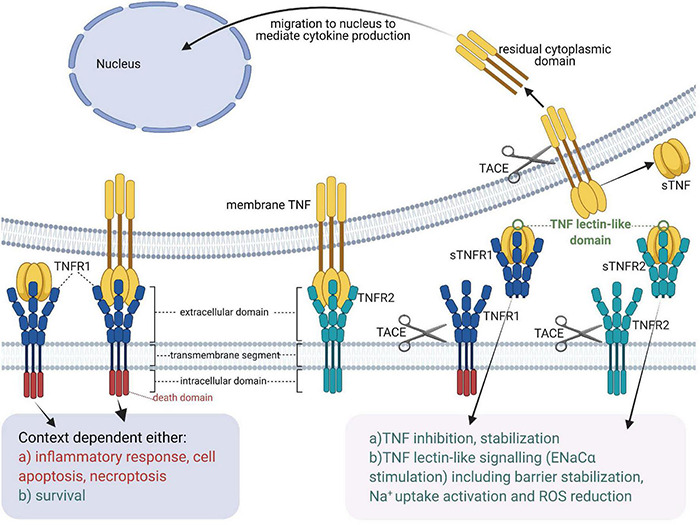
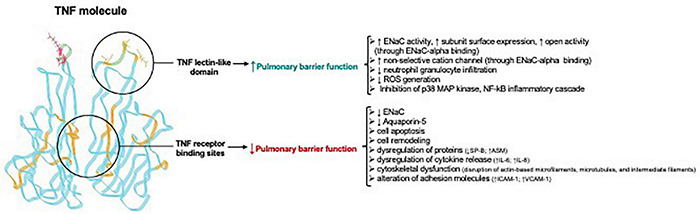
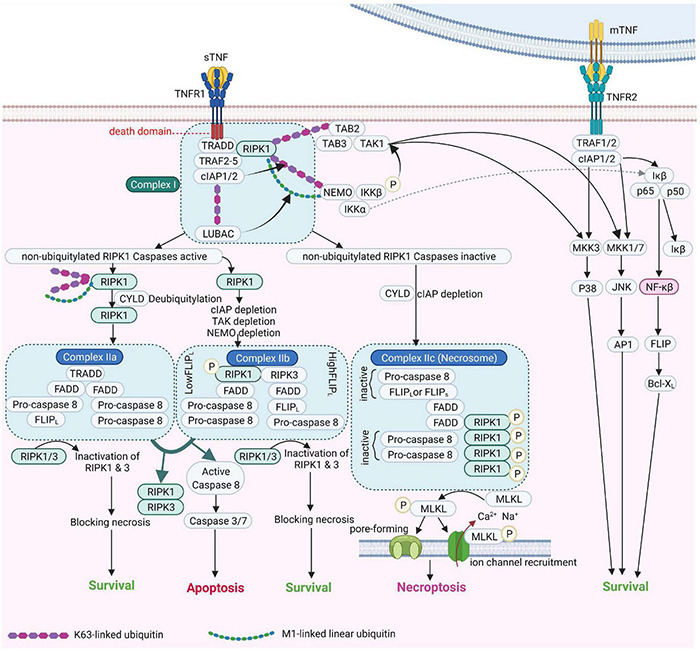
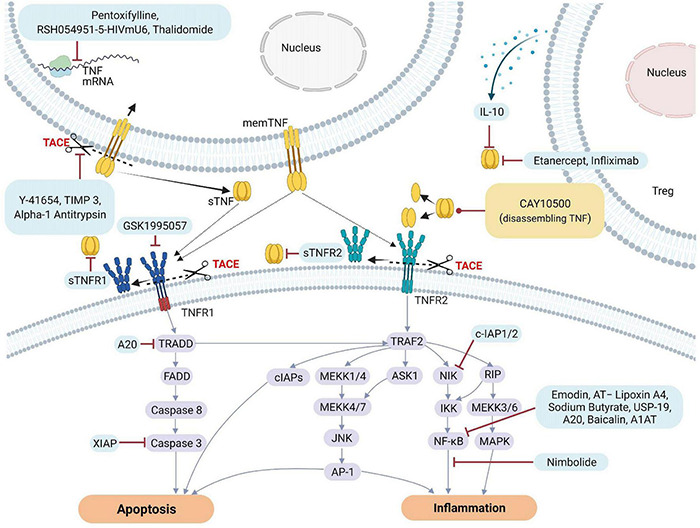
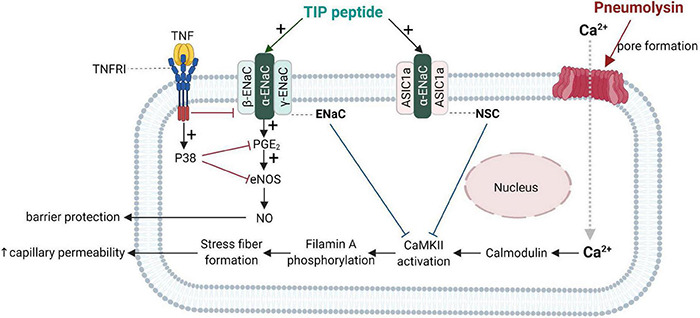
Alveolar-capillary leak is a hallmark of the acute respiratory distress syndrome (ARDS), a potentially lethal complication of severe sepsis, trauma and pneumonia, including COVID-19. Apart from barrier dysfunction, ARDS is characterized by hyper-inflammation and impaired alveolar fluid clearance (AFC), which foster the development of pulmonary permeability edema and hamper gas exchange. Tumor Necrosis Factor (TNF) is an evolutionarily conserved pleiotropic cytokine, involved in host immune defense against pathogens and cancer. TNF exists in both membrane-bound and soluble form and its mainly -but not exclusively- pro-inflammatory and cytolytic actions are mediated by partially overlapping TNFR1 and TNFR2 binding sites situated at the interface between neighboring subunits in the homo-trimer. Whereas TNFR1 signaling can mediate hyper-inflammation and impaired barrier function and AFC in the lungs, ligand stimulation of TNFR2 can protect from ventilation-induced lung injury. Spatially distinct from the TNFR binding sites, TNF harbors within its structure a lectin-like domain that rather protects lung function in ARDS. The lectin-like domain of TNF -mimicked by the 17 residue TIP peptide- represents a physiological mediator of alveolar-capillary barrier protection. and increases AFC in both hydrostatic and permeability pulmonary edema animal models. The TIP peptide directly activates the epithelial sodium channel (ENaC) -a key mediator of fluid and blood pressure control- upon binding to its α subunit, which is also a part of the non-selective cation channel (NSC). Activity of the lectin-like domain of TNF is preserved in complexes between TNF and its soluble TNFRs and can be physiologically relevant in pneumonia. Antibody- and soluble TNFR-based therapeutic strategies show considerable success in diseases such as rheumatoid arthritis, psoriasis and inflammatory bowel disease, but their chronic use can increase susceptibility to infection. Since the lectin-like domain of TNF does not interfere with TNF's anti-bacterial actions, while exerting protective actions in the alveolar-capillary compartments, it is currently evaluated in clinical trials in ARDS and COVID-19. A more comprehensive knowledge of the precise role of the TNFR binding sites versus the lectin-like domain of TNF in lung injury, tissue hypoxia, repair and remodeling may foster the development of novel therapeutics for ARDS.
肺泡-毛细血管渗漏是急性呼吸窘迫综合征(ARDS)的一个标志,ARDS是严重脓毒症、创伤和肺炎(包括新型冠状病毒肺炎)的一种潜在致命并发症。除了屏障功能障碍外,ARDS的特征还包括过度炎症反应和肺泡液体清除(AFC)受损,这促进了肺通透性水肿的发展并妨碍气体交换。肿瘤坏死因子(TNF)是一种在进化上保守的多效性细胞因子,参与宿主针对病原体和癌症的免疫防御。TNF以膜结合形式和可溶性形式存在,其主要(但非唯一)的促炎和细胞溶解作用由位于同三聚体中相邻亚基界面处部分重叠的TNFR1和TNFR2结合位点介导。虽然TNFR1信号传导可介导肺部的过度炎症反应、屏障功能受损和AFC受损,但TNFR2的配体刺激可预防通气诱导的肺损伤。在空间上与TNFR结合位点不同,TNF在其结构内含有一个凝集素样结构域,该结构域在ARDS中对肺功能具有保护作用。TNF的凝集素样结构域(由17个残基的TIP肽模拟)是肺泡-毛细血管屏障保护的生理介质,并在静水压性和通透性肺水肿动物模型中均增加AFC。TIP肽在与上皮钠通道(ENaC,液体和血压控制的关键介质)的α亚基结合后直接激活该通道,α亚基也是非选择性阳离子通道(NSC)的一部分。TNF凝集素样结构域的活性在TNF与其可溶性TNFR的复合物中得以保留,并且在肺炎中可能具有生理相关性。基于抗体和可溶性TNFR的治疗策略在类风湿性关节炎、银屑病和炎症性肠病等疾病中显示出相当大的成功,但长期使用它们会增加感染易感性。由于TNF的凝集素样结构域在肺泡-毛细血管隔室中发挥保护作用的同时不干扰TNF的抗菌作用,目前正在ARDS和新型冠状病毒肺炎的临床试验中对其进行评估。对TNFR结合位点与TNF凝集素样结构域在肺损伤、组织缺氧、修复和重塑中的确切作用有更全面的了解,可能会促进ARDS新型疗法的开发。