Mima Akira
Department of Nephrology, Osaka Medical and Pharmaceutical University, Osaka, Japan.
Heliyon. 2022 Feb 3;8(2):e08878. doi: 10.1016/j.heliyon.2022.e08878. eCollection 2022 Feb.
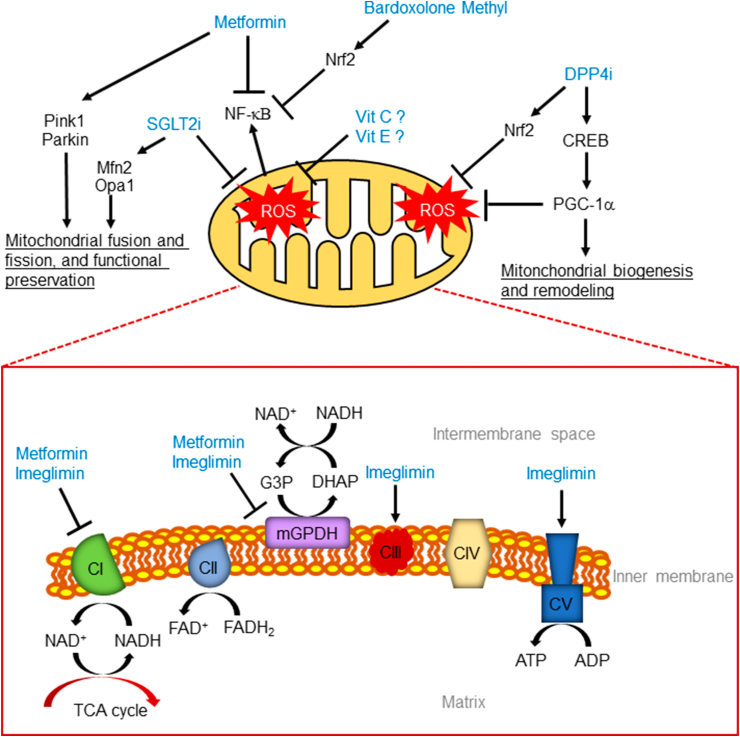
Diabetic kidney disease (DKD) is one of the most frequent causes of chronic kidney disease (CKD) in the United States. Chronic hyperglycemic conditions are thought to be the primary cause of DKD. However, it is clinically difficult to achieve glycemic control in individuals with diabetes. Recent advances in mitochondrial biology have provided a new understanding of mitochondrial dysfunction in DKD. Studies have revealed impaired mitochondrial function in a variety of diabetic complications, including DKD; moreover, abnormal mitochondrial fission may be involved in the progression of DKD. It has been reported that metformin or sodium-glucose cotransporter 2 (SGLT2) inhibitors may provide renal protection by improving mitochondrial dynamics and reducing oxidative stress. Thus, drugs that target the restoration of mitochondrial function may become novel therapeutic agents for DKD. Imeglimin is the first in a new class of oral antidiabetic drugs that can reduce reactive oxygen species production and increase mitochondrial DNA synthesis. This review outlines the potential therapeutic interventions that affect mitochondrial function and prevent DKD.
糖尿病肾病(DKD)是美国慢性肾脏病(CKD)最常见的病因之一。慢性高血糖状况被认为是DKD的主要原因。然而,临床上糖尿病患者很难实现血糖控制。线粒体生物学的最新进展为DKD中线粒体功能障碍提供了新的认识。研究表明,包括DKD在内的多种糖尿病并发症中存在线粒体功能受损;此外,异常的线粒体分裂可能参与DKD的进展。据报道,二甲双胍或钠-葡萄糖协同转运蛋白2(SGLT2)抑制剂可通过改善线粒体动力学和减轻氧化应激提供肾脏保护。因此,靶向恢复线粒体功能的药物可能成为DKD的新型治疗药物。依美格列明是一类新型口服抗糖尿病药物中的首个药物,它可以减少活性氧的产生并增加线粒体DNA合成。本综述概述了影响线粒体功能并预防DKD的潜在治疗干预措施。