Appelhoff Stefan, Hertwig Ralph, Spitzer Bernhard
Center for Adaptive Rationality, Max Planck Institute for Human Development, Lentzeallee 94, 14195 Berlin, Germany.
Research Group Adaptive Memory and Decision Making, Max Planck Institute for Human Development, Lentzeallee 94, 14195 Berlin, Germany.
Cereb Cortex. 2022 Dec 15;33(1):207-221. doi: 10.1093/cercor/bhac062.
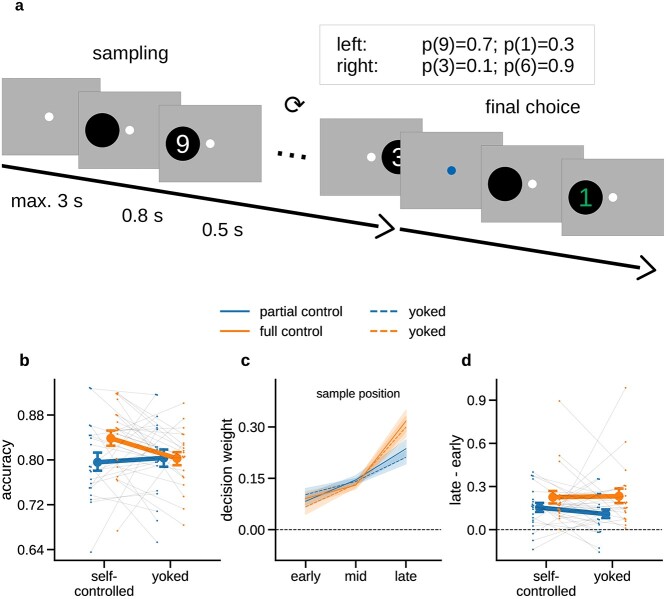
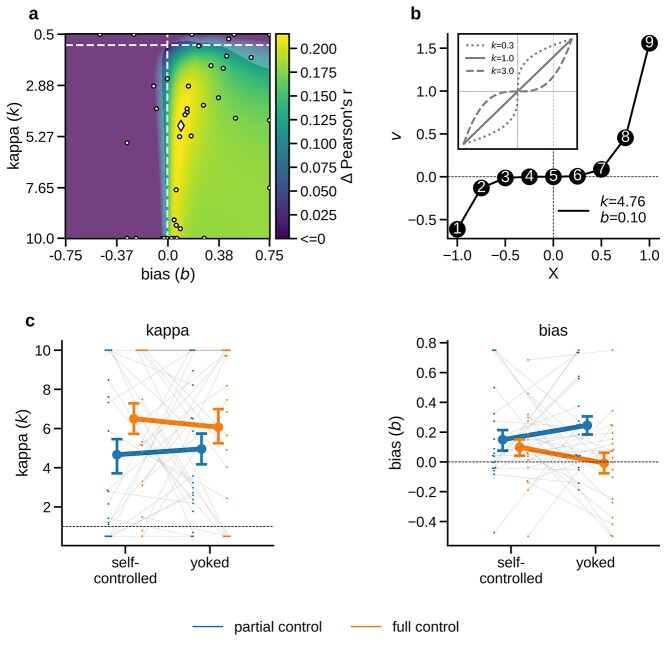
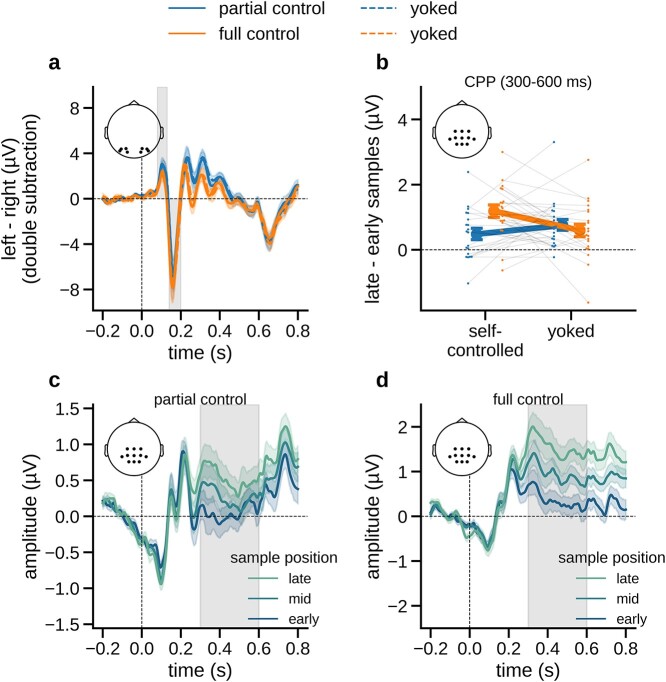
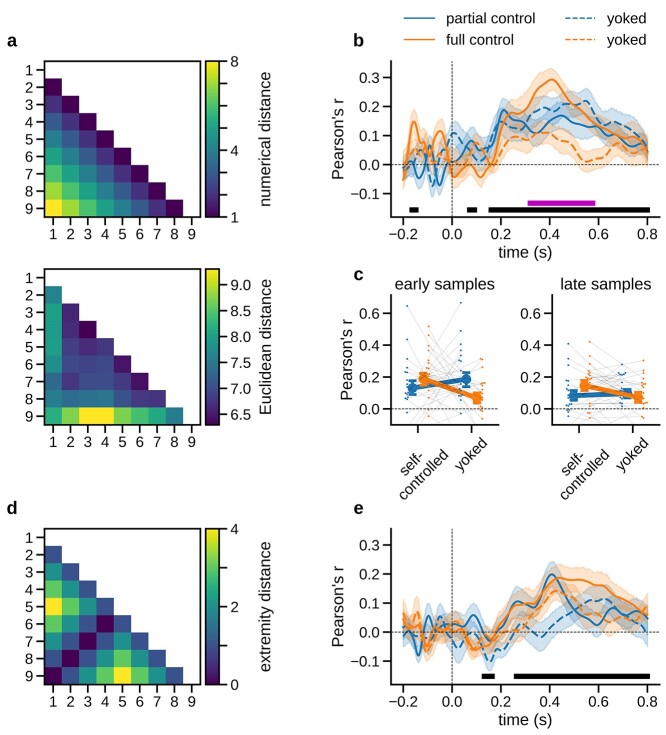
When acquiring information about choice alternatives, decision makers may have varying levels of control over which and how much information they sample before making a choice. How does control over information acquisition affect the quality of sample-based decisions? Here, combining variants of a numerical sampling task with neural recordings, we show that control over when to stop sampling can enhance (i) behavioral choice accuracy, (ii) the build-up of parietal decision signals, and (iii) the encoding of numerical sample information in multivariate electroencephalogram patterns. None of these effects were observed when participants could only control which alternatives to sample, but not when to stop sampling. Furthermore, levels of control had no effect on early sensory signals or on the extent to which sample information leaked from memory. The results indicate that freedom to stop sampling can amplify decisional evidence processing from the outset of information acquisition and lead to more accurate choices.
在获取关于选择选项的信息时,决策者在做出选择之前对所采样的信息种类和数量可能有不同程度的控制。对信息获取的控制如何影响基于样本的决策质量?在这里,我们将数字采样任务的变体与神经记录相结合,表明对何时停止采样的控制可以提高:(i)行为选择准确性;(ii)顶叶决策信号的积累;以及(iii)多元脑电图模式中数字样本信息的编码。当参与者只能控制对哪些选项进行采样,而不能控制何时停止采样时,这些效应均未观察到。此外,控制水平对早期感觉信号或样本信息从记忆中泄露的程度没有影响。结果表明,停止采样的自由可以从信息获取开始就增强决策证据的处理,并导致更准确的选择。