
大孔网状离子交换树脂对废染色和皂洗液中直接染料的回收。
Macro-Reticular Ion Exchange Resins for Recovery of Direct Dyes from Spent Dyeing and Soaping Liquors.
机构信息
Chemical Engineering Department, Faculty of Engineering, Alexandria University, Alexandria 21526, Egypt.
Department of Chemistry, College of Science, Qassim University, Buraydah 51452, Saudi Arabia.
出版信息
Molecules. 2022 Feb 28;27(5):1593. doi: 10.3390/molecules27051593.
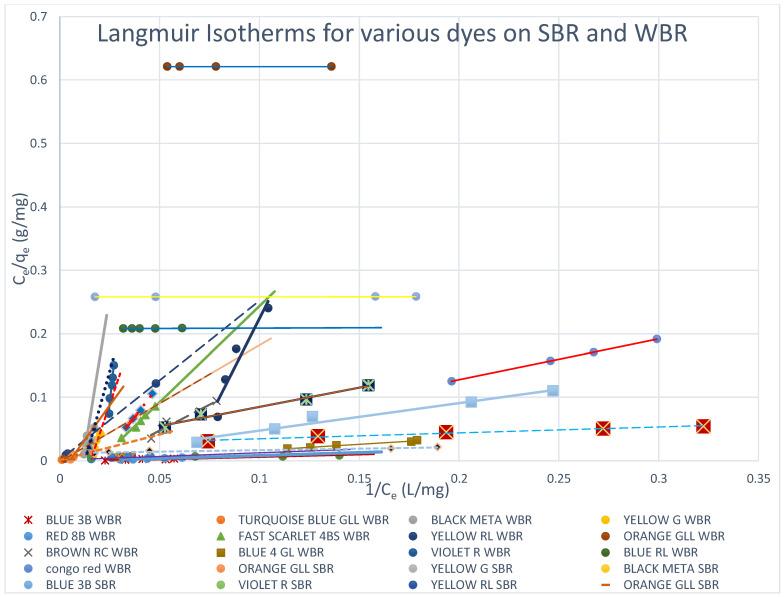
Dyes are a major class of organic pollutants that are well-known for their harmful impact on aquatic life and humans. Several new strategies for removing colours from industrial and residential effluents have recently emerged, with adsorption being the best option. The current study looked at the recovery of direct dyes from aqueous streams for reuse using macro-reticular ion exchange resins (IERs). The investigation includes dyeing single jersey cotton grey textiles with direct dyes from the Isma dye Company in Kafr El Dawar, Egypt. After centrifuging and separating the supernatant liquid, solutions from thirteen different dyes, produced at an average concentration between the wasted and soaping liquor concentrations, were calculated spectrophotometrically from the first dyeing trials. Kinetic data were well fitted with pseudo-second-order rate kinetics. The amounts of dye retained by the anion exchangers increased with a rise in temperature in the case of Strong Base Resin (SBR) and vice versa for Weak Base Resin (WBR). Batch adsorption experiments with SBR and WBR were conducted for each dye, and both Freundlich and Langmuir isotherms were constructed. It was found that adsorption obeyed both isotherms, that monolayer adsorption took place, and that the dye molecular weight, structure, and solubility, as well as the type of anionic resin used, had varying effects on the extent of absorption. The monolayer sorption capacities determined from the Langmuir isotherm model for the strongly and weakly basic anion exchangers were found to be 537.6 and 692 mg/g for Direct Yellow RL, respectively. As a result, Yellow RL exhibited the greatest adsorption on both SBR and WBR. Orange GRLL, Blue 3B, and Congo Red, on the other hand, were the poorest colours absorbed by the IERs, whereas Blue RL demonstrated good adsorption by SBR and accelerated adsorption by WBR. Most of the dyes may be recovered and reused in this manner.
染料是一类重要的有机污染物,它们对水生生物和人类的危害众所周知。最近出现了几种从工业和住宅废水中去除颜色的新策略,其中吸附是最佳选择。本研究探讨了使用大孔网状离子交换树脂(IER)从水溶液中回收直接染料以重复使用的方法。该研究包括用埃及卡夫尔·达瓦尔的伊斯玛染料公司生产的直接染料对单针织物棉灰色纺织品进行染色。离心分离后,通过分光光度法从第一次染色试验中计算出来自 13 种不同染料的上清液溶液,这些染料的平均浓度介于废弃和皂化液浓度之间。动力学数据与伪二级速率动力学很好地拟合。对于强碱树脂(SBR),随着温度的升高,阴离子交换剂保留的染料量增加,而对于弱碱树脂(WBR)则相反。对每种染料进行了 SBR 和 WBR 的批量吸附实验,并构建了 Freundlich 和 Langmuir 等温线。结果表明,吸附同时符合两种等温线,发生单层吸附,并且染料的分子量、结构和溶解度以及所使用的阴离子树脂类型对吸附程度有不同的影响。从 Langmuir 等温线模型确定的强碱性和弱碱性阴离子交换剂的单层吸附容量分别为 537.6 和 692mg/g,用于直接黄 RL。因此,黄 RL 在 SBR 和 WBR 上的吸附效果最好。另一方面,橙 GRLL、蓝 3B 和刚果红是 IER 吸收最差的颜色,而蓝 RL 则表现出对 SBR 的良好吸附和对 WBR 的加速吸附。大多数染料可以通过这种方式回收和再利用。



 Zotero 插件