
用于保留聚己内酯支架小梁状蜂窝状结构的改良组织病理学方案
Modified Histopathological Protocol for Poly-ɛ-Caprolactone Scaffolds Preserving Their Trabecular, Honeycomb-like Structure.
作者信息
Dębski Tomasz, Wysocki Juliusz, Siennicka Katarzyna, Jaroszewicz Jakub, Szlązak Karol, Święszkowski Wojciech, Pojda Zygmunt
机构信息
Department of Regenerative Medicine, Maria Sklodowska-Curie National Research Institute of Oncology, Wilhelma Konrada Roentgena 5, 02-781 Warsaw, Poland.
Materials Design Division, Faculty of Materials Science and Engineering, Warsaw University of Technology, Woloska 141, 02-507 Warsaw, Poland.
出版信息
Materials (Basel). 2022 Feb 25;15(5):1732. doi: 10.3390/ma15051732.
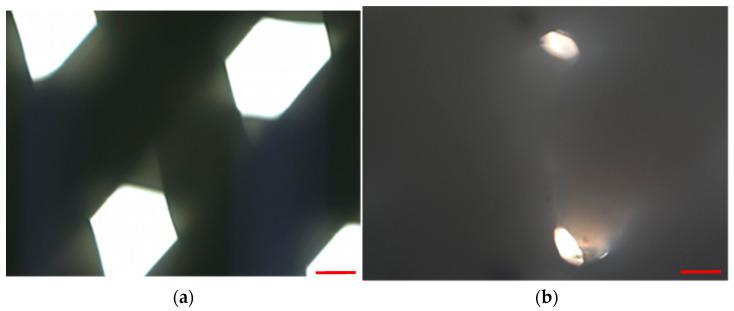
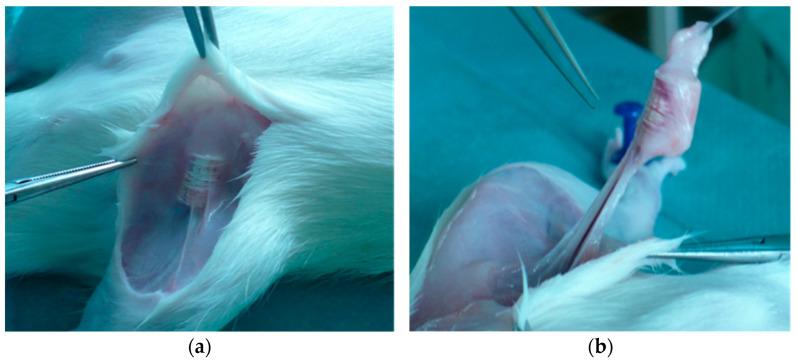
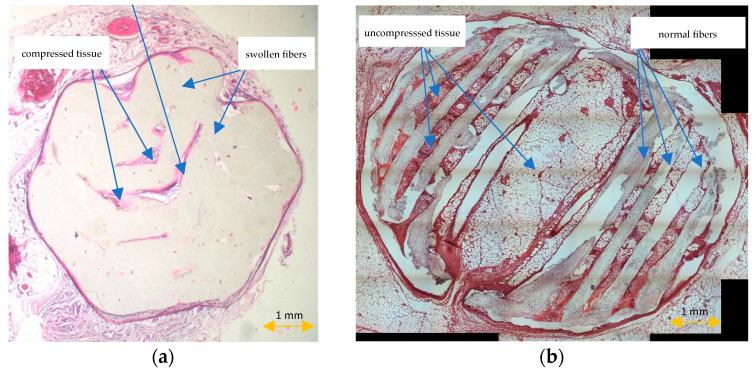
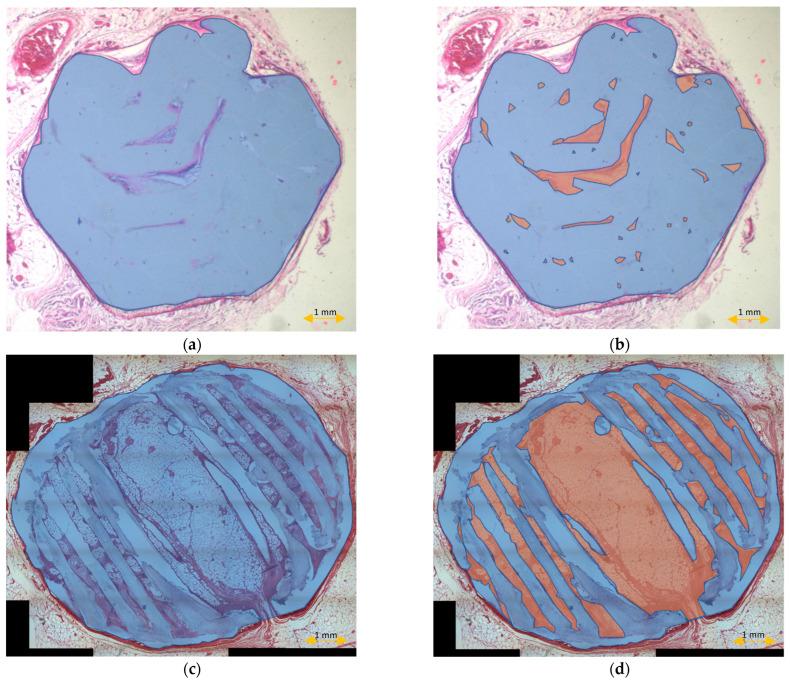
Poly-ɛ-caprolactone (PCL) is now widely studied in relation to the engineering of bone, cartilage, tendons, and other tissues. Standard histological protocols can destroy the carefully created trabecular and honeycomb-like architecture of PCL scaffolds, and could lead to scaffold fibers swelling, resulting in the displacement or compression of tissues inside the scaffold. The aim of this study was to modify a standard histopathological protocol for PCL scaffold preparation and evaluate it on porous cylindrical PCL scaffolds in a rat model. In 16 inbred Wag rats, 2 PCL scaffolds were implanted subcutaneously to both inguinal areas. Two months after implantation, harvested scaffolds were first subjected to μCT imaging, and then to histopathological analysis with standard (left inguinal area) and modified histopathological protocols (right inguinal area). To standardize the results, soft tissue percentages (STPs) were calculated on scaffold cross-sections obtained from both histopathological protocols and compared with corresponding µCT cross-sections. The modified protocol enabled the assessment of almost 10× more soft tissues on the scaffold cross-section than the standard procedure. Moreover, STP was only 1.5% lower than in the corresponding µCT cross-sections assessed before the histopathological procedure. The presented modification of the histopathological protocol is cheap, reproducible, and allows for a comprehensive evaluation of PCL scaffolds while maintaining their trabecular, honeycomb-like structure on cross-sections.
聚己内酯(PCL)目前在骨、软骨、肌腱及其他组织工程方面得到了广泛研究。标准组织学方案可能会破坏精心构建的PCL支架的小梁状和蜂窝状结构,并可能导致支架纤维肿胀,从而致使支架内组织移位或受压。本研究的目的是改进用于PCL支架制备的标准组织病理学方案,并在大鼠模型中的多孔圆柱形PCL支架上对其进行评估。在16只近交系Wag大鼠中,将2个PCL支架皮下植入双侧腹股沟区域。植入两个月后,收获的支架首先进行μCT成像,然后分别采用标准组织病理学方案(左侧腹股沟区域)和改良组织病理学方案(右侧腹股沟区域)进行组织病理学分析。为使结果标准化,计算了两种组织病理学方案所得支架横截面上的软组织百分比(STP),并与相应的μCT横截面进行比较。改良方案在支架横截面上评估的软组织数量几乎比标准方法多10倍。此外,STP仅比组织病理学检查前评估的相应μCT横截面低1.5%。所提出的组织病理学方案改良方法成本低廉、可重复,并且在保持PCL支架横截面小梁状、蜂窝状结构的同时,能够对其进行全面评估。





 Zotero 插件