Nieto-Argüello Alfonso, Medina-Cruz David, Pérez-Ramírez Yeremi S, Pérez-García Sergio A, Velasco-Soto Miguel A, Jafari Zeinab, De Leon Israel, González María Ujué, Huttel Yves, Martínez Lidia, Mayoral Álvaro, Webster Thomas J, García-Martín José M, Cholula-Díaz Jorge L
School of Engineering and Sciences, Tecnologico de Monterrey, Eugenio Garza Sada 2501, Monterrey 64849, NL, Mexico.
Department of Chemical Engineering, Northeastern University, Boston, MA 02115, USA.
Nanomaterials (Basel). 2022 Feb 25;12(5):779. doi: 10.3390/nano12050779.
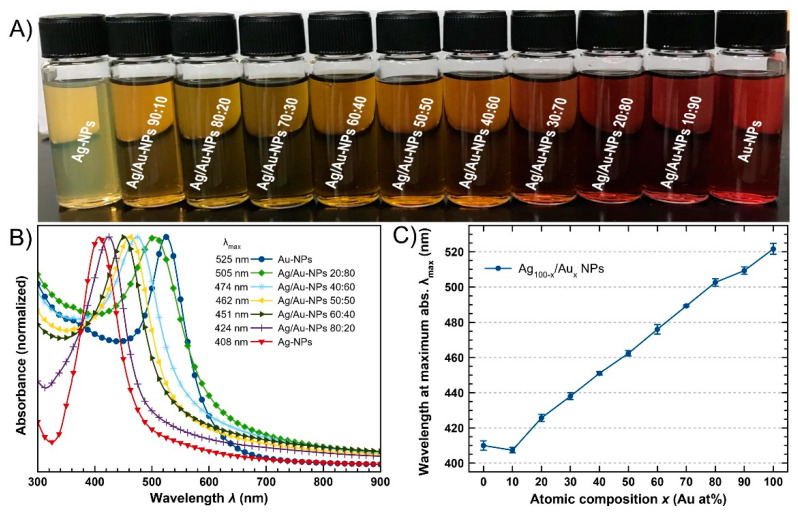
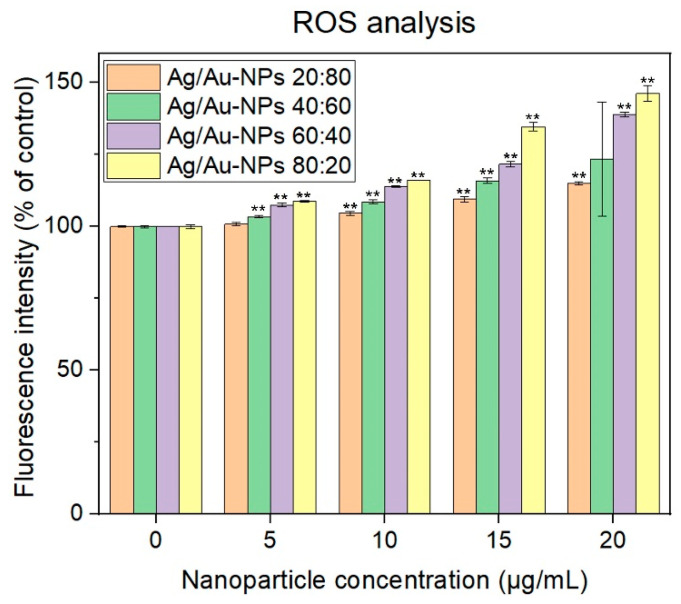
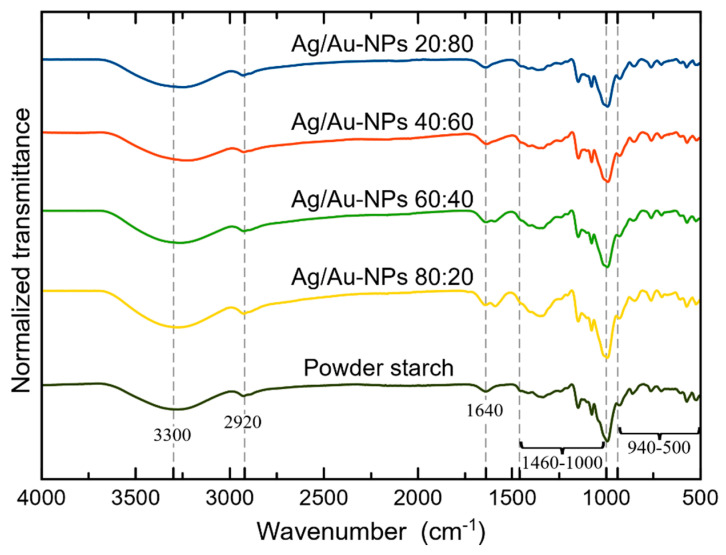
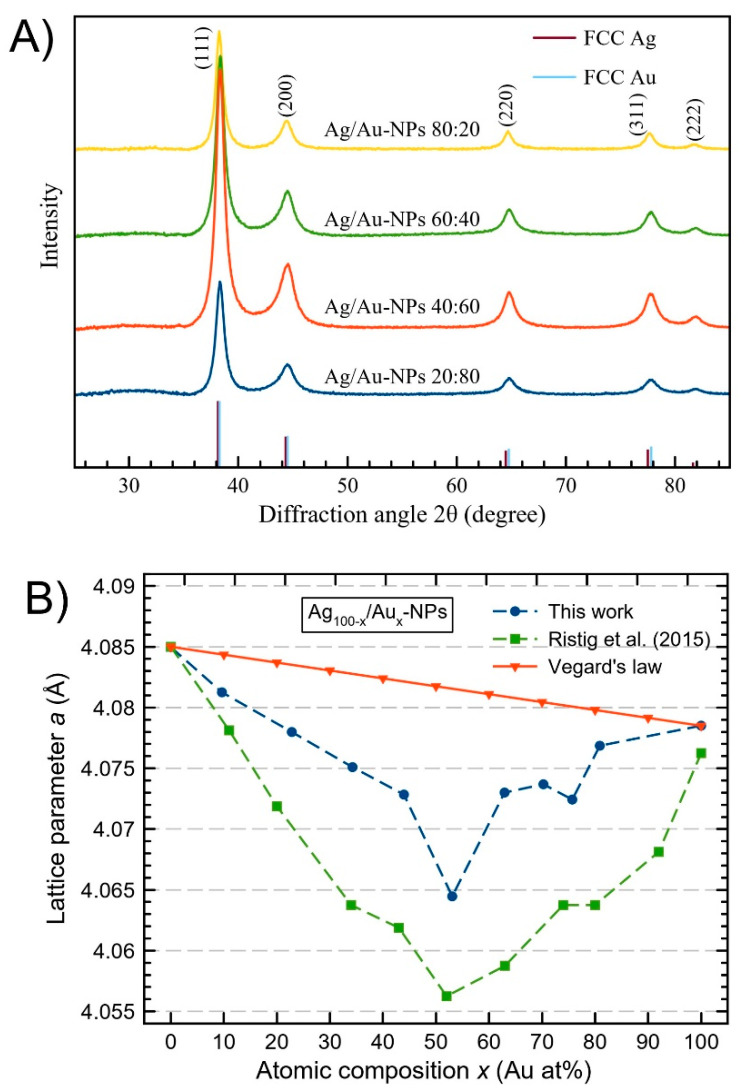
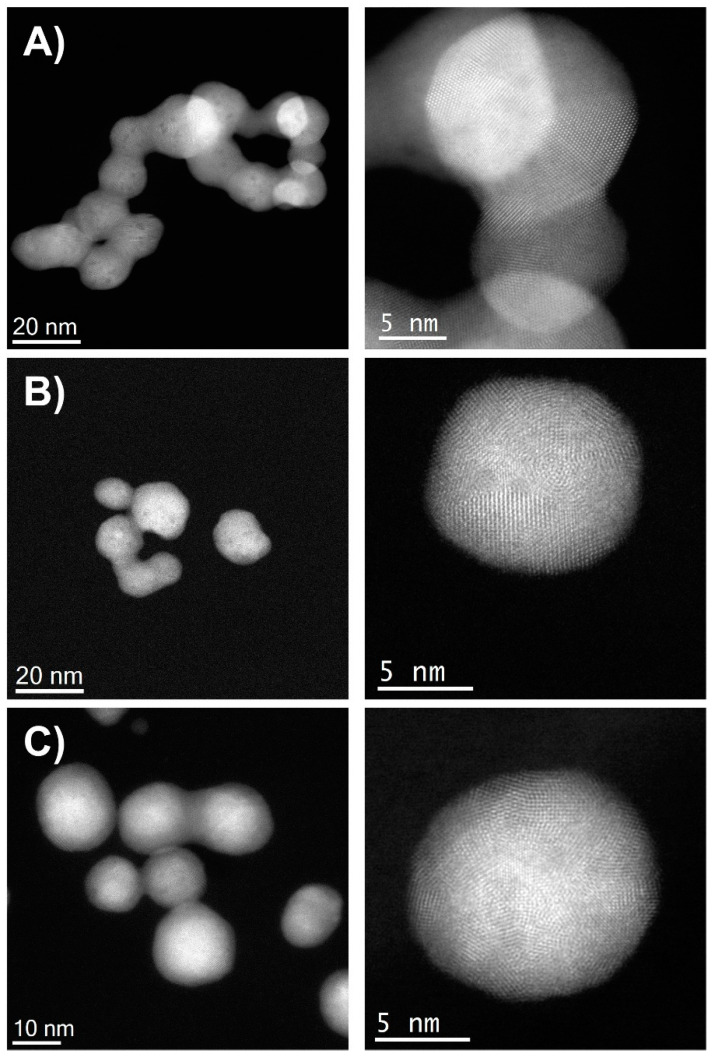
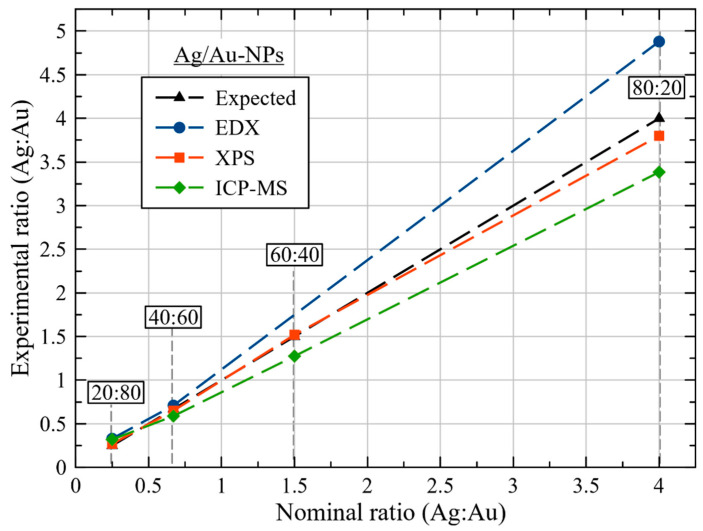
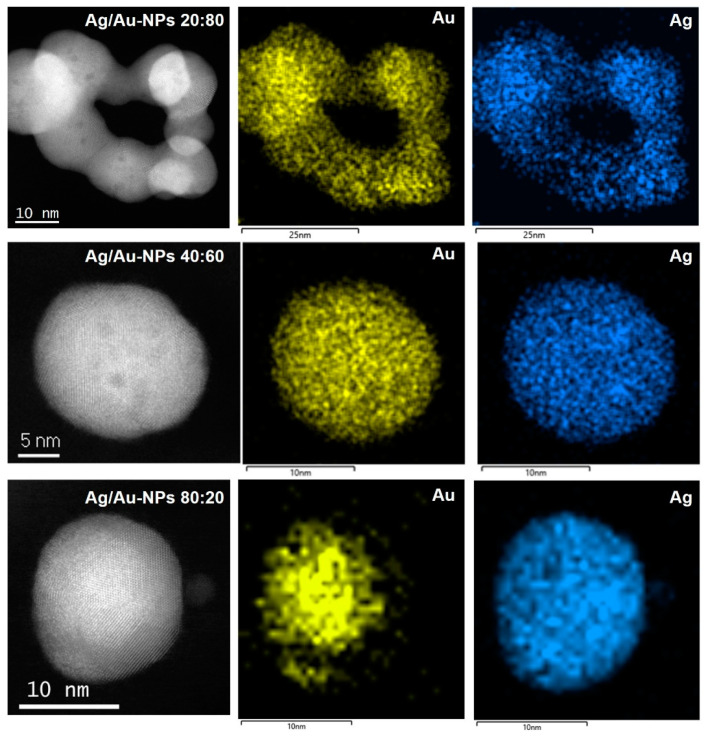
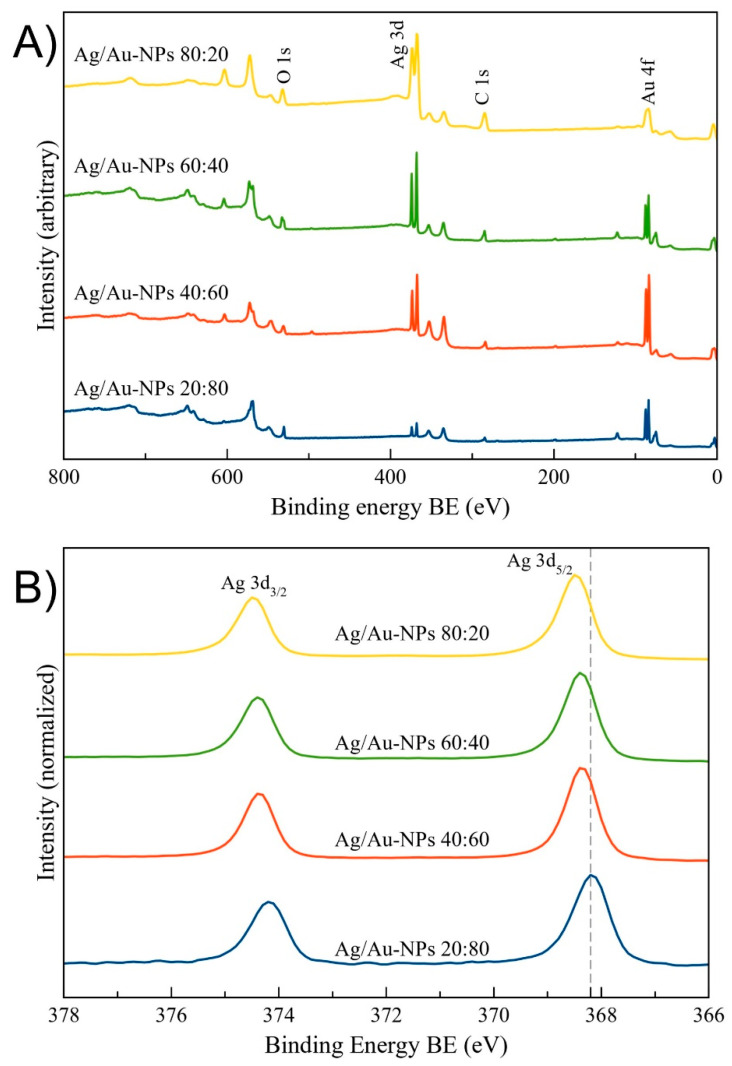
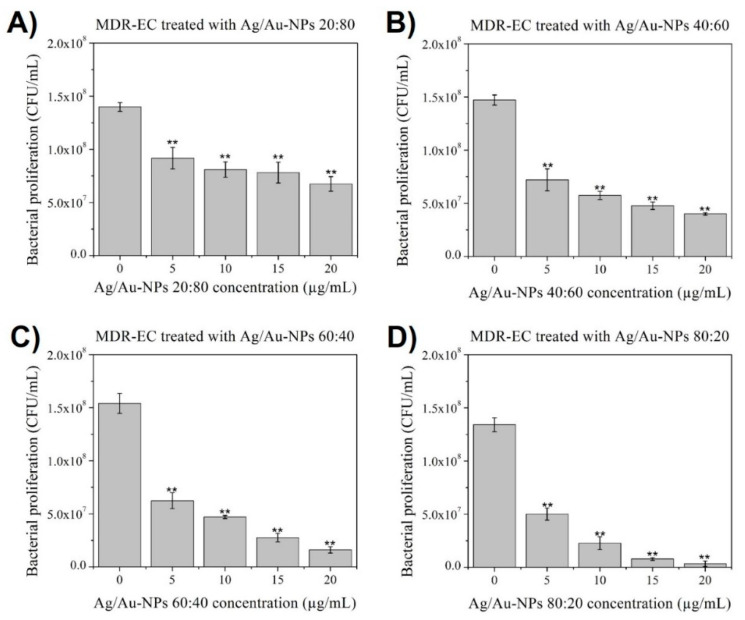
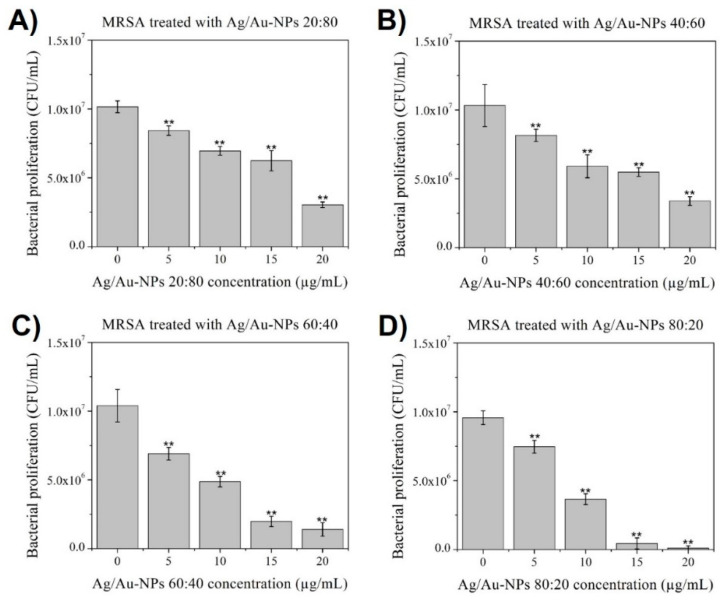
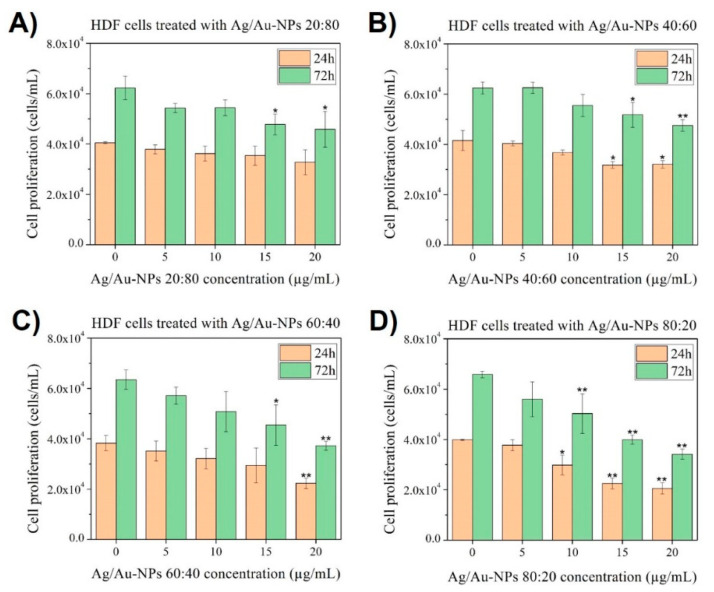
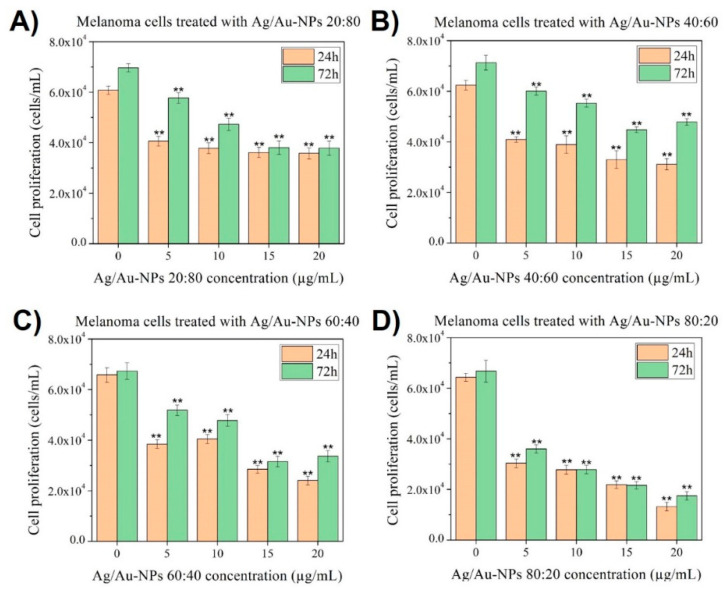
Nanostructured silver (Ag) and gold (Au) are widely known to be potent biocidal and cytotoxic agents as well as biocompatible nanomaterials. It has been recently reported that combining both metals in a specific chemical composition causes a significant enhancement in their antibacterial activity against antibiotic-resistant bacterial strains, as well as in their anticancer effects, while preserving cytocompatibility properties. In this work, Ag/Au bimetallic nanoparticles over a complete atomic chemical composition range were prepared at 10 at% through a green, highly reproducible, and simple approach using starch as a unique reducing and capping agent. The noble metal nanosystems were thoroughly characterized by different analytical techniques, including UV-visible and FT-IR spectroscopies, XRD, TEM/EDS, XPS and ICP-MS. Moreover, absorption spectra simulations for representative colloidal Ag/Au-NP samples were conducted using FDTD modelling. The antibacterial properties of the bimetallic nanoparticles were determined against multidrug-resistant and methicillin-resistant , showing a clear dose-dependent inhibition even at the lowest concentration tested (5 µg/mL). Cytocompatibility assays showed a medium range of toxicity at low and intermediate concentrations (5 and 10 µg/mL), while triggering an anticancer behavior, even at the lowest concentration tested, in a process involving reactive oxygen species production per the nanoparticle Au:Ag ratio. In this manner, this study provides promising evidence that the presently fabricated Ag/Au-NPs should be further studied for a wide range of antibacterial and anticancer applications.
众所周知,纳米结构的银(Ag)和金(Au)是有效的杀菌和细胞毒性剂,也是生物相容性纳米材料。最近有报道称,将这两种金属按特定化学成分组合,会显著增强它们对耐抗生素细菌菌株的抗菌活性以及抗癌效果,同时保持细胞相容性。在这项工作中,通过一种绿色、高度可重复且简单的方法,以淀粉作为唯一的还原剂和封端剂,制备了原子化学组成范围完整的10 at%的Ag/Au双金属纳米颗粒。通过不同的分析技术对贵金属纳米系统进行了全面表征,包括紫外可见光谱和傅里叶变换红外光谱、X射线衍射、透射电子显微镜/能谱、X射线光电子能谱和电感耦合等离子体质谱。此外,使用时域有限差分法建模对代表性的胶体Ag/Au-NP样品进行了吸收光谱模拟。测定了双金属纳米颗粒对多重耐药菌和耐甲氧西林菌的抗菌性能,即使在测试的最低浓度(5 µg/mL)下也显示出明显的剂量依赖性抑制。细胞相容性试验表明,在低浓度和中等浓度(5和10 µg/mL)下具有中等程度的毒性,同时即使在测试的最低浓度下也能引发抗癌行为,这一过程涉及根据纳米颗粒的Au:Ag比例产生活性氧。通过这种方式,本研究提供了有前景的证据,表明目前制备的Ag/Au-NPs应进一步用于广泛的抗菌和抗癌应用研究。