Tecnun-University of Navarra, Paseo Manuel Lardizábal 15, 20018, San Sebastián, Spain.
Biomedical Engineering Center, University of Navarra, Campus Universitario, 31080, Pamplona, Spain.
Sci Rep. 2022 Mar 10;12(1):3898. doi: 10.1038/s41598-022-07785-1.
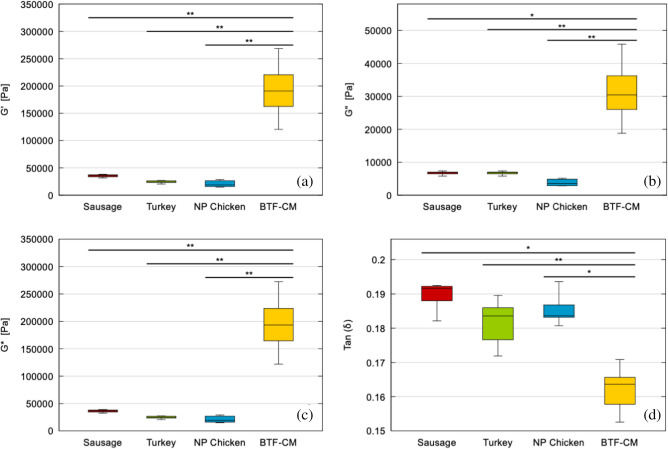
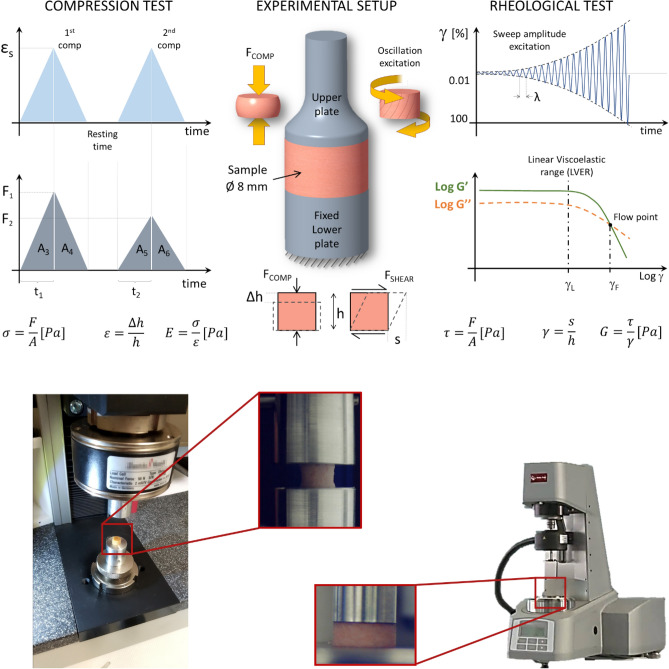
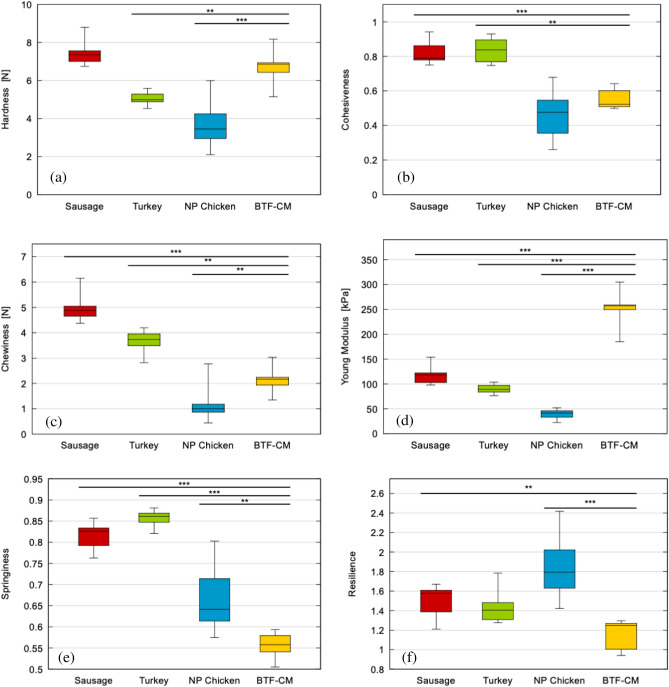
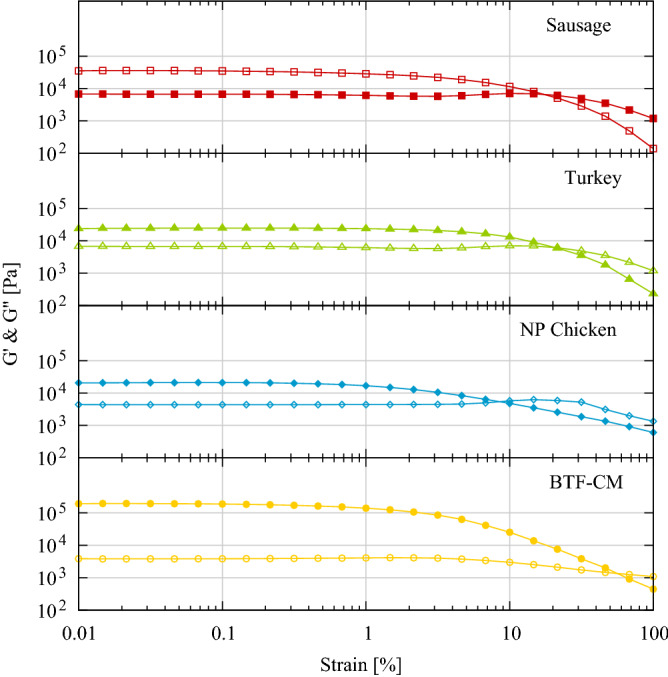
Mechanical characterization supposes a key step in the development of cultured meat to help mimicking the sensorial properties of already existing commercial products based on traditional meat. This work presents two well stablished methods that can help studying cultured meat mechanical characteristics: texture profile analysis (double compression test) and rheology. These techniques provide data about the elastic and viscous behaviour of the samples but also values about other texture characteristics such as springiness, cohesiveness, chewiness and resilience. In this work, we present a comparison of cultured meat-based samples with commercial of the shelf common meat products (sausage, turkey and chicken breast). Results show that both Young's and Shear modulus in the cultured meat samples can be compared to commercial products in order to understand its properties. The texture characteristics for the cultured meat studied, show values within the range of commercial products. These results demonstrate the applicability of this methodology for the adjustment of mechanical properties of cultured meat products.
机械特性的研究是培养肉发展的关键步骤,可以帮助模仿现有的基于传统肉类的商业产品的感官特性。本工作提出了两种可以帮助研究培养肉机械特性的成熟方法:质地剖面分析(双压缩试验)和流变学。这些技术提供了有关样品弹性和粘性行为的数据,还提供了其他质地特性的值,如弹性、内聚性、咀嚼性和恢复性。在这项工作中,我们比较了基于培养肉的样品与市售的普通肉类产品(香肠、火鸡和鸡胸肉)。结果表明,培养肉样品的杨氏模量和剪切模量可以与商业产品进行比较,以了解其特性。所研究的培养肉的质地特性值在商业产品的范围内。这些结果表明,该方法适用于调整培养肉产品的机械性能。