Tan Xiaodan, Dai Xiaoqiu, Chen Ting, Wu Yushuang, Yang Dong, Zheng Yixiong, Chen Huilan, Wan Xiaorong, Yang Yong
Guangzhou Key Laboratory for Research and Development of Crop Germplasm Resources, Zhongkai University of Agriculture and Engineering, Guangzhou, China.
Key Laboratory of Horticultural Plant Biology (HZAU), Ministry of Education, Key Laboratory of Potato Biology and Biotechnology (HZAU), Ministry of Agriculture and Rural Affairs, Huazhong Agricultural University, Wuhan, China.
Front Microbiol. 2022 Feb 23;13:830900. doi: 10.3389/fmicb.2022.830900. eCollection 2022.
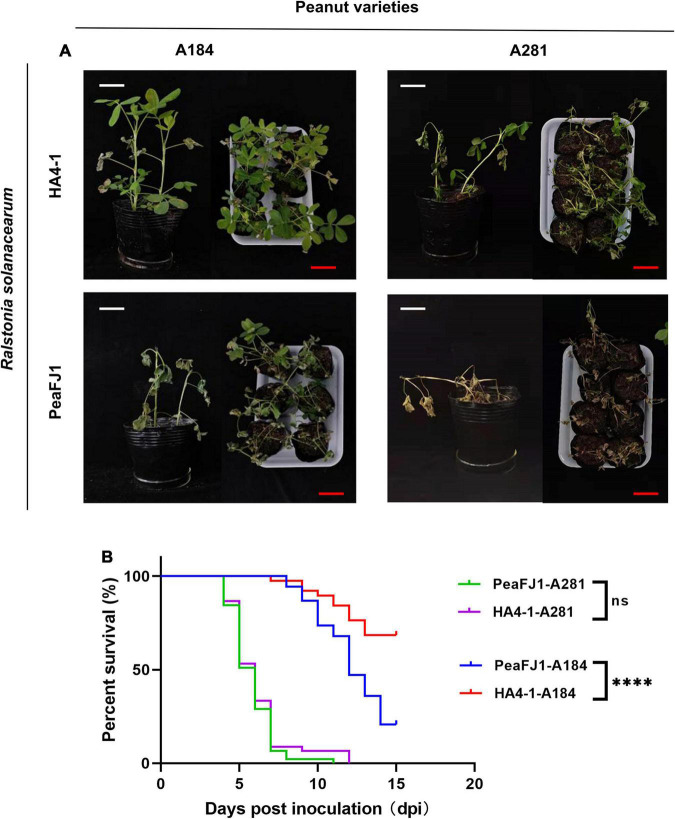
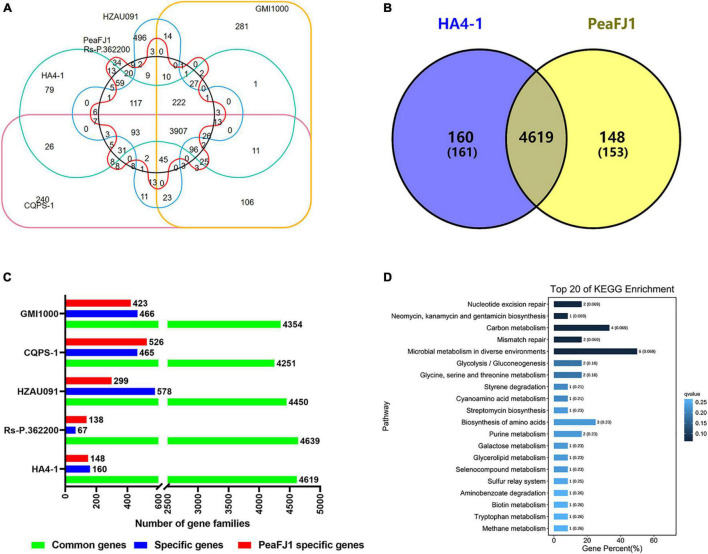
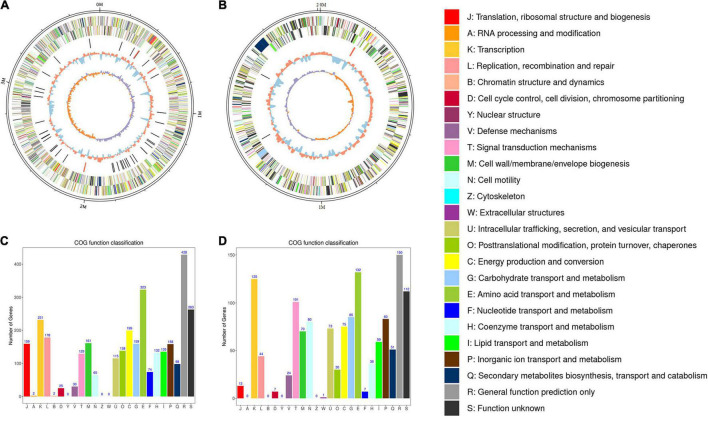
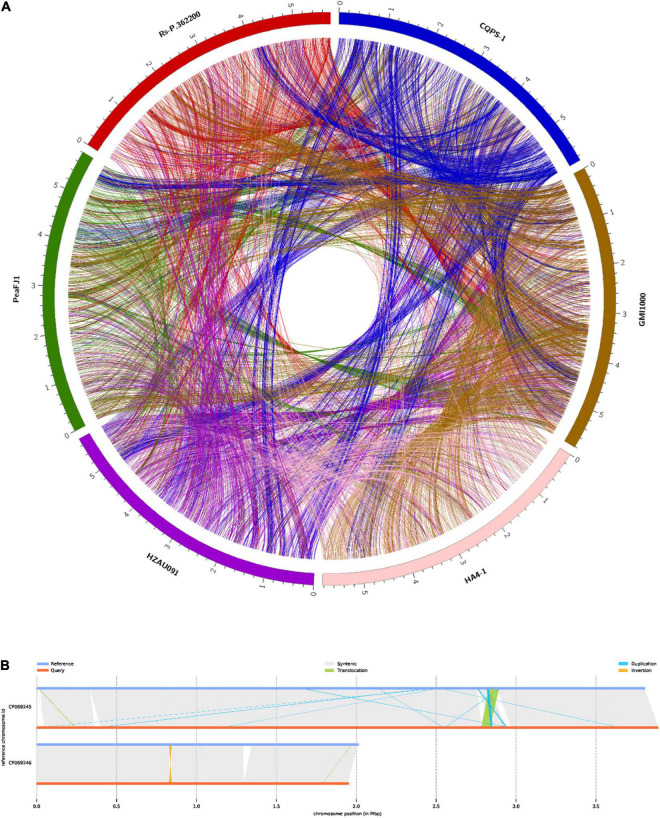
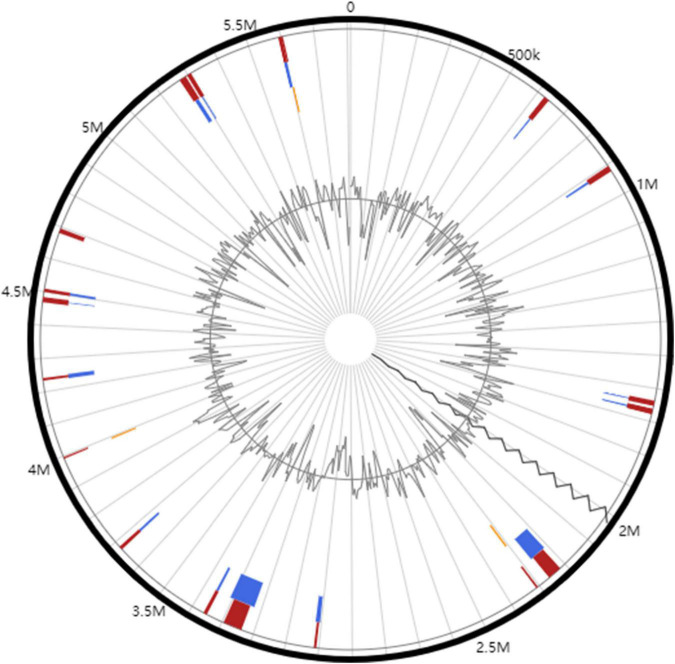
The bacterial wilt of peanut ( L.) caused by is a devastating soil-borne disease that seriously restricted the world peanut production. However, the molecular mechanism of peanut interaction remains largely unknown. We found that HA4-1 and PeaFJ1 isolated from peanut plants showed different pathogenicity by inoculating more than 110 cultivated peanuts. Phylogenetic tree analysis demonstrated that HA4-1 and PeaFJ1 both belonged to phylotype I and sequevar 14M, which indicates a high degree of genomic homology between them. Genomic sequencing and comparative genomic analysis of PeaFJ1 revealed 153 strain-specific genes compared with HA4-1. The PeaFJ1 strain-specific genes consisted of diverse virulence-related genes including LysR-type transcriptional regulators, two-component system-related genes, and genes contributing to motility and adhesion. In addition, the repertoire of the type III effectors of PeaFJ1 was bioinformatically compared with that of HA4-1 to find the candidate effectors responsible for their different virulences. There are 79 effectors in the PeaFJ1 genome, only 4 of which are different effectors compared with HA4-1, including RipS4, RipBB, RipBS, and RS_T3E_Hyp6. Based on the virulence profiles of the two strains against peanuts, we speculated that RipS4 and RipBB are candidate virulence effectors in PeaFJ1 while RipBS and RS_T3E_Hyp6 are avirulence effectors in HA4-1. In general, our research greatly reduced the scope of virulence-related genes and made it easier to find out the candidates that caused the difference in pathogenicity between the two strains. These results will help to reveal the molecular mechanism of peanut- interaction and develop targeted control strategies in the future.
由[病原菌名称缺失]引起的花生细菌性萎蔫病是一种毁灭性的土传病害,严重制约了全球花生生产。然而,花生相互作用的分子机制在很大程度上仍不清楚。通过接种110多种栽培花生,我们发现从花生植株中分离出的HA4-1和PeaFJ1表现出不同的致病性。系统发育树分析表明,HA4-1和PeaFJ1均属于I型菌系和序列变种14M,这表明它们之间具有高度的基因组同源性。与HA4-1相比,PeaFJ1的基因组测序和比较基因组分析揭示了153个菌株特异性基因。PeaFJ1菌株特异性基因包括多种与毒力相关的基因,如LysR型转录调节因子、双组分系统相关基因以及与运动性和黏附性相关的基因。此外,对PeaFJ1的III型效应子库与HA4-1的效应子库进行了生物信息学比较,以找出导致它们毒力差异的候选效应子。PeaFJ1基因组中有79个效应子,与HA4-1相比,其中只有4个是不同的效应子,包括RipS4、RipBB、RipBS和RS_T3E_Hyp6。基于这两个菌株对花生的毒力谱,我们推测RipS4和RipBB是PeaFJ1中的候选毒力效应子,而RipBS和RS_T3E_Hyp6是HA4-1中的无毒效应子。总的来说,我们的研究大大缩小了与毒力相关基因的范围,更容易找出导致两个菌株致病性差异的候选基因。这些结果将有助于揭示花生相互作用的分子机制,并在未来制定针对性的防治策略。