Choroszy Marcin, Sobieszczańska Beata, Litwinowicz Kamil, Łaczmański Łukasz, Chmielarz Mateusz, Walczuk Urszula, Roleder Tomasz, Radziejewska Jadwiga, Wawrzyńska Magdalena
Department of Microbiology, Wrocław Medical University, Chalubinskiego 4 Street, 51-657 Wroclaw, Poland.
Department of Medical Biochemistry, Wroclaw Medical University, Chalubińskiego 10 Street, 50-368 Wroclaw, Poland.
Nutrients. 2022 Jan 18;14(3):424. doi: 10.3390/nu14030424.
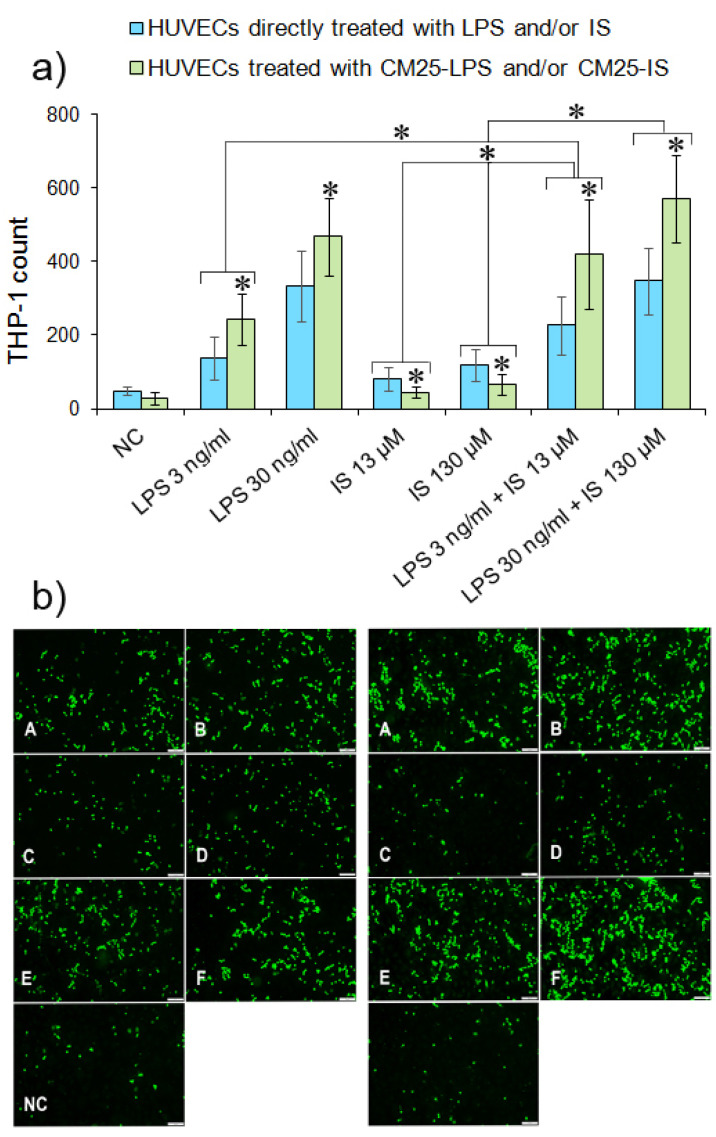
Gut dysbiosis, alongside a high-fat diet and cigarette smoking, is considered one of the factors promoting coronary arterial disease (CAD) development. The present study aimed to research whether gut dysbiosis can increase bacterial metabolites concentration in the blood of CAD patients and what impact these metabolites can exert on endothelial cells. The gut microbiomes of 15 age-matched CAD patients and healthy controls were analyzed by 16S rRNA sequencing analysis. The in vitro impact of LPS and indoxyl sulfate at concentrations present in patients' sera on endothelial cells was investigated. 16S rRNA sequencing analysis revealed gut dysbiosis in CAD patients, further confirmed by elevated LPS and indoxyl sulfate levels in patients' sera. CAD was associated with depletion of and . LPS and indoxyl sulfate demonstrated co-toxicity to endothelial cells inducing reactive oxygen species, E-selectin, and monocyte chemoattractant protein-1 (MCP-1) production. Moreover, both of these metabolites promoted thrombogenicity of endothelial cells confirmed by monocyte adherence. The co-toxicity of LPS and indoxyl sulfate was associated with harmful effects on endothelial cells, strongly suggesting that gut dysbiosis-associated increased intestinal permeability can initiate or promote endothelial inflammation and atherosclerosis progression.
肠道菌群失调与高脂饮食和吸烟一样,被认为是促进冠状动脉疾病(CAD)发展的因素之一。本研究旨在探讨肠道菌群失调是否会增加CAD患者血液中细菌代谢产物的浓度,以及这些代谢产物对内皮细胞有何影响。通过16S rRNA测序分析对15名年龄匹配的CAD患者和健康对照的肠道微生物群进行了分析。研究了患者血清中存在的浓度的脂多糖(LPS)和硫酸吲哚酚对内皮细胞的体外影响。16S rRNA测序分析显示CAD患者存在肠道菌群失调,患者血清中LPS和硫酸吲哚酚水平升高进一步证实了这一点。CAD与 和 的减少有关。LPS和硫酸吲哚酚对内皮细胞表现出共同毒性,可诱导活性氧、E选择素和单核细胞趋化蛋白-1(MCP-1)的产生。此外,这两种代谢产物均通过单核细胞黏附证实促进了内皮细胞的血栓形成性。LPS和硫酸吲哚酚的共同毒性与对内皮细胞的有害影响有关,强烈表明肠道菌群失调相关的肠道通透性增加可引发或促进内皮炎症和动脉粥样硬化进展。