Grosso Giuseppe, Godos Justyna, Currenti Walter, Micek Agnieszka, Falzone Luca, Libra Massimo, Giampieri Francesca, Forbes-Hernández Tamara Y, Quiles José L, Battino Maurizio, La Vignera Sandro, Galvano Fabio
Department of Biomedical and Biotechnological Sciences, University of Catania, 95123 Catania, Italy.
Institute of Nursing and Midwifery, Faculty of Health Sciences, Medical College, Jagiellonian University, 31-501 Krakow, Poland.
Nutrients. 2022 Jan 27;14(3):545. doi: 10.3390/nu14030545.
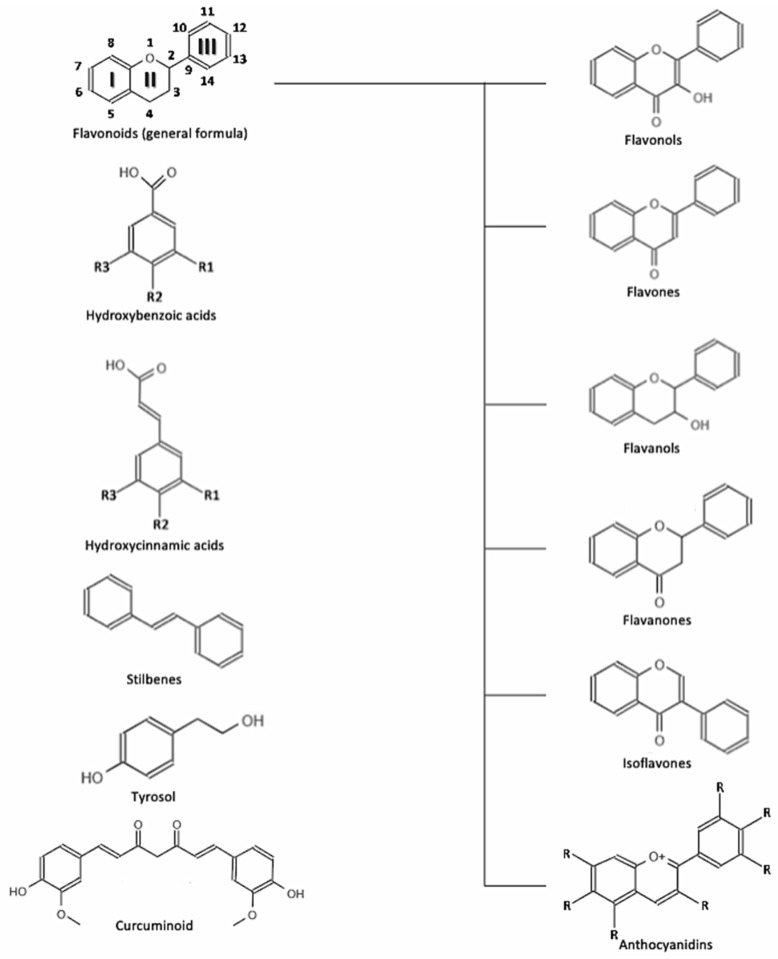
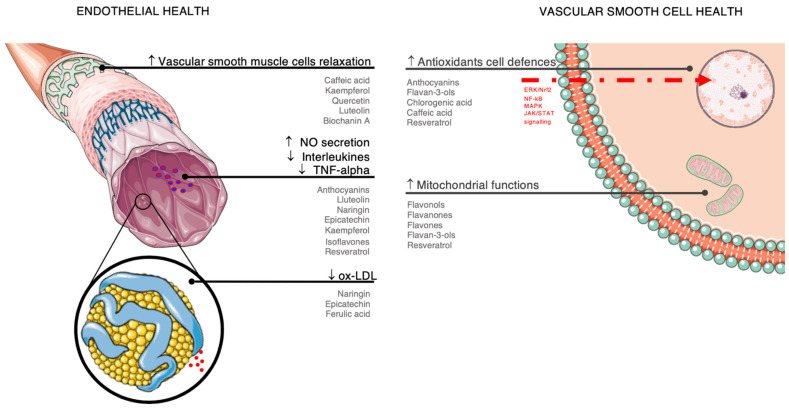
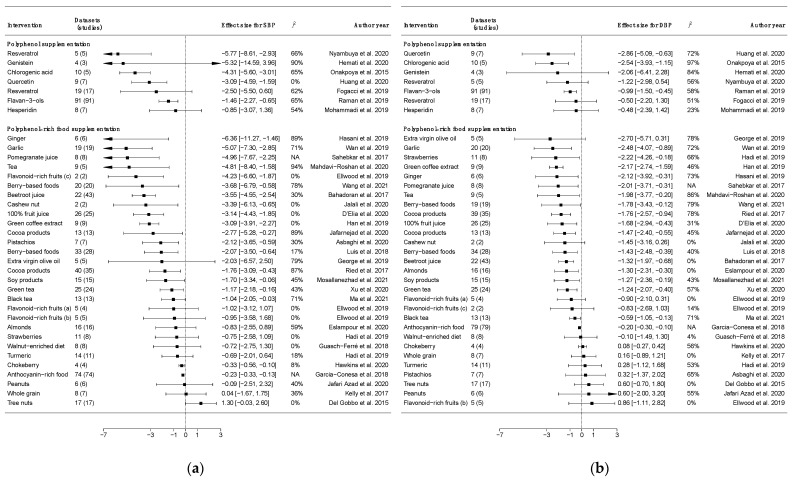
The aim of this review was to explore existing evidence from studies conducted on humans and summarize the mechanisms of action of dietary polyphenols on vascular health, blood pressure and hypertension. There is evidence that some polyphenol-rich foods, including berry fruits rich in anthocyanins, cocoa and green tea rich in flavan-3-ols, almonds and pistachios rich in hydroxycinnamic acids, and soy products rich in isoflavones, are able to improve blood pressure levels. A variety of mechanisms can elucidate the observed effects. Some limitations of the evidence, including variability of polyphenol content in plant-derived foods and human absorption, difficulty disentangling the effects of polyphenols from other dietary compounds, and discrepancy of doses between animal and human studies should be taken into account. While no single food counteracts hypertension, adopting a plant-based dietary pattern including a variety of polyphenol-rich foods is an advisable practice to improve blood pressure.
本综述的目的是探索对人类进行的研究中的现有证据,并总结膳食多酚对血管健康、血压和高血压的作用机制。有证据表明,一些富含多酚的食物,包括富含花青素的浆果、富含黄烷-3-醇的可可和绿茶、富含羟基肉桂酸的杏仁和开心果,以及富含异黄酮的豆制品,能够改善血压水平。多种机制可以解释所观察到的效果。应考虑到证据的一些局限性,包括植物性食物中多酚含量的变异性和人体吸收情况、难以将多酚的作用与其他膳食化合物的作用区分开来,以及动物研究和人体研究之间剂量的差异。虽然没有单一食物能对抗高血压,但采用包括各种富含多酚食物的植物性饮食模式是改善血压的明智做法。