Department of Veterinary Sciences, University of Turin, Turin, Italy.
Istituto Zooprofilattico Sperimentale delle Venezie, Legnaro (Padua), Italy.
BMC Vet Res. 2022 Mar 11;18(1):95. doi: 10.1186/s12917-022-03199-3.
Early bacterial colonization in puppies is still a poorly understood phenomenon. Although the topic is of considerable interest, a big gap in knowledge still exists on the understanding of timing and features of neonatal gut colonization. Thence, the purpose of this study was to evaluate the relationship between dam and litter microbial flora, in vaginally delivered puppies, from birth to two months of age. Bacteria were identified using MALDI-TOF, an accurate and sensitive method, and cluster analysis of data provided a new insight on the investigated topic.
Six dam-litter units of two medium size breeds were enrolled in the study. Vaginal and colostrum/milk samples were collected from dams after delivery and 48h post-partum, while rectal samples were taken from dams and puppies after delivery and at day 2, 30 and 60 (T2, T30 and T60, respectively) post-partum. Bacterial isolation and identification were performed following standard techniques, then the data were analyzed using a new approach based on bacterial genus population composition obtained using a wide MALDI-TOF screening and cluster analysis.
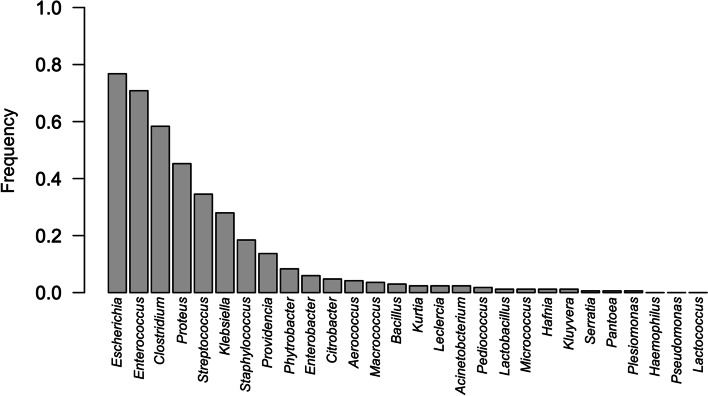
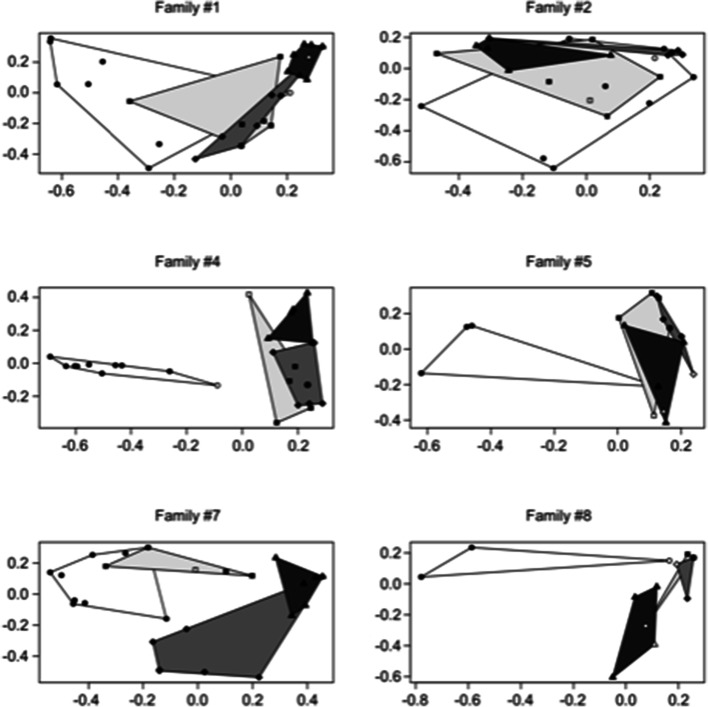
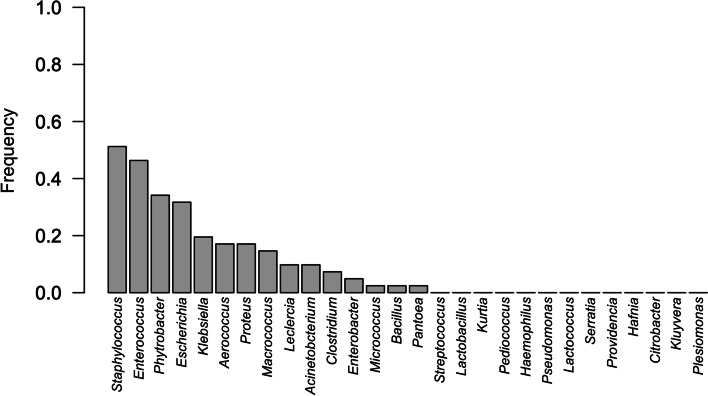
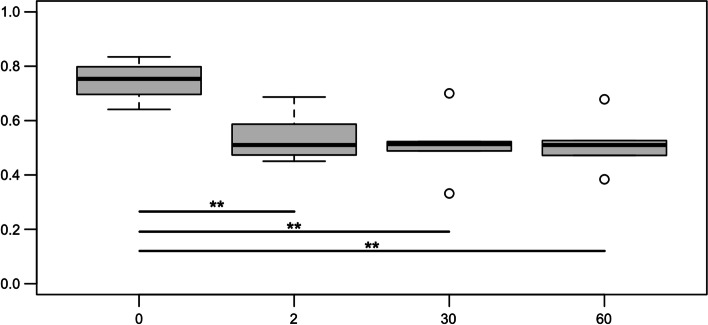
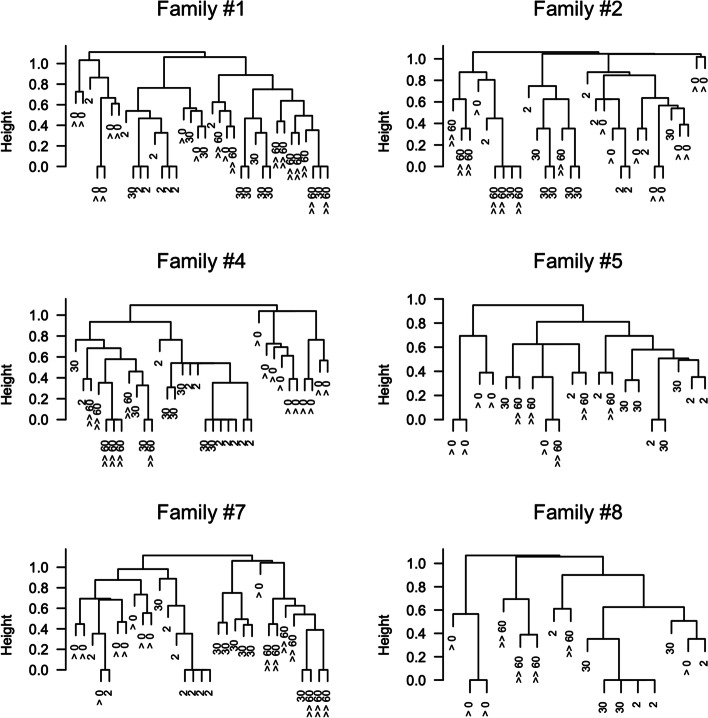
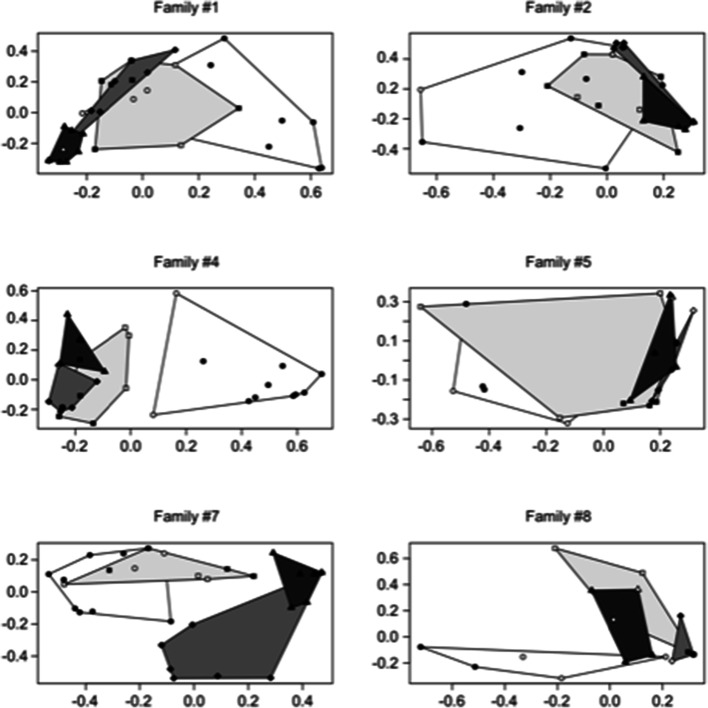
Forty-eight bacteriological samples were collected from the dams and 145 from their 42 puppies. Colostrum/milk samples (n = 12) showed a bacterial growth mainly limited to few colonies. Staphylococci, Enterococci, E. coli, Proteus spp. were most frequently isolated. All vaginal swabs (n = 12) resulted in bacteria isolation (medium to high growth). Streptococci, Enterococci, E. coli were the most frequently detected. E. coli, Proteus mirabilis, Enterococcus spp., Streptococcus spp. were often obtained from dams' and puppies' rectal swabs. Clostridia, not isolated in any other sampling site, were rarely found (n = 3) in meconium while they were more frequently isolated at later times (T2: n = 30; T30: n = 17; T60: n = 27). Analysis of the bacterial genus pattern over time showed a statistically significant reduction (P < 0.01) in the heterogeneity of microbial composition in all time points if compared to birth for each dam-litter unit. These results were confirmed with cluster analysis and two-dimensional scaling.
This novel data analysis suggests a fundamental role of the individual dam in seeding and shaping the microbiome of the litter. Thus, modulating the dam's microbiota may positively impact the puppy microbiota and benefit their health.
幼犬早期细菌定植仍是一个尚未完全阐明的现象。尽管这一课题引起了广泛关注,但对于新生儿肠道定植的时间和特征,我们仍缺乏足够的认识。因此,本研究旨在评估阴道分娩幼犬的母犬和窝仔微生物菌群之间的关系,从出生到两个月大。使用 MALDI-TOF 对细菌进行鉴定,这是一种准确且敏感的方法,数据聚类分析为该研究课题提供了新的见解。
本研究纳入了两个中型犬种的 6 个母犬-窝仔单元。母犬在分娩后和产后 48 小时采集阴道和初乳/母乳样本,而在分娩后和产后第 2、30 和 60 天(T2、T30 和 T60)分别采集母犬和幼犬的直肠样本。采用标准技术进行细菌分离和鉴定,然后使用基于 MALDI-TOF 广泛筛选和聚类分析获得的细菌属种群组成的新方法分析数据。
从母犬和 42 只幼犬中采集了 48 个细菌学样本。初乳/母乳样本(n=12)显示细菌生长主要局限于少数菌落。葡萄球菌、肠球菌、大肠杆菌、变形杆菌属最常分离到。所有阴道拭子(n=12)均分离出细菌(中至高度生长)。链球菌、肠球菌、大肠杆菌是最常检测到的。大肠杆菌、奇异变形杆菌、肠球菌属、链球菌属常从母犬和幼犬的直肠拭子中分离到。梭菌属在其他采样部位均未分离到,在胎粪中(n=3)很少发现,而在后期(T2:n=30;T30:n=17;T60:n=27)则更常分离到。随着时间的推移,对细菌属模式的分析表明,与每个母犬-窝仔单元的出生时相比,所有时间点的微生物组成异质性均呈统计学显著降低(P<0.01)。聚类分析和二维缩放也证实了这一结果。
这种新的数据分析表明,母犬在为窝仔定殖和塑造微生物组方面发挥着基础性作用。因此,调节母犬的微生物群可能会对幼犬的微生物群产生积极影响,并有益于它们的健康。