Laboratory of Experimental Therapies in Oncology, IRCCS Istituto Giannina Gaslini, Via G. Gaslini 5, 16147, Genoa, Italy.
U.O. Proteomica e Spettrometria di Massa, IRCSS Ospedale Policlinico San Martino, Genoa, Italy.
J Exp Clin Cancer Res. 2022 Mar 11;41(1):92. doi: 10.1186/s13046-022-02281-w.
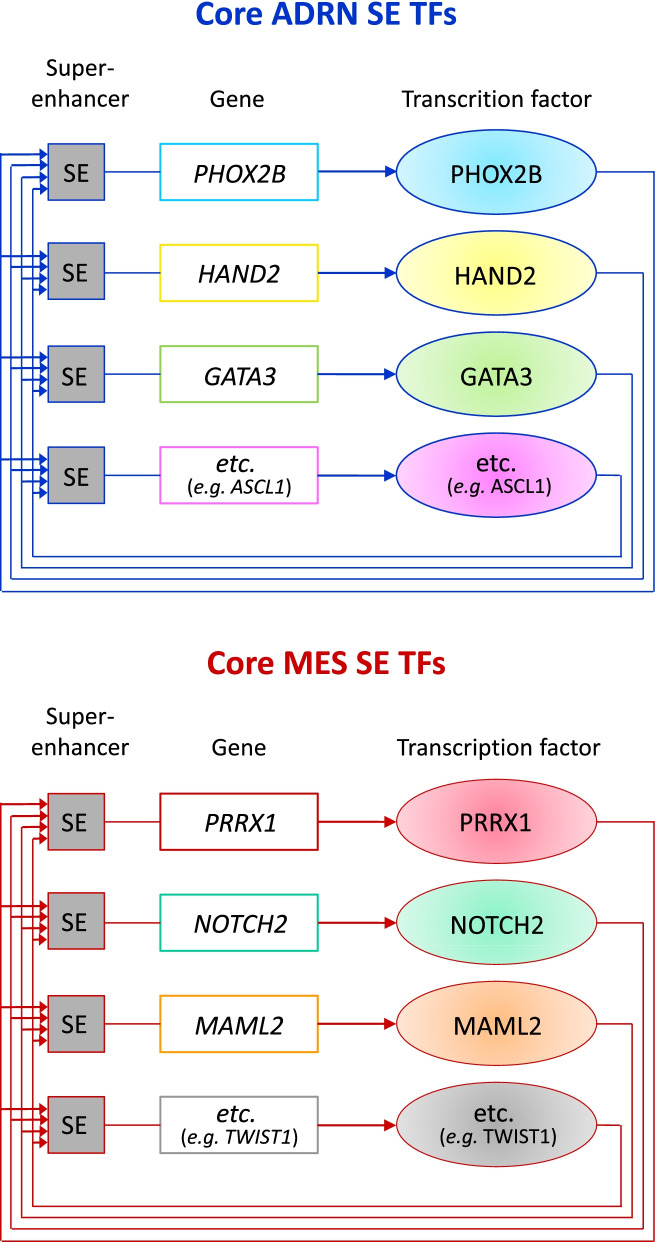
Neuroblastoma (NB) is a pediatric tumor that originates from neural crest-derived cells undergoing a defective differentiation due to genomic and epigenetic impairments. Therefore, NB may arise at any final site reached by migrating neural crest cells (NCCs) and their progeny, preferentially in the adrenal medulla or in the para-spinal ganglia.NB shows a remarkable genetic heterogeneity including several chromosome/gene alterations and deregulated expression of key oncogenes that drive tumor initiation and promote disease progression.NB substantially contributes to childhood cancer mortality, with a survival rate of only 40% for high-risk patients suffering chemo-resistant relapse. Hence, NB remains a challenge in pediatric oncology and the need of designing new therapies targeted to specific genetic/epigenetic alterations become imperative to improve the outcome of high-risk NB patients with refractory disease or chemo-resistant relapse.In this review, we give a broad overview of the latest advances that have unraveled the developmental origin of NB and its complex epigenetic landscape.Single-cell RNA sequencing with spatial transcriptomics and lineage tracing have identified the NCC progeny involved in normal development and in NB oncogenesis, revealing that adrenal NB cells transcriptionally resemble immature neuroblasts or their closest progenitors. The comparison of adrenal NB cells from patients classified into risk subgroups with normal sympatho-adrenal cells has highlighted that tumor phenotype severity correlates with neuroblast differentiation grade.Transcriptional profiling of NB tumors has identified two cell identities that represent divergent differentiation states, i.e. undifferentiated mesenchymal (MES) and committed adrenergic (ADRN), able to interconvert by epigenetic reprogramming and to confer intra-tumoral heterogeneity and high plasticity to NB.Chromatin immunoprecipitation sequencing has disclosed the existence of two super-enhancers and their associated transcription factor networks underlying MES and ADRN identities and controlling NB gene expression programs.The discovery of NB-specific regulatory circuitries driving oncogenic transformation and maintaining the malignant state opens new perspectives on the design of innovative therapies targeted to the genetic and epigenetic determinants of NB. Remodeling the disrupted regulatory networks from a dysregulated expression, which blocks differentiation and enhances proliferation, toward a controlled expression that prompts the most differentiated state may represent a promising therapeutic strategy for NB.
神经母细胞瘤(NB)是一种起源于神经嵴衍生细胞的儿科肿瘤,由于基因组和表观遗传损伤,这些细胞的分化出现缺陷。因此,NB 可能发生在迁移的神经嵴细胞(NCC)及其后代到达的任何最终部位,优先发生在肾上腺髓质或脊柱旁神经节。NB 表现出显著的遗传异质性,包括几种染色体/基因改变和关键癌基因的失调表达,这些癌基因驱动肿瘤起始并促进疾病进展。NB 对儿童癌症死亡率有很大贡献,对于化疗耐药复发的高危患者,生存率仅为 40%。因此,NB 仍然是儿科肿瘤学的一个挑战,设计针对特定遗传/表观遗传改变的新疗法的需求变得至关重要,以改善难治性疾病或化疗耐药复发的高危 NB 患者的预后。在这篇综述中,我们广泛概述了最新的进展,这些进展揭示了 NB 的发育起源及其复杂的表观遗传景观。单细胞 RNA 测序结合空间转录组学和谱系追踪已经确定了参与正常发育和 NB 致癌的 NCC 后代,揭示了肾上腺 NB 细胞在转录上类似于不成熟的神经母细胞或其最接近的祖细胞。将患者分为风险亚组的肾上腺 NB 细胞与正常交感肾上腺细胞进行比较,突出了肿瘤表型严重程度与神经母细胞分化程度相关。NB 肿瘤的转录谱分析确定了两种代表不同分化状态的细胞身份,即未分化的间充质(MES)和有承诺的肾上腺素能(ADRN),能够通过表观遗传重编程相互转化,并赋予 NB 肿瘤内异质性和高可塑性。染色质免疫沉淀测序揭示了两个超级增强子的存在及其相关的转录因子网络,这些网络是 MES 和 ADRN 身份的基础,并控制着 NB 的基因表达程序。发现驱动致癌转化和维持恶性状态的 NB 特异性调节回路为针对 NB 的遗传和表观遗传决定因素设计创新疗法开辟了新的视角。从失调表达重塑失调的调节网络,阻断分化并增强增殖,朝着促进最分化状态的受控表达可能是 NB 的一种有前途的治疗策略。