State Key Laboratory of Oral Diseases, West China Hospital of Stomatology, Sichuan University, Chengdu, China.
National Clinical Research Center for Oral Diseases, West China Hospital of Stomatology, Sichuan University, Chengdu, China.
Int J Oral Sci. 2022 Mar 11;14(1):15. doi: 10.1038/s41368-022-00165-5.
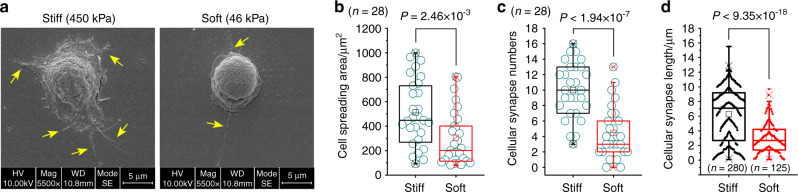
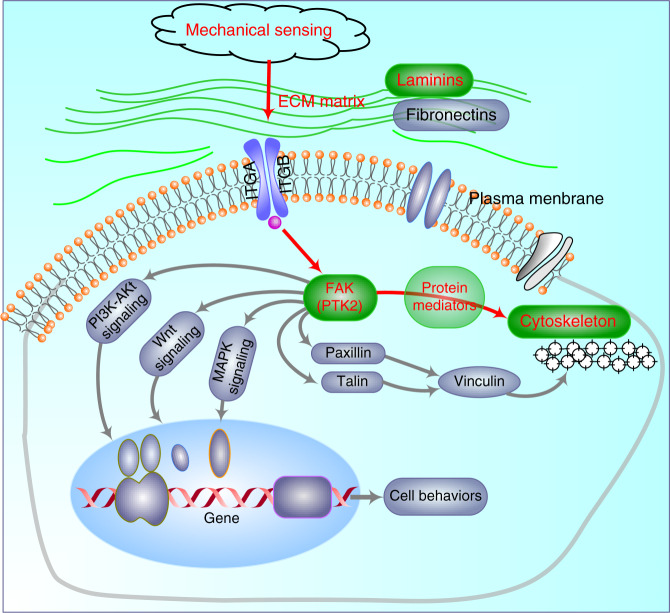
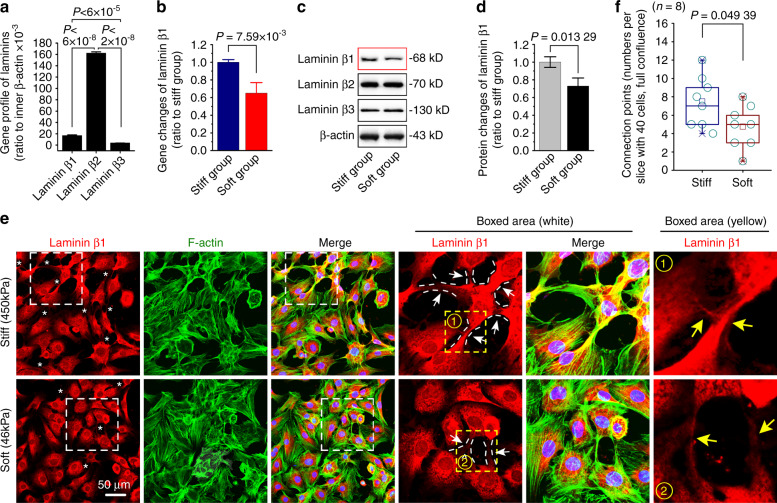
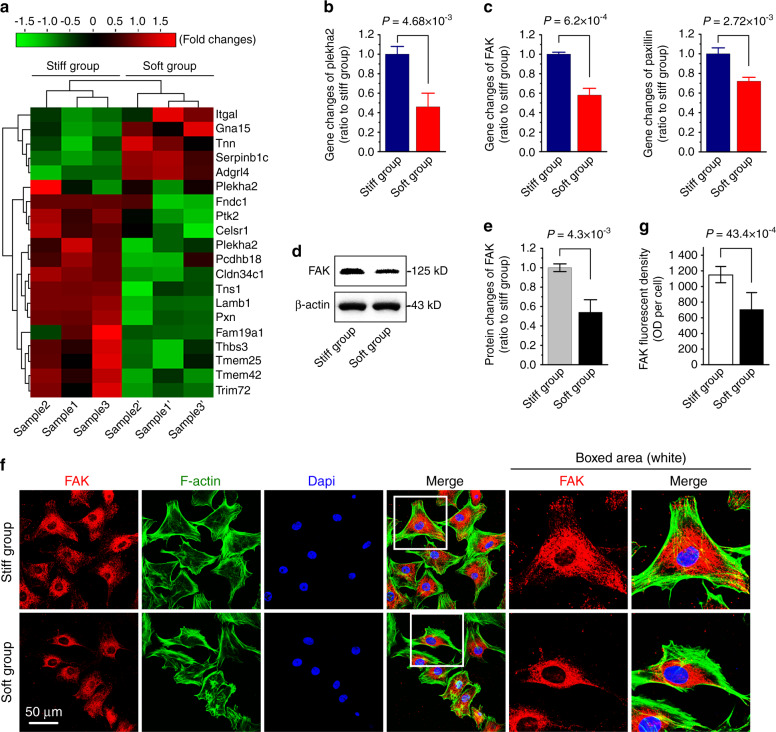
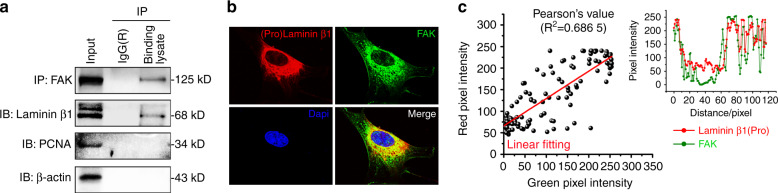
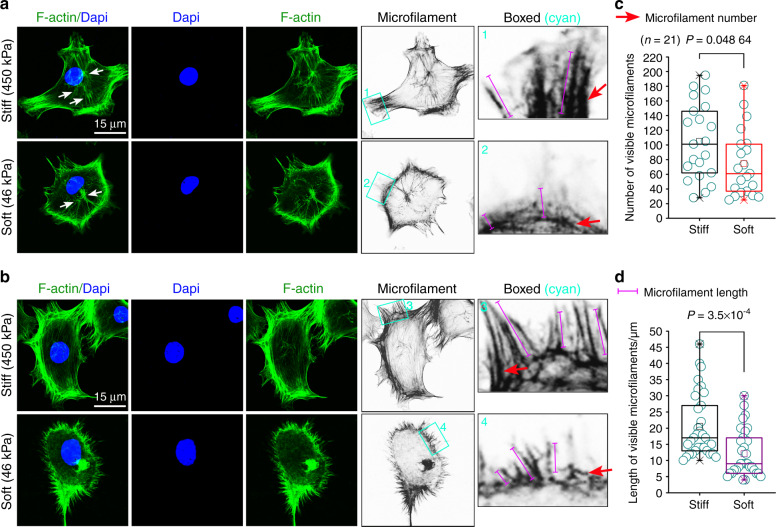
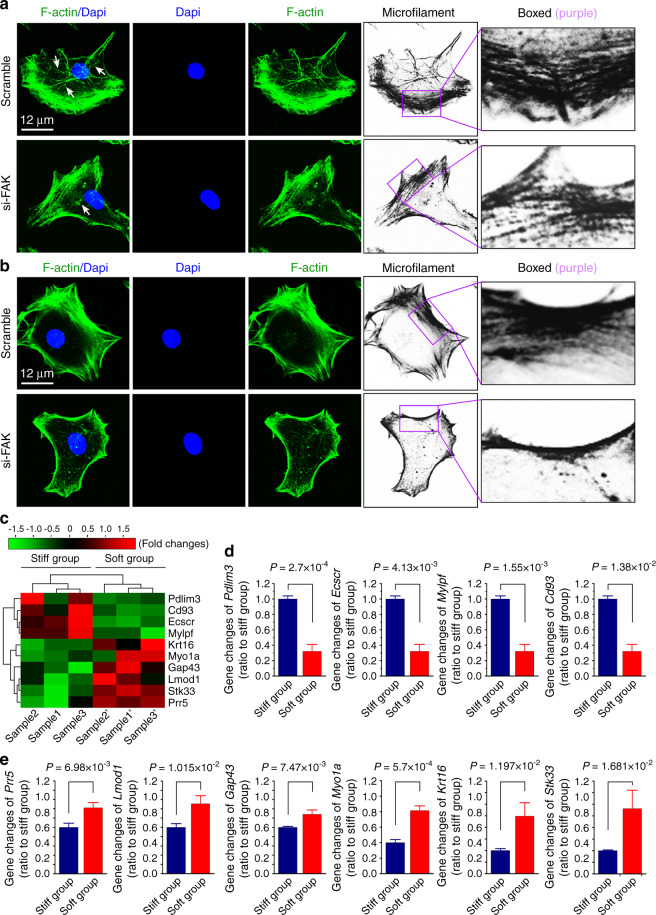
Microenvironmental biophysical factors play a fundamental role in controlling cell behaviors including cell morphology, proliferation, adhesion and differentiation, and even determining the cell fate. Cells are able to actively sense the surrounding mechanical microenvironment and change their cellular morphology to adapt to it. Although cell morphological changes have been considered to be the first and most important step in the interaction between cells and their mechanical microenvironment, their regulatory network is not completely clear. In the current study, we generated silicon-based elastomer polydimethylsiloxane (PDMS) substrates with stiff (15:1, PDMS elastomer vs. curing agent) and soft (45:1) stiffnesses, which showed the Young's moduli of ~450 kPa and 46 kPa, respectively, and elucidated a new path in cytoskeleton re-organization in chondrocytes in response to changed substrate stiffnesses by characterizing the axis shift from the secreted extracellular protein laminin β1, focal adhesion complex protein FAK to microfilament bundling. We first showed the cellular cytoskeleton changes in chondrocytes by characterizing the cell spreading area and cellular synapses. We then found the changes of secreted extracellular linkage protein, laminin β1, and focal adhesion complex protein, FAK, in chondrocytes in response to different substrate stiffnesses. These two proteins were shown to be directly interacted by Co-IP and colocalization. We next showed that impact of FAK on the cytoskeleton organization by showing the changes of microfilament bundles and found the potential intermediate regulators. Taking together, this modulation axis of laminin β1-FAK-microfilament could enlarge our understanding about the interdependence among mechanosensing, mechanotransduction, and cytoskeleton re-organization.
微环境的生物物理因素在控制细胞行为方面起着根本作用,包括细胞形态、增殖、黏附和分化,甚至决定细胞命运。细胞能够主动感知周围的力学微环境,并改变其细胞形态以适应它。尽管细胞形态的变化被认为是细胞与其力学微环境相互作用的第一步和最重要的步骤,但它们的调控网络并不完全清楚。在本研究中,我们制备了具有高(15:1,PDMS 弹性体与固化剂)和低(45:1)两种不同杨氏模量(分别约为 450 kPa 和 46 kPa)的硅基弹性体聚二甲基硅氧烷(PDMS)基底,阐明了细胞骨架在软骨细胞中对基质刚度变化的响应过程中的重新组织的新途径,通过对从分泌细胞外基质蛋白层粘连蛋白 β1 到黏着斑复合物蛋白 FAK 的轴突转移来描绘细胞骨架的重新组织。我们首先通过表征细胞铺展面积和细胞突触,研究了软骨细胞中的细胞骨架变化。然后,我们发现了在不同基质刚度下,软骨细胞中分泌的细胞外连接蛋白层粘连蛋白 β1 和黏着斑复合物蛋白 FAK 的变化。通过 Co-IP 和共定位实验,发现这两种蛋白直接相互作用。接着,我们通过展示微丝束的变化,研究了 FAK 对细胞骨架组织的影响,并发现了潜在的中间调节剂。综上所述,层粘连蛋白 β1-FAK-微丝这条调节轴可以增进我们对机械感知、机械转导和细胞骨架重新组织之间相互依存关系的理解。