Guo Qiang, Xiao Xiao-Yue, Wu Chuang-Yan, Li Dan, Chen Jiu-Ling, Ding Xiang-Chao, Cheng Chao, Chen Chong-Rui, Tong Song, Wang Si-Hua
Department of Thoracic Surgery, Union Hospital, Tongji Medical College, Huazhong University of Science and Technology, Wuhan, China.
Department of Cardiovascular Surgery, Union Hospital, Tongji Medical College, Huazhong University of Science and Technology, Wuhan, China.
Front Genet. 2022 Feb 24;13:823075. doi: 10.3389/fgene.2022.823075. eCollection 2022.
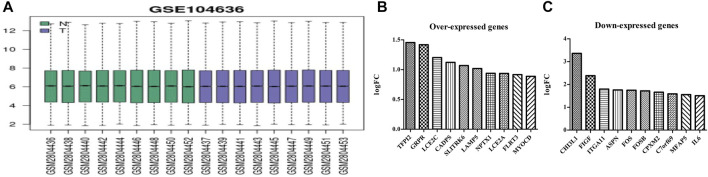
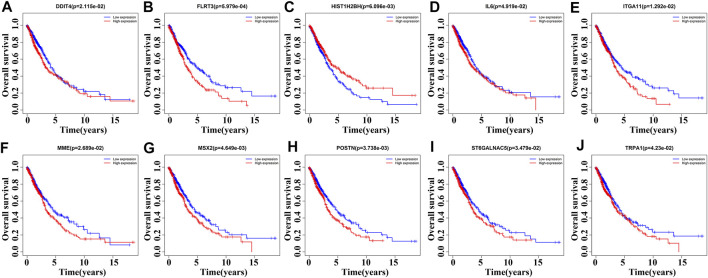
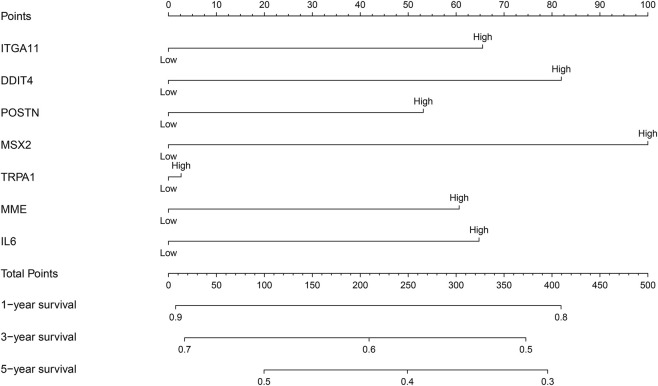
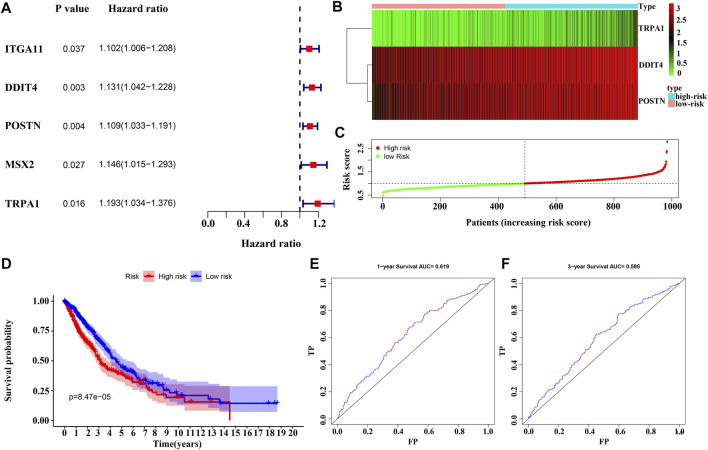
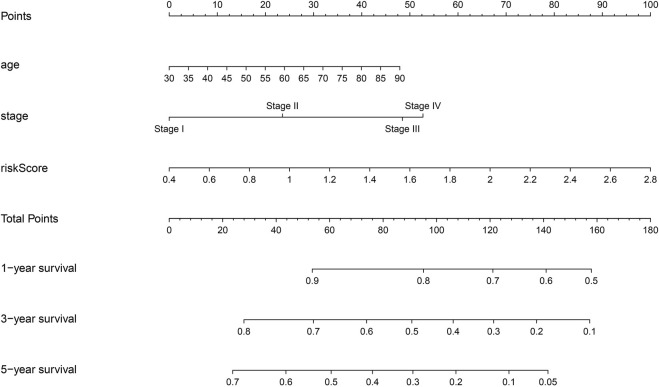
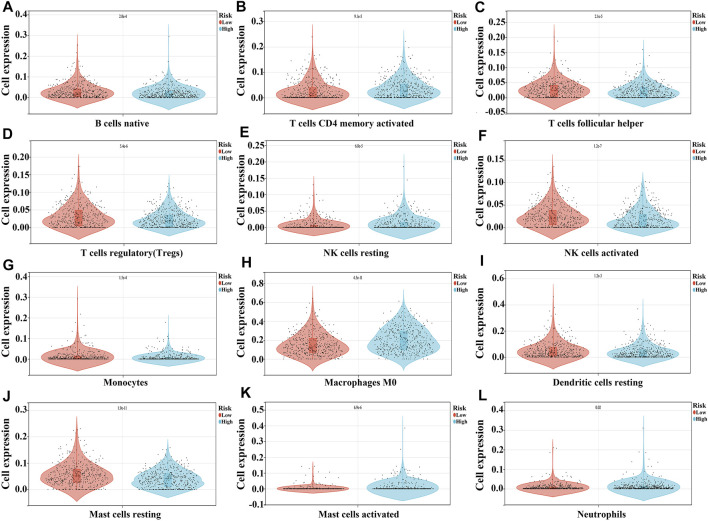
The tumor microenvironment (TME) plays an important regulatory role in the progression of non-small cell lung cancer (NSCLC). Mesenchymal stem cells (MSCs) in the TME might contribute to the occurrence and development of cancer. This study evaluates the role of differentially expressed genes (DEGs) of MSCs and the development of NSCLC and develops a prognostic risk model to assess the therapeutic responses. The DEGs in MSCs from lung tissues and from normal tissues were analyzed using GEO2R. The functions and mechanisms of the DEGs were analyzed using the Gene ontology (GO) and Kyoto Encyclopedia of Genes and Genomes (KEGG). Additionally, the Cancer Genome Atlas (TCGA) database was used to determine the expression levels of the DEGs of MSCs in the NSCLC tissues. The prognostic factors of NSCLC related to MSCs were screened by survival analysis, meta-analysis, Cox regression analysis, and a prognostic risk model and nomogram was developed. The signaling mechanisms and immune roles that risk model participate in NSCLC development were determined via Gene Set Enrichment Analysis and CIBERSORT analysis. Compared to the normal tissues, 161 DEGs were identified in the MSCs of the lung tissues. These DEGs were associated with mechanisms, such as DNA replication, nuclear division, and homologous recombination. The overexpression of , , , , , , and were associated with dismal prognosis of NSCLC patients. A high-risk score based on the prognostic risk model indicated the dismal prognosis of NSCLC patients. The nomogram showed that the age, clinical stage, and risk score affected the prognosis of NSCLC patients. Further, the high-risk model was associated with signaling mechanisms, such as the ECM-receptor interaction pathways, cytokine-cytokine receptor interaction, and MAPK pathways, involved in the progression of NSCLC and was also related to the components of the immune system, such as macrophages M0, T follicular helper cells, regulatory T cells. Therefore, the risk model and nomogram that was constructed on the basis of MSC-related factors such as , , and could facilitate the discovery of target molecules that participate in the progression of NSCLC, which might also serve as new candidate markers for evaluating the prognosis of NSCLC patients.
肿瘤微环境(TME)在非小细胞肺癌(NSCLC)的进展中起着重要的调节作用。TME中的间充质干细胞(MSCs)可能有助于癌症的发生和发展。本研究评估了MSCs差异表达基因(DEGs)在NSCLC发生发展中的作用,并建立了一个预后风险模型来评估治疗反应。使用GEO2R分析来自肺组织和正常组织的MSCs中的DEGs。使用基因本体论(GO)和京都基因与基因组百科全书(KEGG)分析DEGs的功能和机制。此外,利用癌症基因组图谱(TCGA)数据库确定NSCLC组织中MSCs的DEGs表达水平。通过生存分析、荟萃分析、Cox回归分析筛选与MSCs相关的NSCLC预后因素,并建立预后风险模型和列线图。通过基因集富集分析和CIBERSORT分析确定风险模型参与NSCLC发展的信号机制和免疫作用。与正常组织相比,在肺组织的MSCs中鉴定出161个DEGs。这些DEGs与DNA复制、核分裂和同源重组等机制相关。 、 、 、 、 、 和 的过表达与NSCLC患者的不良预后相关。基于预后风险模型的高风险评分表明NSCLC患者预后不良。列线图显示年龄、临床分期和风险评分影响NSCLC患者的预后。此外,高风险模型与参与NSCLC进展的信号机制相关,如细胞外基质-受体相互作用途径、细胞因子-细胞因子受体相互作用和MAPK途径,也与免疫系统的组成部分相关,如巨噬细胞M0、滤泡辅助性T细胞、调节性T细胞。因此,基于 、 、 等与MSCs相关因素构建的风险模型和列线图有助于发现参与NSCLC进展的靶分子,这也可能作为评估NSCLC患者预后的新候选标志物。