Cherniushok Oleksandr, Smitiukh Oleksandr V, Tobola Janusz, Knura Rafal, Marchuk Oleg V, Parashchuk Taras, Wojciechowski Krzysztof T
Thermoelectric Research Laboratory, Department of Inorganic Chemistry, Faculty of Materials Science and Ceramics, AGH University of Science and Technology, Mickiewicza Ave. 30, Krakow 30-059, Poland.
Department of Chemistry and Technology, Volyn National University, Voli Ave 13, Lutsk 43025, Ukraine.
Chem Mater. 2022 Mar 8;34(5):2146-2160. doi: 10.1021/acs.chemmater.1c03593. Epub 2022 Feb 15.
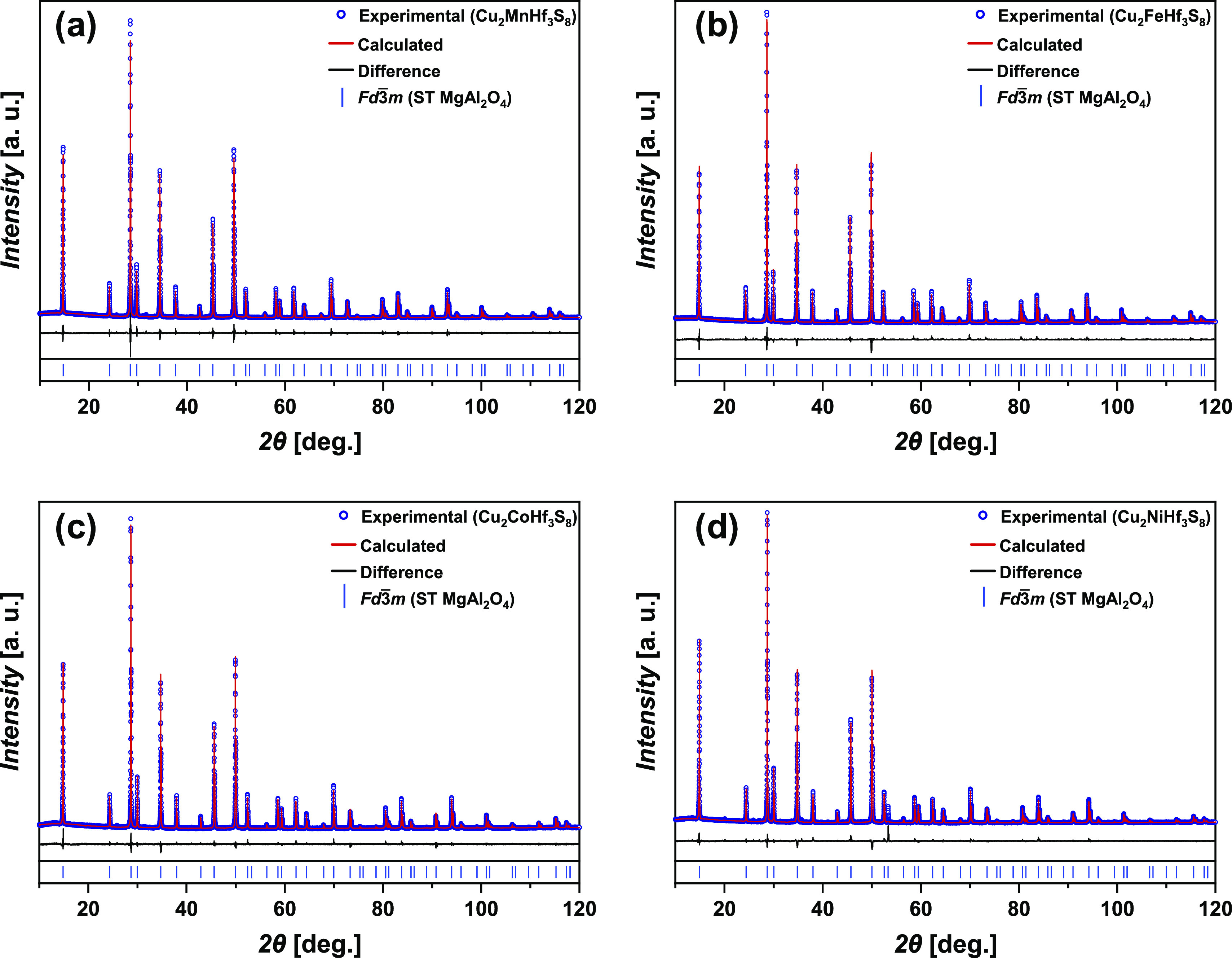
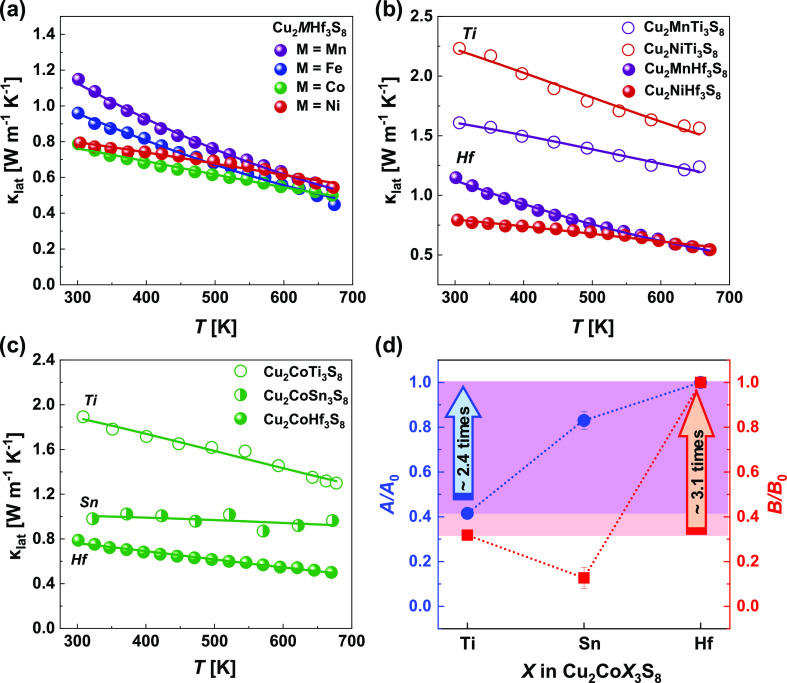
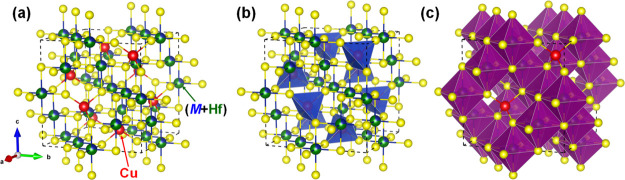
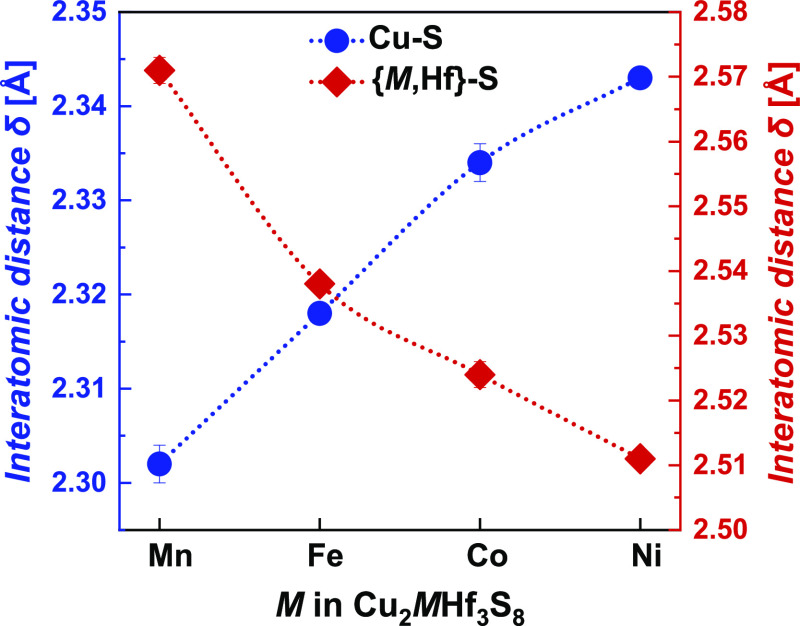
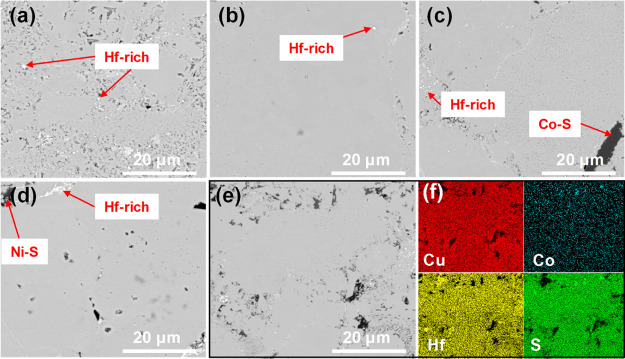
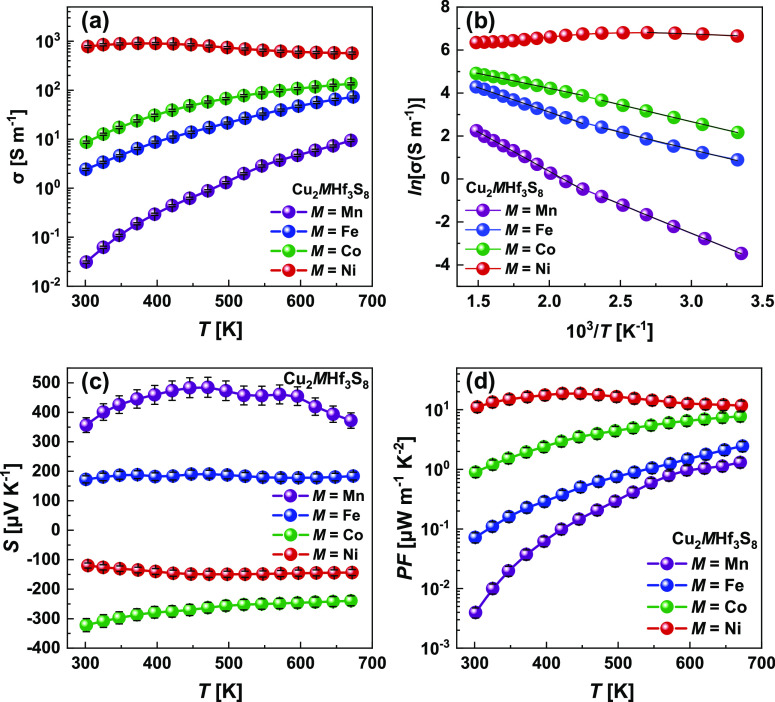
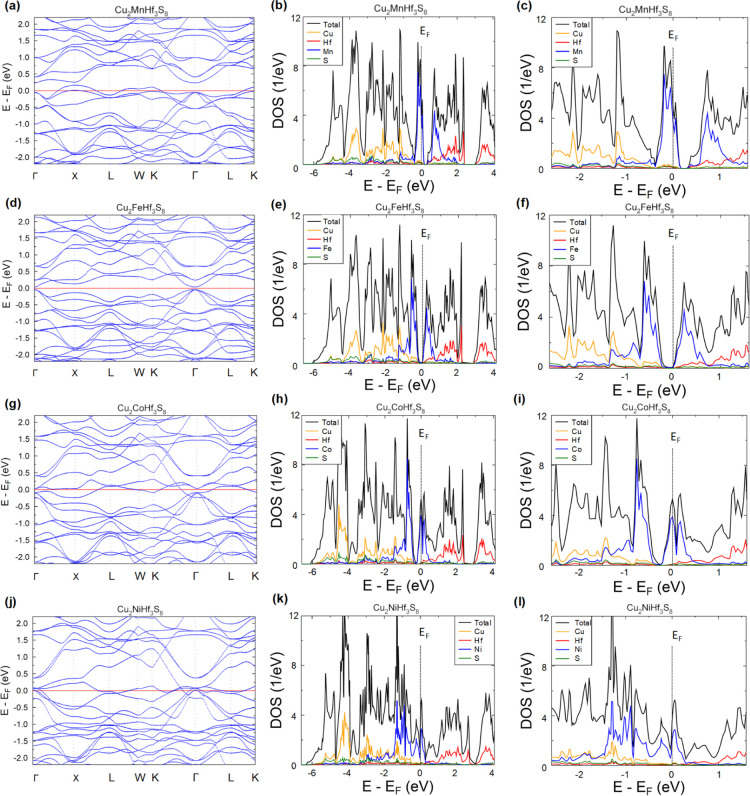
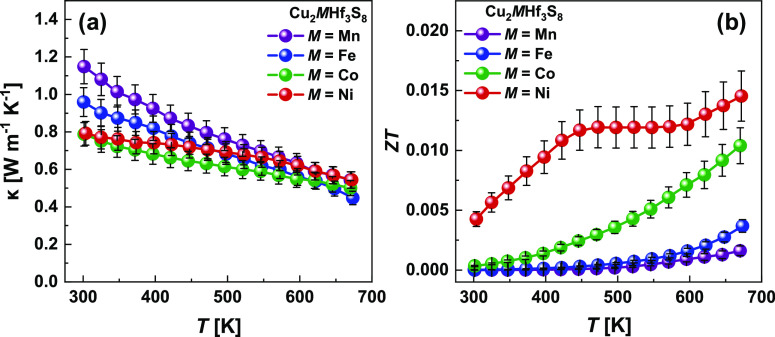
Uncovering of the origin of intrinsically low thermal conductivity in novel crystalline solids is among the main streams in modern thermoelectricity. Because of their earth-abundant nature and environmentally friendly content, Cu-based thiospinels are attractive functional semiconductors, including thermoelectric (TE) materials. Herein, we report the crystal structure, as well as electronic and TE properties of four new CuMHfS (M-Mn, Fe, Co, and Ni) thiospinels. The performed density functional theory calculations predicted the decrease of the band gap and transition from p- to n-type conductivity in the Mn-Fe-Co-Ni series, which was confirmed experimentally. The best TE performance in this work was observed for the CuNiHfS thiospinel due to its highest power factor and low thermal conductivity. Moreover, all the discovered compounds possess very low lattice thermal conductivity κ over the investigated temperature range. The κ for CuCoHfS has been found to be as low as 0.8 W m K at 298 K and 0.5 W m K at 673 K, which are significantly lower values compared to the other Cu-based thiospinels reported up to date. The strongly disturbed phonon transport of the investigated alloys mainly comes from the peculiar crystal structure where the large cubic unit cells contain many vacant octahedral voids. As it was evaluated from the Callaway approach and confirmed by the speed of sound measurements, such a crystal structure promotes the increase in lattice anharmonicity, which is the main reason for the low κ. This work provides a guideline for the engineering of thermal transport in thiospinels and offers the discovered CuMHfS (M-Mn, Fe, Co, and Ni) compounds, as new promising functional materials with low lattice thermal conductivity.
揭示新型晶体固体中固有低导热率的起源是现代热电学的主流研究方向之一。由于铜基硫代尖晶石具有储量丰富且环保的特性,它们作为包括热电(TE)材料在内的功能性半导体颇具吸引力。在此,我们报告了四种新型CuMHfS(M = Mn、Fe、Co和Ni)硫代尖晶石的晶体结构以及电子和热电性能。进行的密度泛函理论计算预测了Mn - Fe - Co - Ni系列中带隙的减小以及从p型到n型导电性的转变,这一点得到了实验证实。在这项工作中,CuNiHfS硫代尖晶石表现出最佳的热电性能,这归因于其最高的功率因子和低导热率。此外,在所研究的温度范围内,所有发现的化合物都具有非常低的晶格热导率κ。已发现CuCoHfS在298 K时的κ低至0.8 W m⁻¹ K⁻¹,在673 K时为0.5 W m⁻¹ K⁻¹,与迄今为止报道的其他铜基硫代尖晶石相比,这些值要低得多。所研究合金中强烈受扰的声子输运主要源于其特殊的晶体结构,其中大的立方晶胞包含许多空的八面体空隙。正如通过Callaway方法评估并经声速测量证实的那样,这种晶体结构促进了晶格非谐性的增加,这是κ较低的主要原因。这项工作为硫代尖晶石中的热输运工程提供了指导方针,并提供了所发现的CuMHfS(M = Mn、Fe、Co和Ni)化合物,作为具有低晶格热导率的新型有前景的功能材料。