ENT Institute and Department of Otorhinolaryngology, Eye & ENT Hospital, State Key Laboratory of Medical Neurobiology and MOE Frontiers Center for Brain Science, Fudan University, Shanghai, 200031, China.
Institutes of Biomedical Sciences, Fudan University, Shanghai, 200032, China.
Signal Transduct Target Ther. 2022 Mar 14;7(1):79. doi: 10.1038/s41392-022-00893-4.
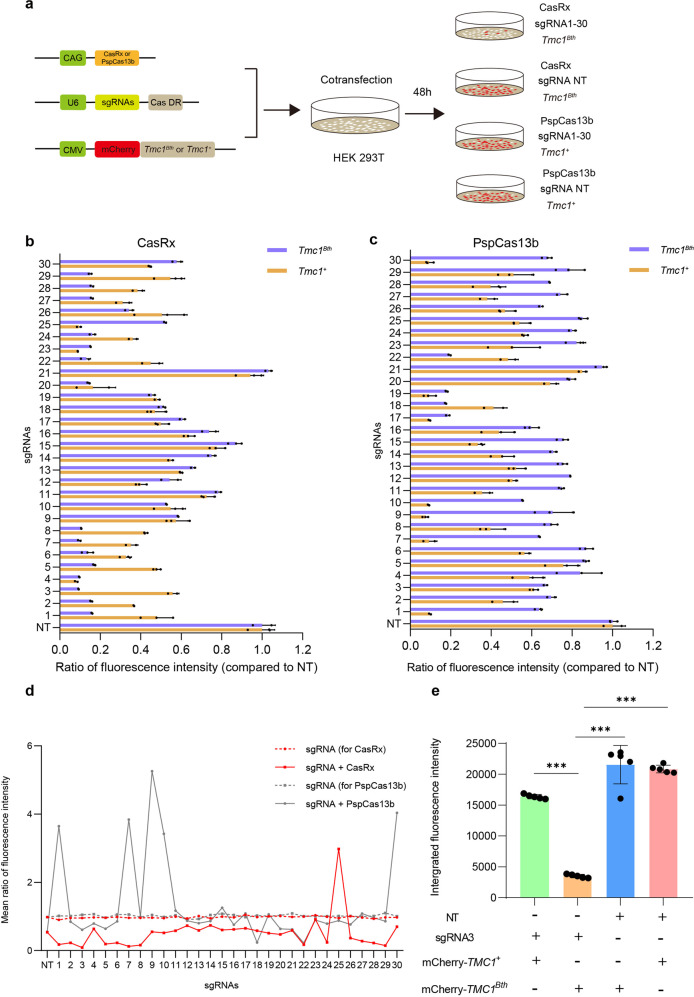
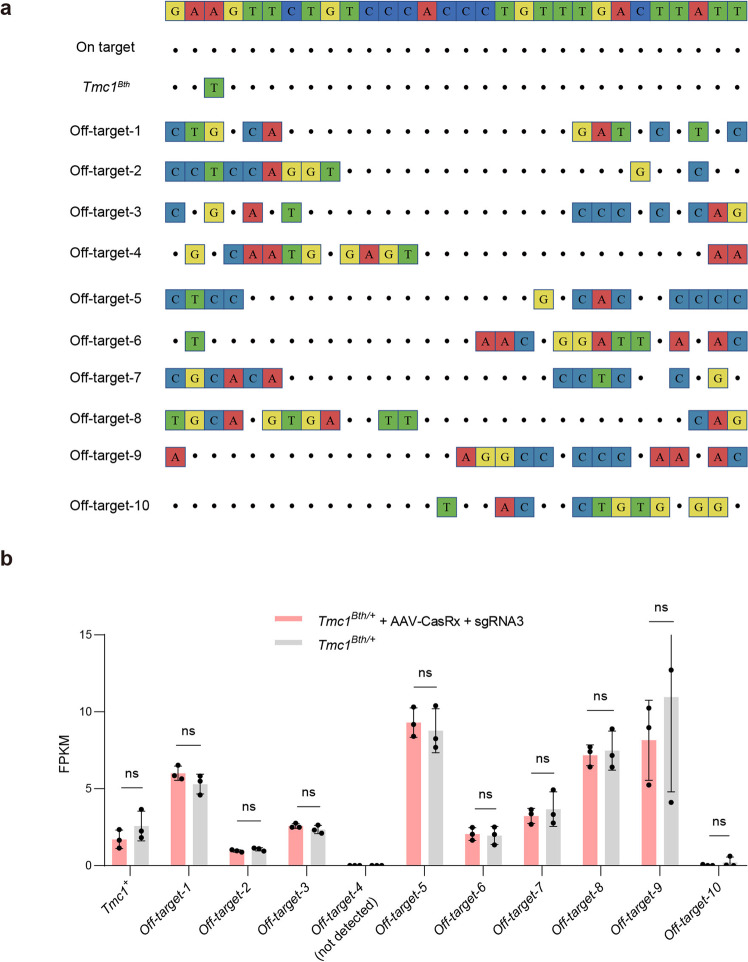
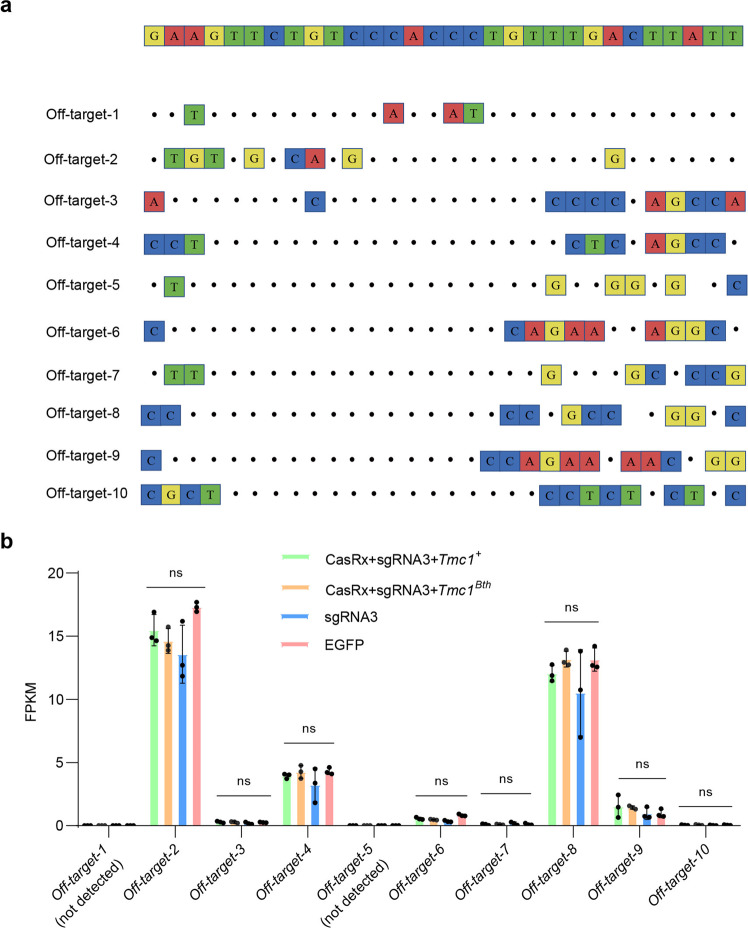
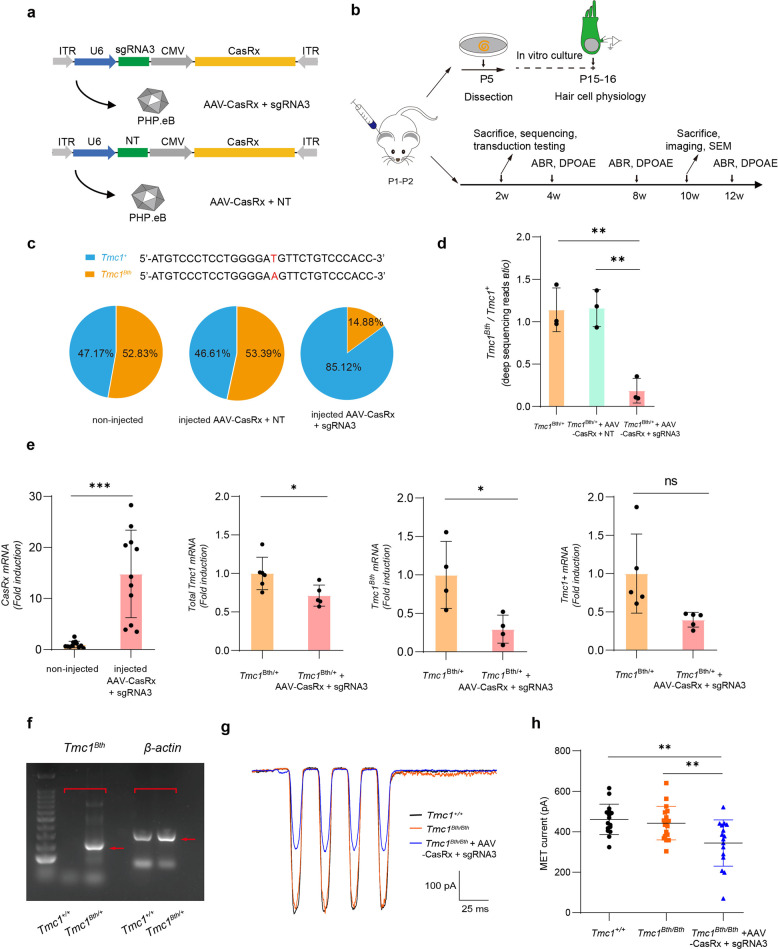
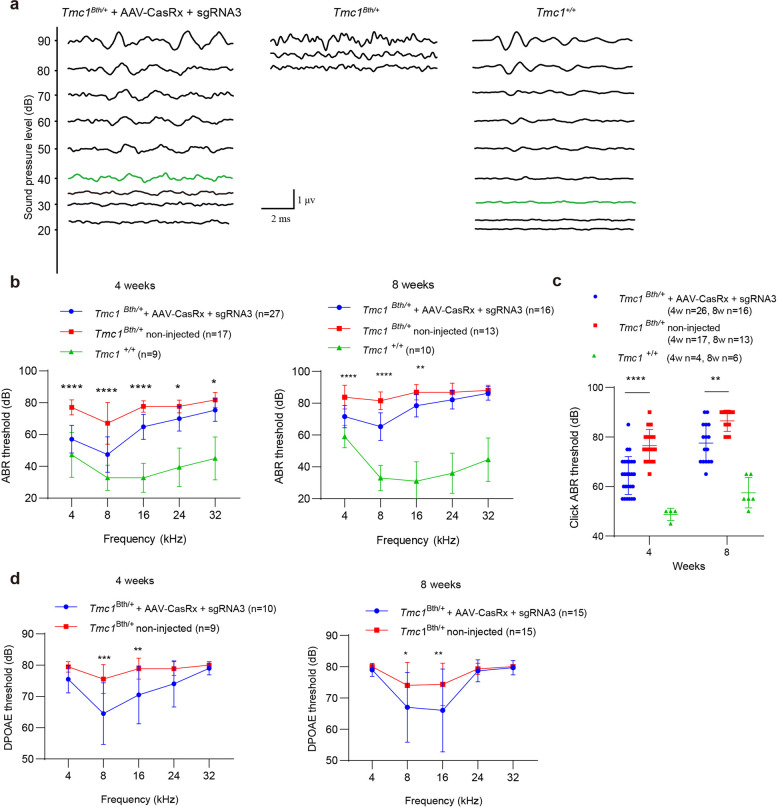
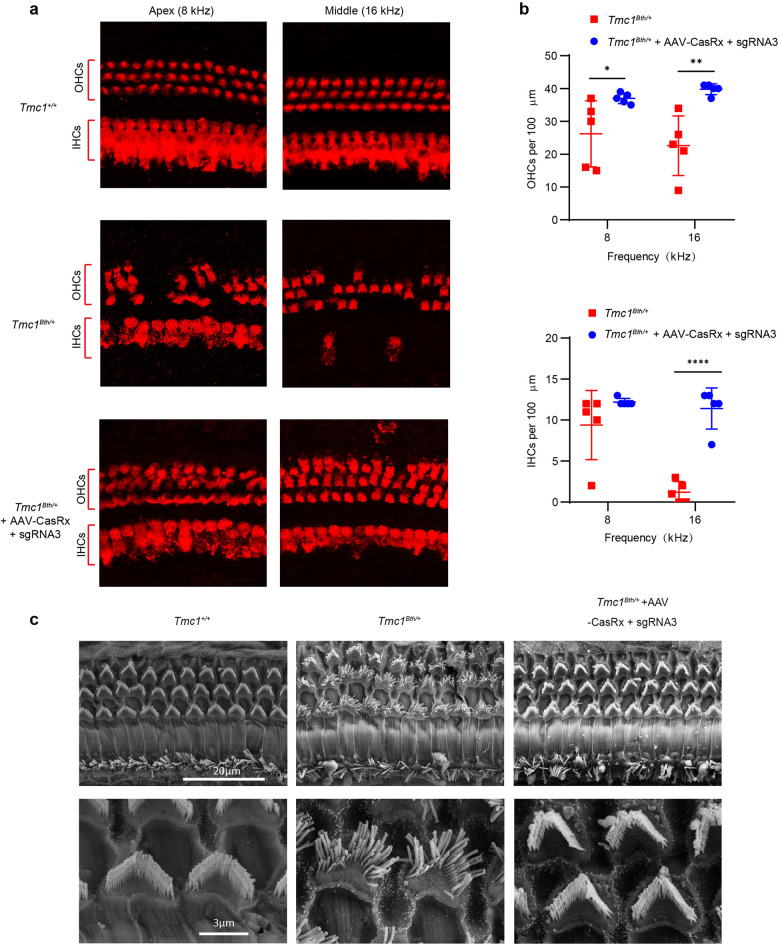
CRISPR/RfxCas13d (CasRx) editing system can specifically and precisely cleave single-strand RNAs, which is a promising treatment for various disorders by downregulation of related gene expression. Here, we tested this RNA-editing approach on Beethoven (Bth) mice, an animal model for human DFNA36 due to a point mutation in Tmc1. We first screened 30 sgRNAs in cell cultures and found that CasRx with sgRNA3 reduced the Tmc1 transcript by 90.8%, and the Tmc1 wild type transcript (Tmc1) by 44.3%. We then injected a newly developed AAV vector (AAV-PHP.eB) based CasRx into the inner ears of neonatal Bth mice, and we found that Tmc1 was reduced by 70.2% in 2 weeks with few off-target effects in the whole transcriptome. Consistently, we found improved hair cell survival, rescued hair bundle degeneration, and reduced mechanoelectrical transduction current. Importantly, the hearing performance, measured in both ABR and DPOAE thresholds, was improved significantly in all ages over 8 weeks. We, therefore, have validated the CRISPR/CasRx-based RNA editing strategy in treating autosomal-dominant hearing loss, paving way for its further application in many other hereditary diseases in hearing and beyond.
CRISPR/RfxCas13d (CasRx) 编辑系统可以特异性和精确地切割单链 RNA,通过下调相关基因表达,这是治疗各种疾病的有前途的方法。在这里,我们在 Beethoven (Bth) 小鼠上测试了这种 RNA 编辑方法,该小鼠是由于 Tmc1 点突变引起的人类 DFNA36 的动物模型。我们首先在细胞培养物中筛选了 30 个 sgRNA,发现 CasRx 与 sgRNA3 将 Tmc1 转录本降低了 90.8%,而 Tmc1 野生型转录本 (Tmc1) 降低了 44.3%。然后,我们将一种新开发的基于 AAV 的 CasRx 载体 (AAV-PHP.eB) 注射到新生 Bth 小鼠的内耳中,发现 Tmc1 在 2 周内降低了 70.2%,而整个转录组的脱靶效应很少。一致地,我们发现毛细胞存活率提高,毛束退化得到挽救,机械电转换电流减少。重要的是,在所有年龄组中,ABR 和 DPOAE 阈值的听力性能均得到了显著改善。因此,我们已经验证了基于 CRISPR/CasRx 的 RNA 编辑策略在治疗常染色体显性遗传性听力损失中的有效性,为其在听力和其他遗传性疾病中的进一步应用铺平了道路。