Mahmood Zahid, Ali Mohsin, Mirza Javed Iqbal, Fayyaz Muhammad, Majeed Khawar, Naeem Muhammad Kashif, Aziz Abdul, Trethowan Richard, Ogbonnaya Francis Chuks, Poland Jesse, Quraishi Umar Masood, Hickey Lee Thomas, Rasheed Awais, He Zhonghu
Department of Plant Sciences, Quaid-i-Azam University, Islamabad, Pakistan.
Crop Sciences Institute, National Agricultural Research Centre (NARC), Islamabad, Pakistan.
Front Plant Sci. 2022 Feb 24;13:788593. doi: 10.3389/fpls.2022.788593. eCollection 2022.
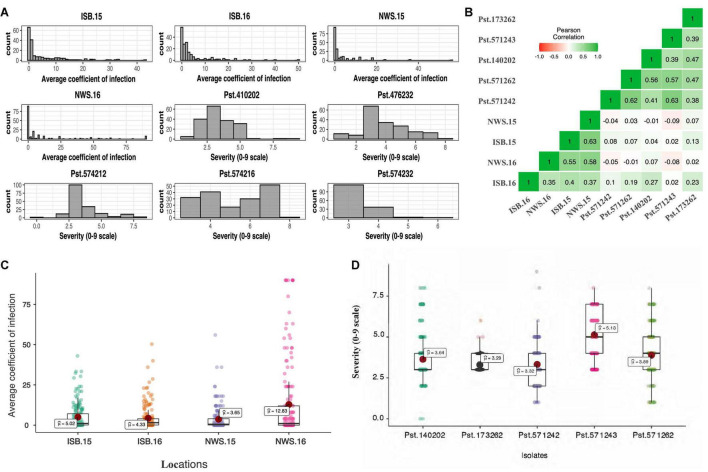
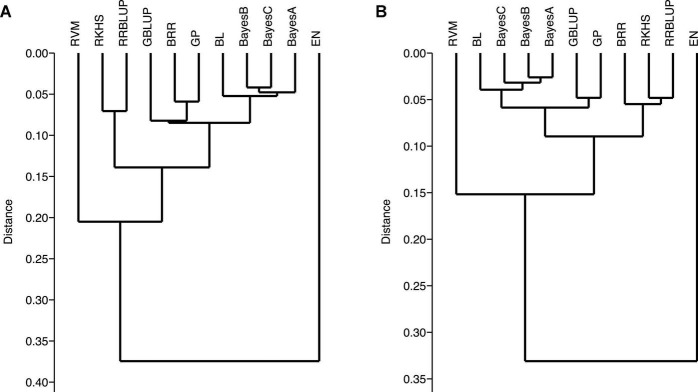
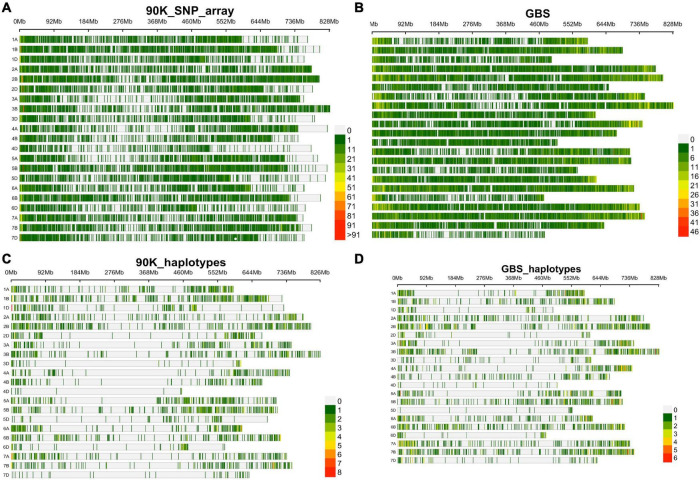
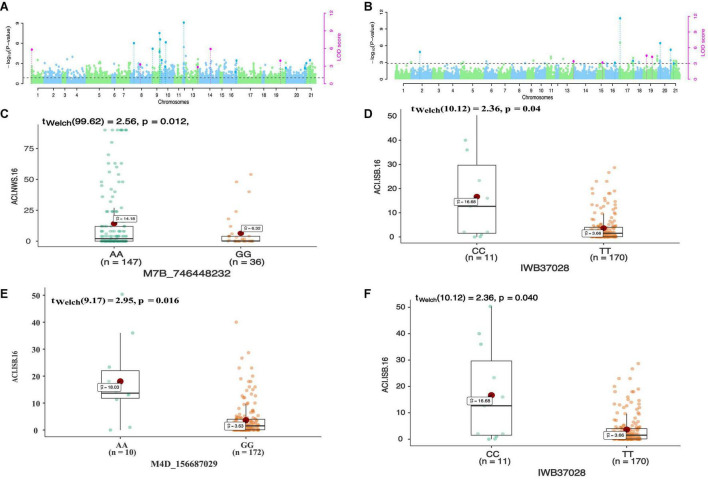
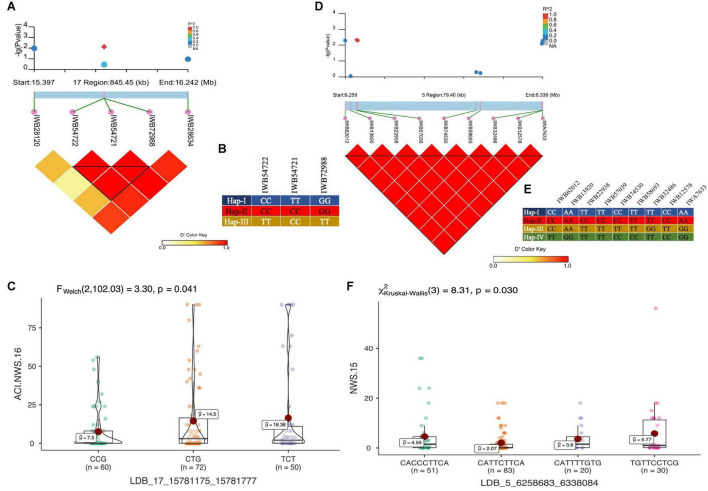
Stripe rust caused by () is an economically important disease attacking wheat all over the world. Identifying and deploying new genes for resistance is an economical and long-term strategy for controlling . A genome-wide association study (GWAS) using single nucleotide polymorphisms (SNPs) and functional haplotypes were used to identify loci associated with stripe rust resistance in synthetic-derived (SYN-DER) wheats in four environments. In total, 92 quantitative trait nucleotides (QTNs) distributed over 65 different loci were associated with resistance to at seedling and adult plant stages. Nine additional loci were discovered by the linkage disequilibrium-based haplotype-GWAS approach. The durable rust-resistant gene provided resistance in all four environments, and against all the five races used in this study. The analysis identified several SYN-DER accessions that carried major genes: either or . New loci were also identified on chr2B, chr5B, and chr7D, and 14 QTNs and three haplotypes identified on the D-genome possibly carry new alleles of the known genes contributed by the founders. We also evaluated eleven different models for genomic prediction of resistance, and a prediction accuracy up to 0.85 was achieved for an adult plant resistance, however, genomic prediction for seedling resistance remained very low. A meta-analysis based on a large number of existing GWAS would enhance the identification of new genes and loci for stripe rust resistance in wheat. The genetic framework elucidated here for stripe rust resistance in SYN-DER identified the novel loci for resistance to assembled in adapted genetic backgrounds.
由()引起的条锈病是一种在全球范围内对小麦造成经济损失的重要病害。鉴定和部署新的抗病基因是控制条锈病的一种经济且长期的策略。在四个环境中,利用单核苷酸多态性(SNP)和功能单倍型进行全基因组关联研究(GWAS),以鉴定人工合成衍生(SYN-DER)小麦中与条锈病抗性相关的位点。总共,分布在65个不同位点的92个数量性状核苷酸(QTN)与幼苗期和成株期对条锈病的抗性相关。通过基于连锁不平衡的单倍型-GWAS方法又发现了9个位点。持久抗病基因在所有四个环境中均提供抗性,并且对本研究中使用的所有五个条锈菌生理小种都有抗性。分析鉴定出了几个携带主要基因(要么是 ,要么是 )的SYN-DER种质。在2B染色体、5B染色体和7D染色体上也鉴定出了新位点,并且在D基因组上鉴定出的14个QTN和三个单倍型可能携带了由 供体贡献的已知基因的新等位基因。我们还评估了11种不同的条锈病抗性基因组预测模型,成株期抗性的预测准确率高达0.85,然而,幼苗期抗性的基因组预测仍然很低。基于大量现有GWAS的荟萃分析将增强对小麦条锈病抗性新基因和位点的鉴定。这里阐明的SYN-DER小麦条锈病抗性遗传框架确定了在适应的遗传背景中组装的条锈病抗性新位点。