Queiroz-Telles Flavio, Bonifaz Alexandro, Cognialli Regielly, Lustosa Bruno P R, Vicente Vania Aparecida, Ramírez-Marín Hassiel Aurelio
Department of Public Health, Hospital de Clínicas, Federal University of Paraná, Curitiba, Brazil.
Mycology Department, Hospital General de México "Dr. Eduardo Liceaga", Mexico City, México.
Curr Fungal Infect Rep. 2022;16(2):33-46. doi: 10.1007/s12281-022-00429-x. Epub 2022 Mar 8.
Pediatric sporotrichosis has not been sufficiently studied; this review aims to evaluate the risk and prognostic factors related to the development of sporotrichosis associated to this age group. Also, we want to evaluate the causes of the increased number of cases of sporotrichosis in the pediatric population such as environmental changes in endemic areas, the biodiversity, and virulence among the pathogenic clade causing sporotrichosis in different areas of the globe, and especially the progression of the zoonotic transmission of infections caused by infections, associated to zoonotic transmission in Brazil and other endemic sporotrichosis countries.
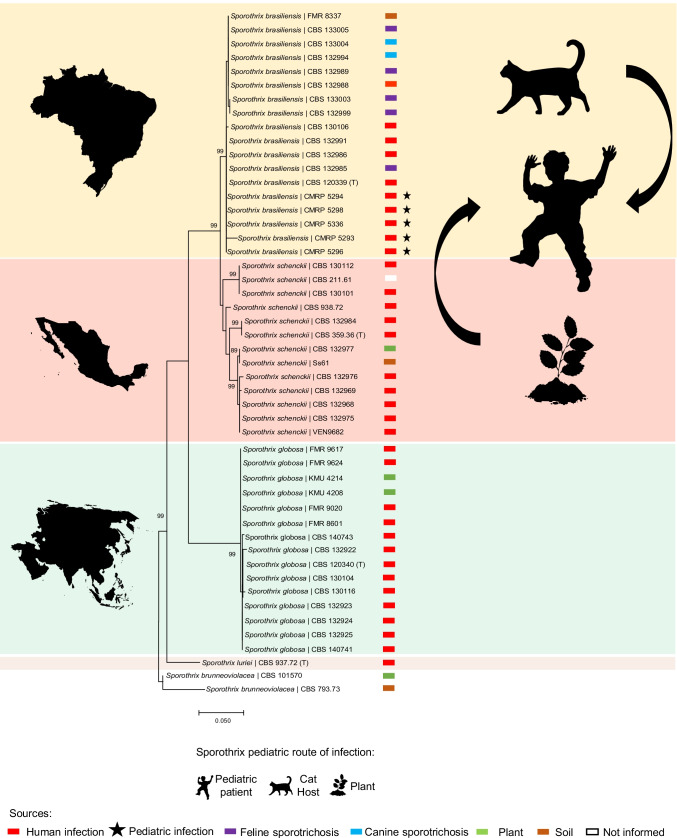
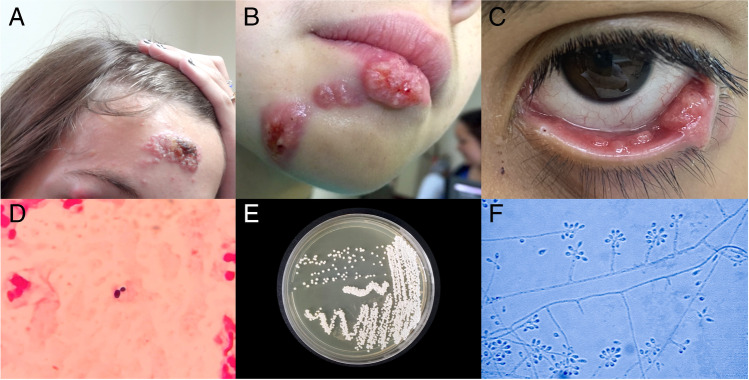
After evaluating a case series of 40 patients, we found that pediatric sporotrichosis in Mexico is mainly caused by which prevails in rural areas and is mainly sapronotically transmitted. In Brazil, the longest and largest pediatric sporotrichosis outbreak is caused by , etiologically related to sick cats, directly from lesions containing a high yeast cell burden. When affecting children and may cause distinct clinical manifestations especially in the onset of the disease and affected anatomical site. In Mexico, most of the patients are successfully treated with potassium iodide, whereas in Brazil, all patients respond to itraconazole.
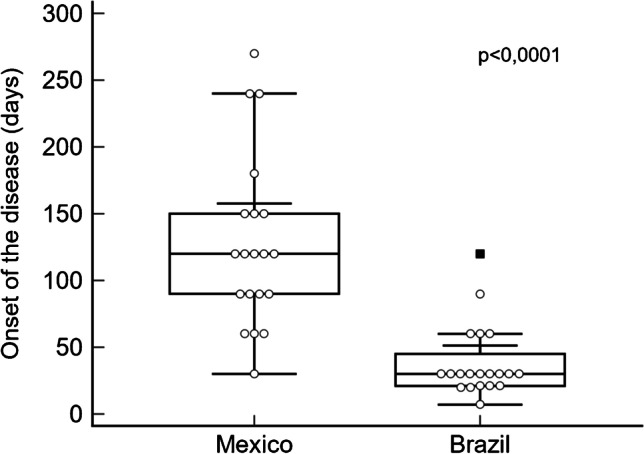
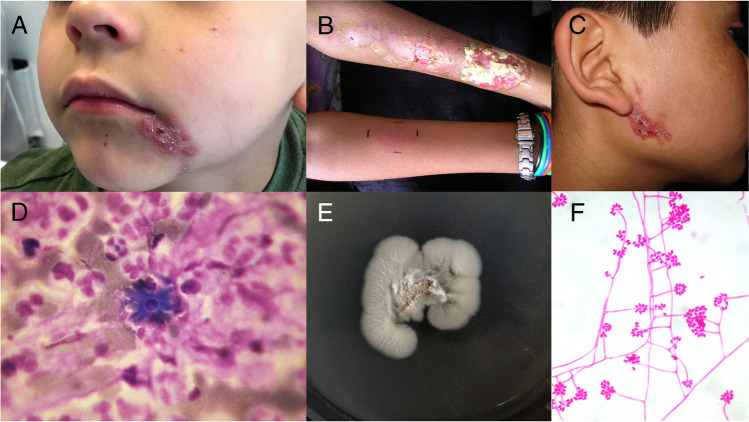
is the major etiologic agent in Mexico, being sapronotically transmitted, while in Brazil, is only transmitted by cats. In Mexico, the disease prevails in male patients (60%) from rural areas; in Brazil, the disease is more frequent in females (60%) from an urban region. Due to the zoonotic sporotrichosis outbreak in Brazil, the time of evolution seems to be shorter in Brazilian patients than in Mexican patients. Most Brazilian patients presented with facial lesions, including ocular involvement, while in Mexico, most of the children presented upper limbs involvement. In Mexico, treatment with potassium iodide in children was observed to induce faster remission than itraconazole, but controlled studies are lacking to evaluate this versus itraconazole, due to the low number of cases. A comparative study should be designed to evaluate the best and safest antifungal therapy for pediatric sporotrichosis.
The online version contains supplementary material available at 10.1007/s12281-022-00429-x.
儿童孢子丝菌病尚未得到充分研究;本综述旨在评估与该年龄组孢子丝菌病发生相关的风险和预后因素。此外,我们还想评估儿童人群中孢子丝菌病病例数增加的原因,如流行地区的环境变化、生物多样性以及全球不同地区引起孢子丝菌病的致病分支中的毒力,特别是与巴西和其他孢子丝菌病流行国家的人畜共患病传播相关的感染传播情况。
在评估了40例患者的病例系列后,我们发现墨西哥的儿童孢子丝菌病主要由[具体菌种1]引起,该菌种在农村地区占主导地位,主要通过腐生传播。在巴西,持续时间最长、规模最大的儿童孢子丝菌病疫情是由[具体菌种2]引起的,病因与病猫有关,直接来自酵母细胞负荷高的病变部位。当感染儿童时,[具体菌种1]和[具体菌种2]可能会引起不同的临床表现,尤其是在疾病发作和受影响的解剖部位方面。在墨西哥,大多数患者用碘化钾成功治疗,而在巴西,所有患者对伊曲康唑有反应。
[具体菌种1]是墨西哥的主要病原体,通过腐生传播,而在巴西,[具体菌种2]仅通过猫传播。在墨西哥,该病在农村地区的男性患者中占主导(60%);在巴西,该病在城市地区的女性患者中更常见(60%)。由于巴西发生了人畜共患孢子丝菌病疫情,巴西患者的病程似乎比墨西哥患者短。大多数巴西患者出现面部病变,包括眼部受累,而在墨西哥,大多数儿童出现上肢受累。在墨西哥,观察到儿童用碘化钾治疗比用伊曲康唑诱导缓解更快,但由于病例数少,缺乏对照研究来评估其与伊曲康唑的疗效对比。应设计一项比较研究来评估儿童孢子丝菌病的最佳和最安全的抗真菌治疗方法。
在线版本包含可在10.1007/s12281-022-00429-x获取的补充材料。