Yang Wenjuan, Tan Shiming, Yang Lixia, Chen Xiaohui, Yang Ruiqian, Oyang Linda, Lin Jinguan, Xia Longzheng, Wu Nayiyuan, Han Yaqian, Tang Yanyan, Su Min, Luo Xia, Yang Yiqing, Huang Lisheng, Hu Zifan, Tao Yi, Liu Lin, Jin Yi, Wang Hui, Liao Qianjin, Zhou Yujuan
Hunan Key Laboratory of Cancer Metabolism, Hunan Cancer Hospital and the Affiliated Cancer Hospital of Xiangya School of Medicine, Central South University, 283 Tongzipo Road, Changsha 410013, Hunan, China.
University of South China, West Changsheng Road, Hengyang 421001, Hunan, China.
Mol Ther Oncolytics. 2022 Feb 15;24:612-623. doi: 10.1016/j.omto.2022.02.008. eCollection 2022 Mar 17.
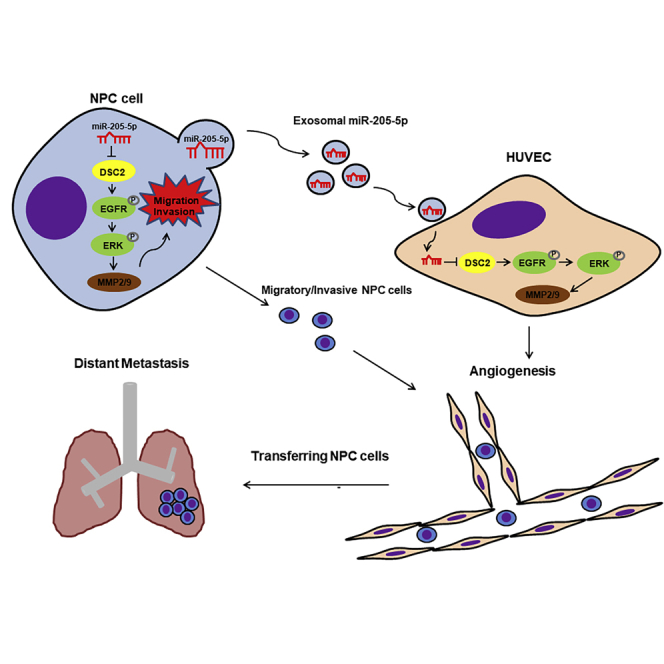
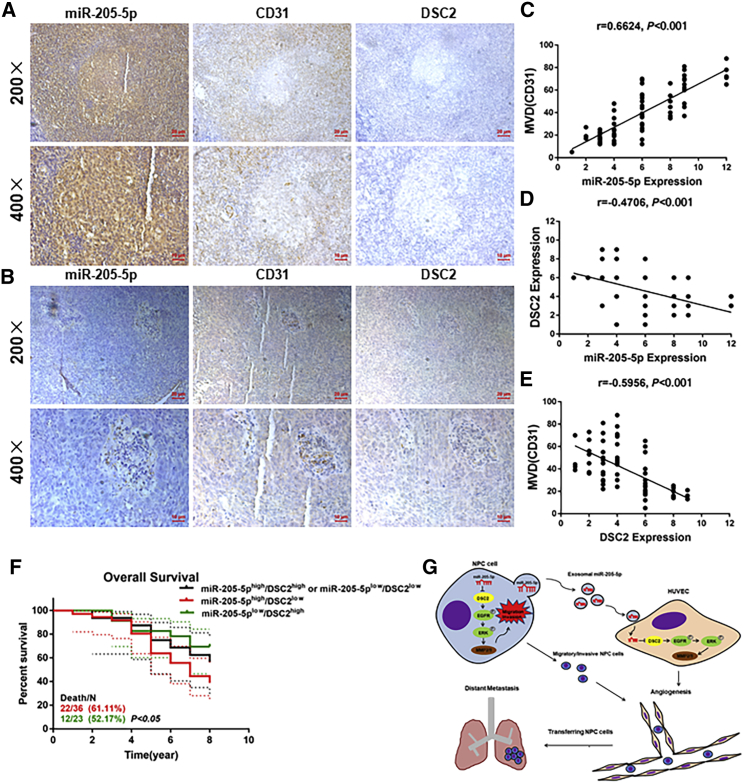
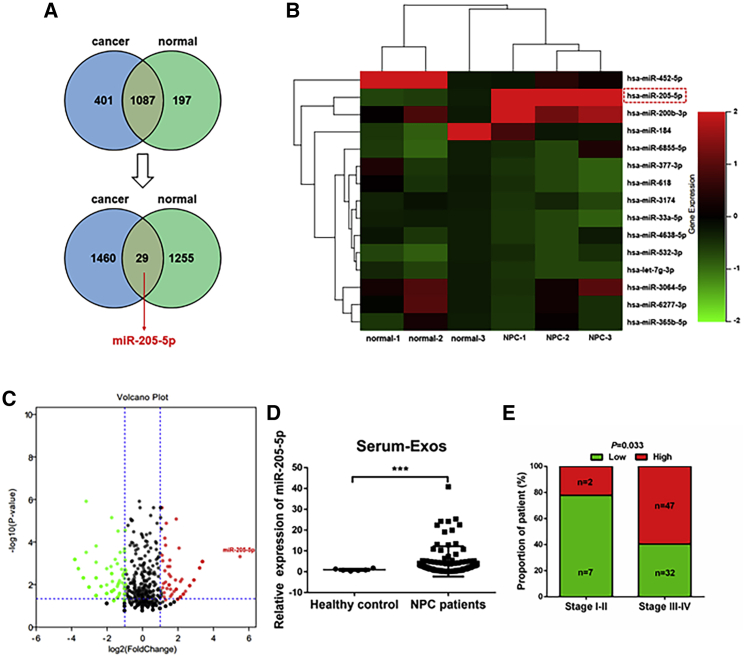
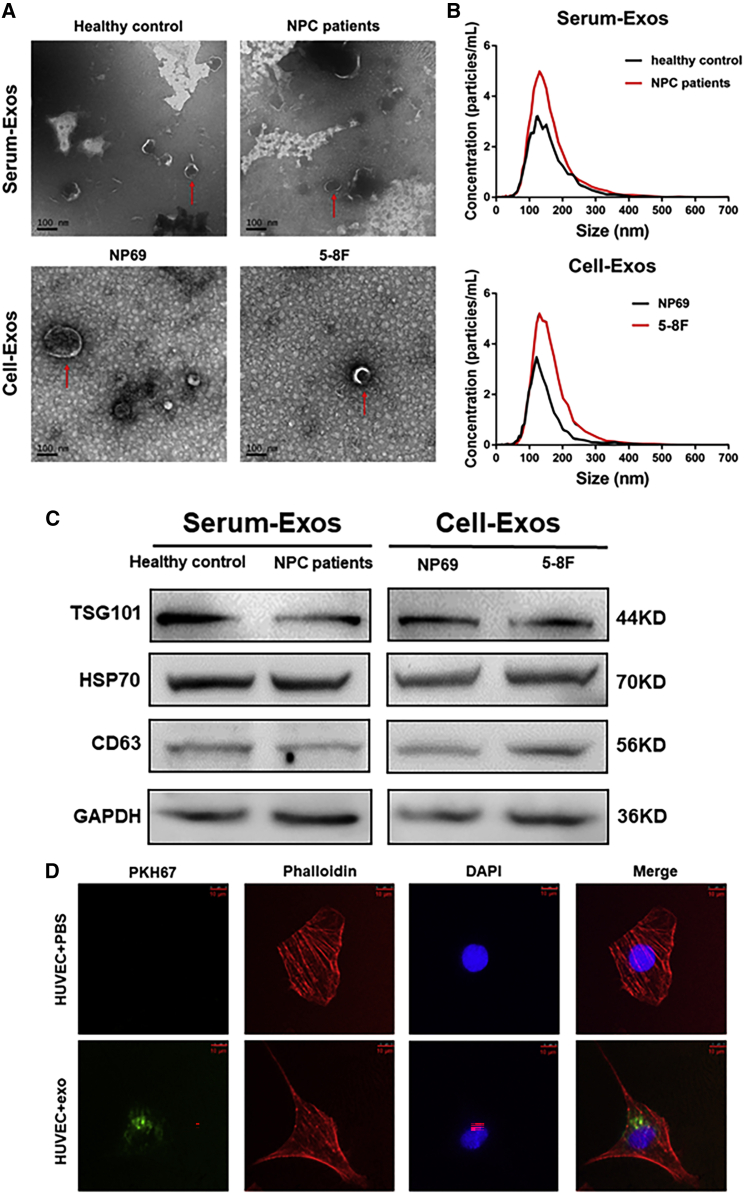
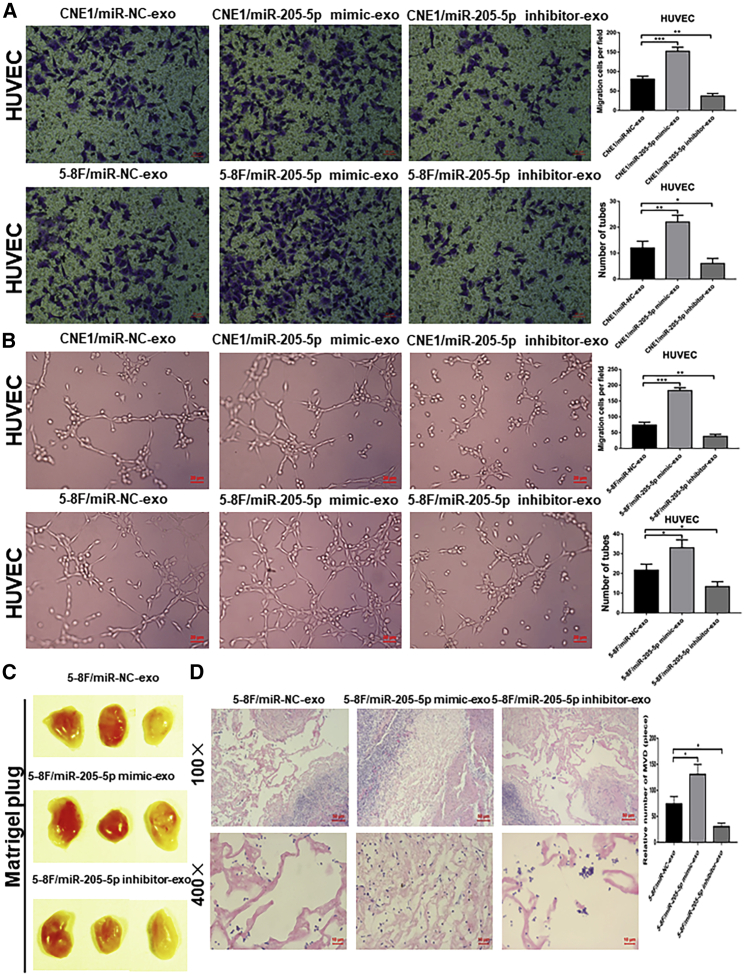
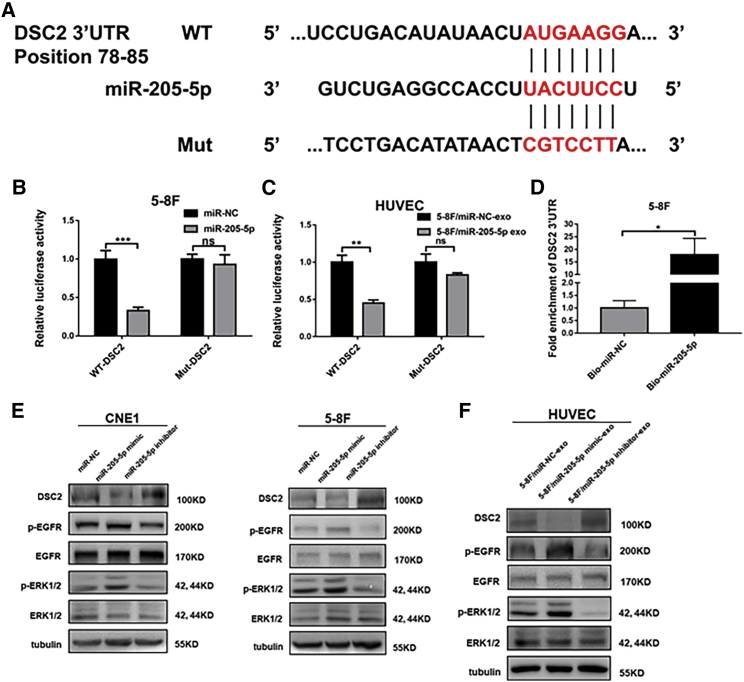
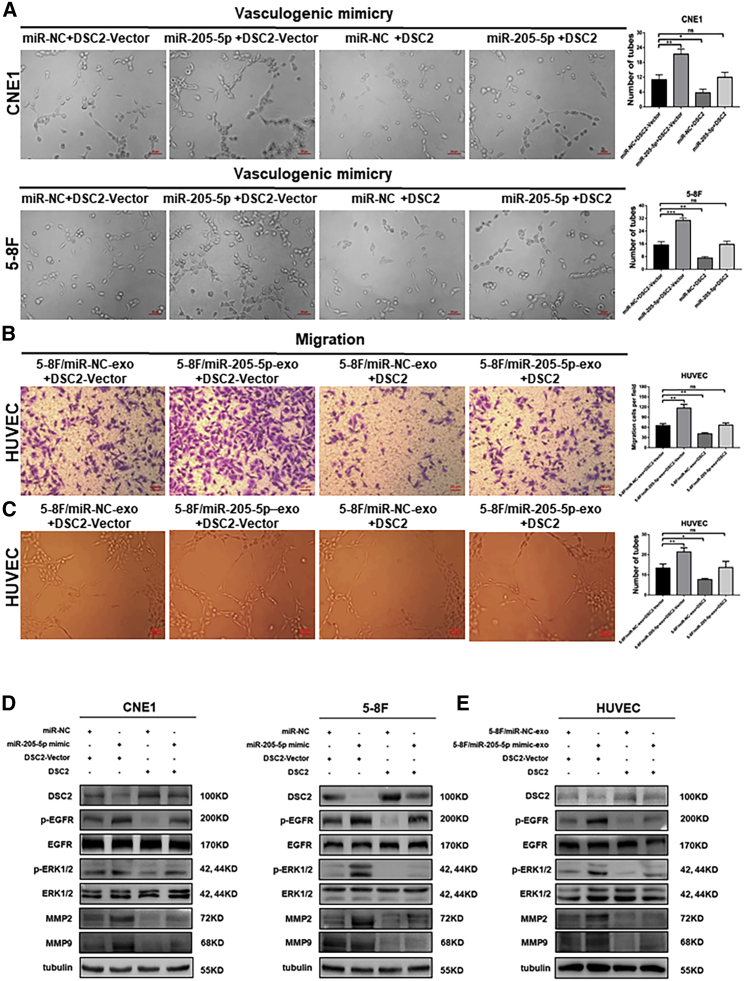
The aim of this study was to investigate whether and how exosomal miR-205-5p regulated angiogenesis and nasopharyngeal carcinoma (NPC) metastasis. We found that up-regulated serum exosomal miR-205-5p levels were associated with NPC progression and worse overall survival of NPC patients. miR-205-5p over-expression significantly increased tube formation, wound healing, migration and invasion of NPC cells, and lung metastasis of NPC tumors, whereas miR-205-5p inhibition had opposite effects. Exosomal miR-205-5p from NPC cells promoted the migration, tube formation, and microvessel density (MVD) of HUVECs and . Furthermore, bioinformatics-, luciferase reporter-, and biotinylated miR-205-5p-based pull-down assays indicated that miR-205-5p directly bound to the 3' UTR of (). Exosomal miR-205-5p targeted to enhance the EGFR/ERK signaling and MMP2/MMP9 expression, promoting angiogenesis and NPC metastasis, which was abrogated by DSC2 over-expression. Finally, the levels of miR-205-5p transcripts were positively correlated with MVD but negatively with DSC2 expression in NPC tissues, and patients with miR-205/DSC2 NPC had worse overall survival. In conclusion, exosomal miR-205-5p promotes angiogenesis and NPC metastasis by targeting DSC2 to enhance EGFR/ERK signaling and MMP expression. This exosomal/miR-205-5p/EGFR/ERK axis may be a new therapeutic target for intervention of NPC metastasis.
本研究的目的是探讨外泌体miR-205-5p是否以及如何调节血管生成和鼻咽癌(NPC)转移。我们发现血清外泌体miR-205-5p水平上调与NPC进展及NPC患者较差的总生存期相关。miR-205-5p过表达显著增加了NPC细胞的管腔形成、伤口愈合、迁移和侵袭,以及NPC肿瘤的肺转移,而miR-205-5p抑制则产生相反的效果。NPC细胞来源的外泌体miR-205-5p促进了人脐静脉内皮细胞(HUVECs)的迁移、管腔形成和微血管密度(MVD)。此外,基于生物信息学、荧光素酶报告基因和生物素化miR-205-5p的下拉实验表明,miR-205-5p直接与()的3'UTR结合。外泌体miR-205-5p靶向()以增强EGFR/ERK信号传导和MMP2/MMP9表达,促进血管生成和NPC转移,而DSC2过表达可消除这种作用。最后,NPC组织中miR-205-5p转录本水平与MVD呈正相关,但与DSC2表达呈负相关,且miR-205/DSC2型NPC患者的总生存期较差。总之,外泌体miR-205-5p通过靶向DSC2增强EGFR/ERK信号传导和MMP表达来促进血管生成和NPC转移。这个外泌体/miR-205-5p/EGFR/ERK轴可能是干预NPC转移的一个新的治疗靶点。