Department of Environmental Toxicology, Texas Tech University, Lubbock, TX, United States of America.
Environmental Science and Studies, Towson University, Towson, MD, United States of America.
PeerJ. 2022 Mar 9;10:e13054. doi: 10.7717/peerj.13054. eCollection 2022.
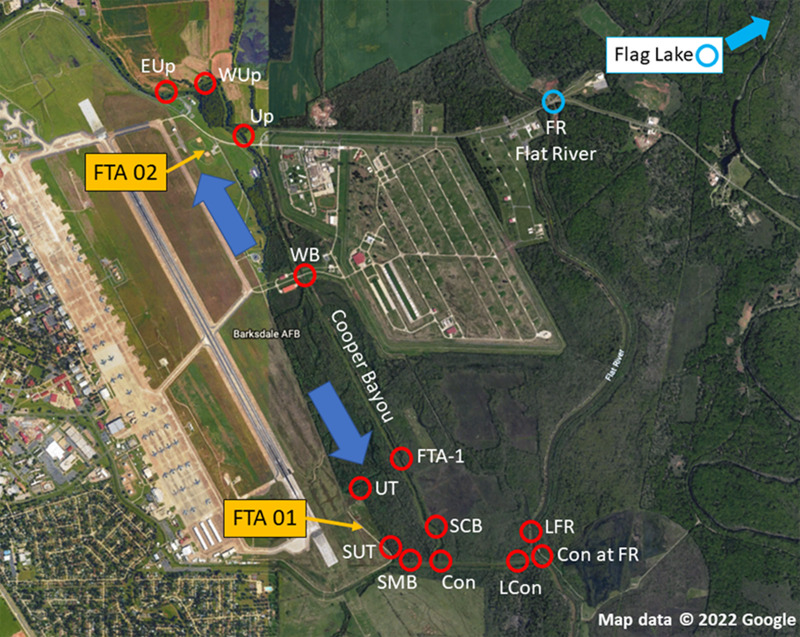
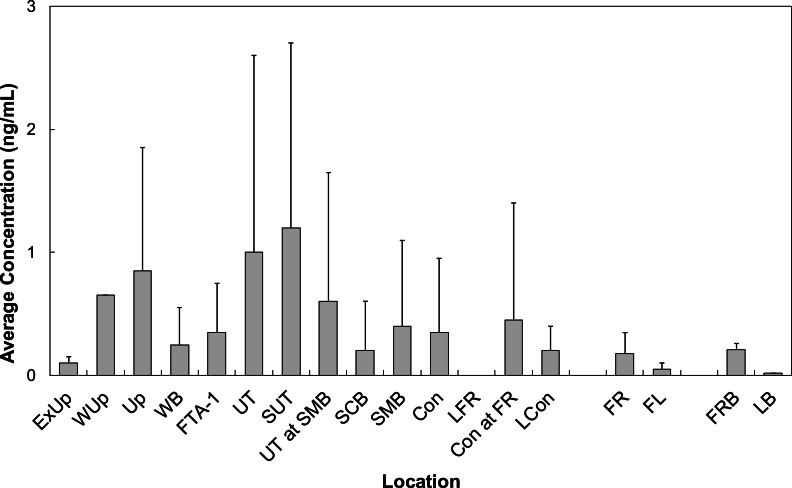
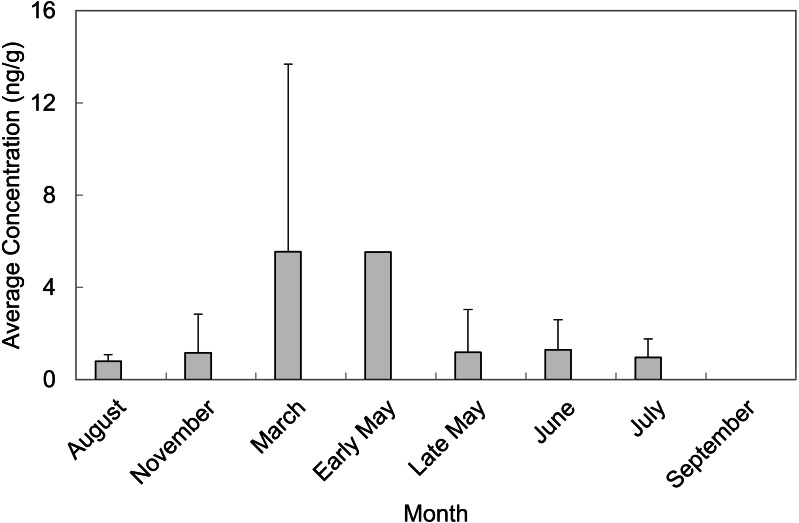
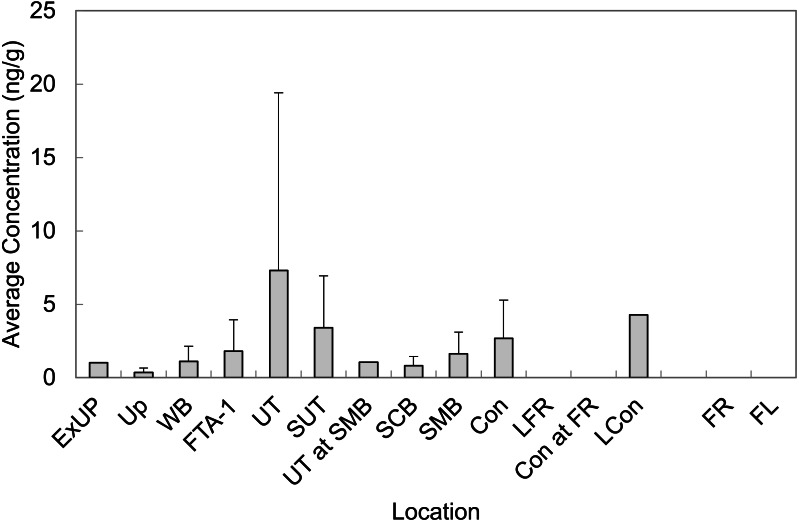
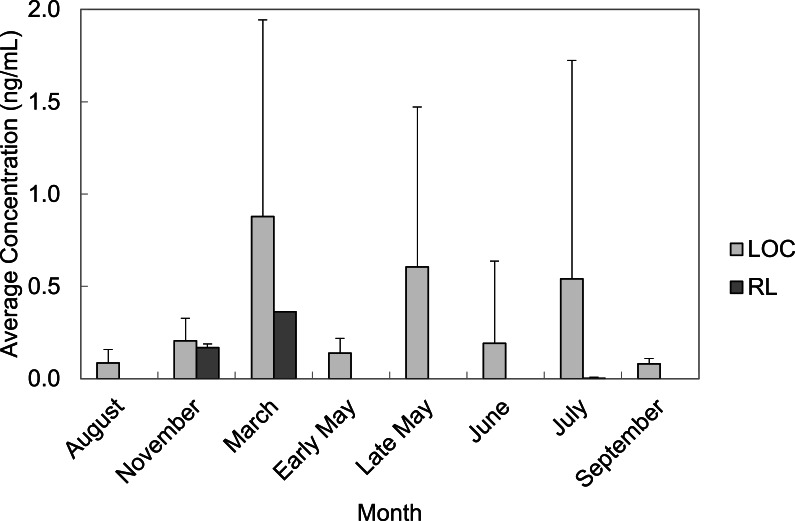
Perfluoroalkyl acids (PFAAs) are environmentally persistent components of surfactants that consist of fully fluorinated carbon chains and a terminal sulfonate or carboxylate polar head moiety. Due to their unique amphiphilic properties, PFAAs are used in the manufacturing of products such as aqueous film forming foams (AFFF). There is cause for concern for PFAA contamination resulting from runoff and groundwater infiltration of AFFF that were used during fire training. This study analyzed water and sediment samples that were collected over a 13-month sampling period from bayous upstream and downstream of two former fire training areas located near Barksdale Air Force Base (BAFB); the occurrence and magnitude of PFAAs supported an aquatic ecological risk assessment of potential impacts of PFAAs at the site. Liquid chromatography coupled with mass spectrometry was used for determination of 6 PFAAs listed under the third Unregulated Contaminant Monitoring Rule (UCMR 3). Total PFAA concentrations in surface water and sediment samples ranged from 0 (ND) -7.1 ng/mL and 0 (ND) -31.4 ng/g, respectively. Perfluorooctanesulfonic acid (PFOS) and perfluorooctanoic acid (PFOA) were the predominant PFAAs detected. In general, perfluorosulfonates were quantified more frequently and at higher concentrations than perfluorocarboxylates. The perfluoroalkyl chain length of PFAAs also showed significant influence on PFAA concentrations when analyzed by Spearman's rank correlation analysis. Some contamination we observed in surface water and sediment samples from reference locations could be a result of local runoff from the use of commercial products containing per- and poly-fluoroalkyl substances (PFAS), but AFFF appears to be the primary source given the close proximity of the historical fire training areas.
全氟烷基酸(PFAAs)是由全氟碳链和末端磺酸盐或羧酸盐极性头部分组成的表面活性剂中具有环境持久性的成分。由于其独特的两亲性特性,PFAAs 被用于制造水性成膜泡沫(AFFF)等产品。由于在消防训练中使用的 AFFF 的径流和地下水渗透,导致 PFAA 污染,这引起了人们的关注。本研究分析了在位于巴克斯代尔空军基地(BAFB)附近的两个前消防训练区上下游的河口采集的 13 个月的水样和沉积物样品;PFAAs 的出现和幅度支持了对该地点 PFAAs 潜在影响的水生生态风险评估。使用液相色谱-质谱联用技术测定了第三个未受管制污染物监测规则(UCMR 3)下列出的 6 种 PFAAs。地表水和沉积物样品中的总 PFAAs 浓度范围分别为 0(ND)-7.1ng/mL 和 0(ND)-31.4ng/g。全氟辛烷磺酸(PFOS)和全氟辛酸(PFOA)是检测到的主要 PFAAs。一般来说,全氟磺酸盐的定量频率和浓度都高于全氟羧酸盐。通过 Spearman 秩相关分析,当分析 PFAAs 的全氟烷基链长度时,PFAAs 的浓度也显示出显著的影响。在参考位置的地表水和沉积物样品中观察到的一些污染可能是由于使用含有全氟和多氟烷基物质(PFAS)的商业产品导致的当地径流造成的,但鉴于历史消防训练区的临近,AFFF 似乎是主要来源。