Chauhan Ravendra P, Gordon Michelle L
School of Laboratory Medicine and Medical Sciences, Nelson R. Mandela School of Medicine, College of Health Sciences, University of KwaZulu-Natal, 719 Umbilo Road, Durban, 4001, South Africa.
Porcine Health Manag. 2022 Mar 14;8(1):10. doi: 10.1186/s40813-022-00251-4.
Backyard swine farming is critical to generating subsistence and food security in rural and peri-urban households in several developing countries. The objective of this systematic review was to analyze the molecular and serological prevalence of influenza A virus (IAV) in backyard swine populations globally.
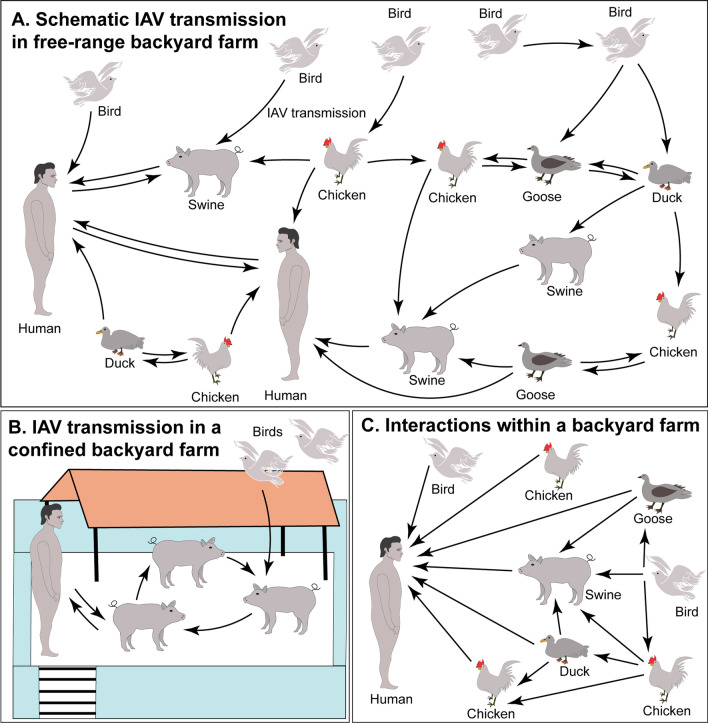
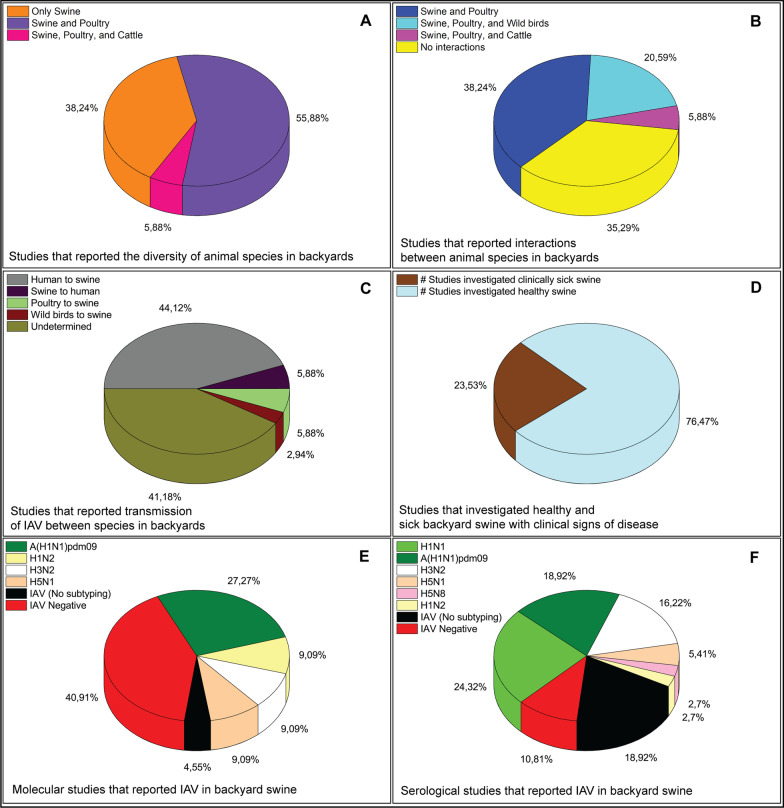
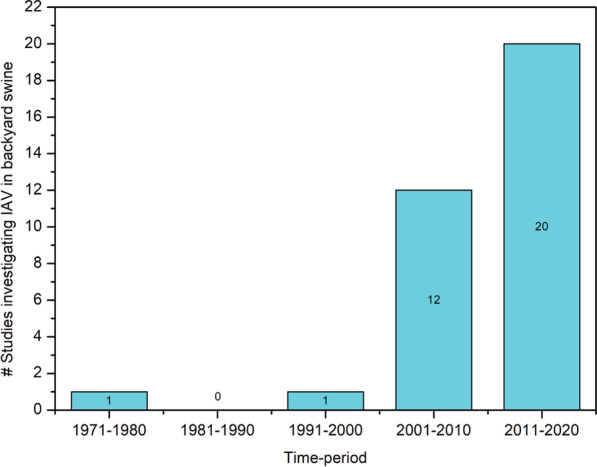
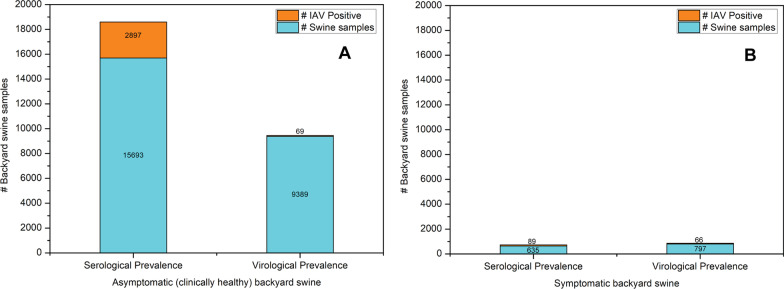
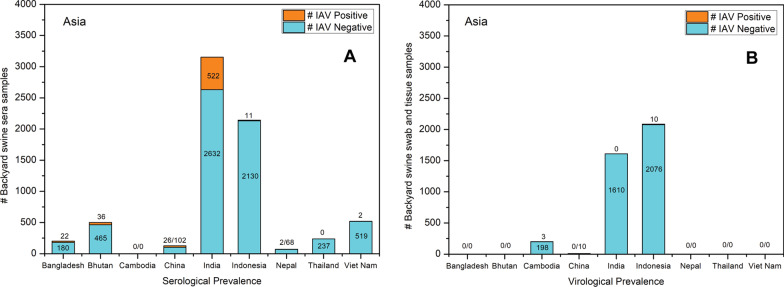
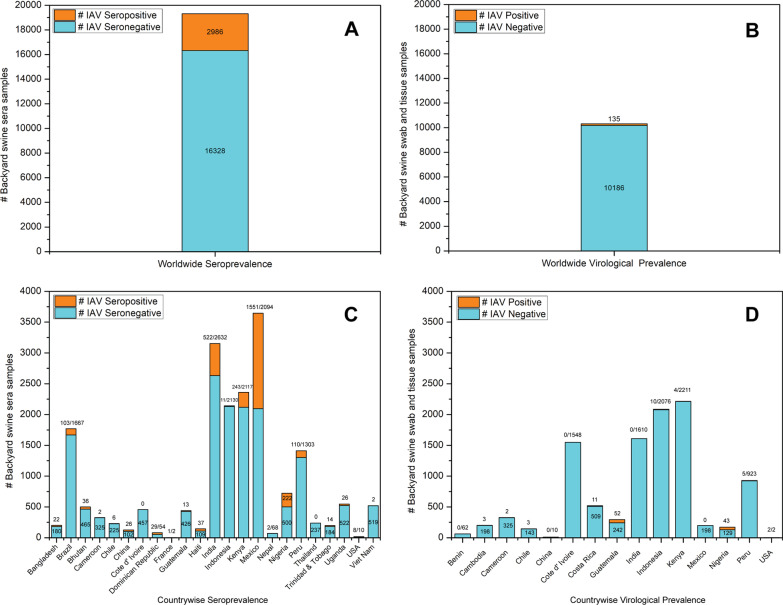
We identified 34 full-text research articles in NCBI-PubMed and Google Scholar databases that have reported IAV sero- and/or virological prevalence in backyard swine up to 11 July 2021. The highest number of studies were reported from Asia (n = 11) followed by North America (n = 10), South America (n = 6), Africa (n = 6), and Europe (n = 1). While the maximum number of studies (44.12%) reported human-to-swine transmission of IAV, swine-to-human (5.88%), poultry-to-swine (5.88%), and wild birds-to-swine (2.94%) transmissions were also reported. An overall higher IAV seroprevalence (18.28%) in backyard swine was detected compared to the virological prevalence (1.32%). The human-origin pandemic A(H1N1)pdm09 virus clade 1A.3.3.2 was the more frequently detected IAV subtype in virological studies (27.27%) than serological studies (18.92%). In addition, the avian-origin highly pathogenic H5N1 and H5N8 viruses were also detected, which further substantiated the evidence of avian-swine interactions in the backyards.
Human-swine and avian-swine interactions in backyards may transmit IAV between species. Monitoring the circulation and evolution of IAV in backyard swine would help stakeholders make informed decisions to ensure sustainable backyard swine farming and public safety.
在一些发展中国家,后院养猪对于农村和城郊家庭的生计及粮食安全至关重要。本系统综述的目的是分析全球后院猪群中甲型流感病毒(IAV)的分子和血清学流行情况。
我们在NCBI - PubMed和谷歌学术数据库中识别出34篇全文研究文章,这些文章报告了截至2021年7月11日后院猪中IAV的血清学和/或病毒学流行情况。报告研究数量最多的是亚洲(n = 11),其次是北美洲(n = 10)、南美洲(n = 6)、非洲(n = 6)和欧洲(n = 1)。虽然最多的研究(44.12%)报告了IAV的人传猪传播,但也报告了猪传人(5.88%)、禽传猪(5.88%)和野鸟传猪(2.94%)的传播情况。与病毒学流行率(1.32%)相比,在后院猪中检测到总体更高的IAV血清学流行率(18.28%)。在病毒学研究中,人源大流行A(H1N1)pdm09病毒1A.3.3.2分支比血清学研究(18.92%)更频繁地被检测到(27.27%)。此外,还检测到禽源高致病性H5N1和H5N8病毒,这进一步证实了后院中禽 - 猪相互作用的证据。
后院中的人 - 猪和禽 - 猪相互作用可能会在物种间传播IAV。监测后院猪中IAV的传播和进化将有助于利益相关者做出明智决策,以确保后院养猪业的可持续发展和公共安全。