Bahji Anees, Breward Natasha, Duff Whitney, Absher Nafisa, Patten Scott B, Alcorn Jane, Mousseau Darrell D
Department of Psychiatry, University of Calgary, 2500 University Drive NW, Calgary, Alberta, T2N 1N4, Canada.
Cannabinoid Research Initiative of Saskatchewan (CRIS), Saskatchewan, Canada.
J Cannabis Res. 2022 Mar 14;4(1):11. doi: 10.1186/s42238-022-00119-y.
We undertook this systematic review to determine the efficacy and safety of cannabis-based medicine as a treatment for behavioral, psychological, and motor symptoms associated with neurocognitive disorders.
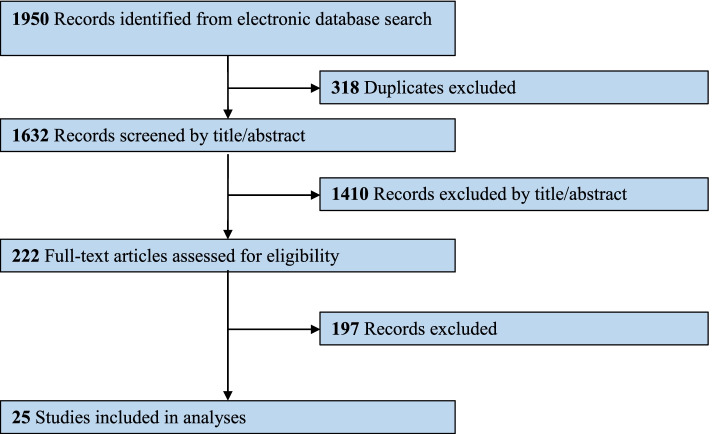
We conducted a PRISMA-guided systematic review to identify studies using cannabis-based medicine to treat behavioral, psychological, and motor symptoms among individuals with Alzheimer's disease (AD) dementia, Parkinson's disease (PD), and Huntington's disease (HD). We considered English-language articles providing original data on three or more participants, regardless of design.
We identified 25 studies spanning 1991 to 2021 comprised of 14 controlled trials, 5 pilot studies, 5 observational studies, and 1 case series. In most cases, the cannabinoids tested were dronabinol, whole cannabis, and cannabidiol, and the diagnoses included AD (n = 11), PD (n = 11), and HD (n = 3). Primary outcomes were motor symptoms (e.g., dyskinesia), sleep disturbance, cognition, balance, body weight, and the occurrence of treatment-emergent adverse events.
A narrative summary of the findings from the limited number of studies in the area highlights an apparent association between cannabidiol-based products and relief from motor symptoms in HD and PD and an apparent association between synthetic cannabinoids and relief from behavioral and psychological symptoms of dementia across AD, PD, and HD. These preliminary conclusions could guide using plant-based versus synthetic cannabinoids as safe, alternative treatments for managing neuropsychiatric symptoms in neurocognitive vulnerable patient populations.
我们进行了这项系统评价,以确定大麻类药物作为治疗与神经认知障碍相关的行为、心理和运动症状的疗效和安全性。
我们进行了一项遵循PRISMA指南的系统评价,以识别使用大麻类药物治疗阿尔茨海默病(AD)痴呆、帕金森病(PD)和亨廷顿病(HD)患者的行为、心理和运动症状的研究。我们纳入了提供关于三名或更多参与者原始数据的英文文章,无论其设计如何。
我们识别出了1991年至2021年期间的25项研究,包括14项对照试验、5项试点研究、5项观察性研究和1个病例系列。在大多数情况下,所测试的大麻素为屈大麻酚、全大麻和大麻二酚,诊断包括AD(n = 11)、PD(n = 11)和HD(n = 3)。主要结局为运动症状(如运动障碍)、睡眠障碍、认知、平衡、体重以及治疗中出现的不良事件的发生情况。
该领域有限数量研究结果的叙述性总结突出了基于大麻二酚的产品与HD和PD运动症状缓解之间的明显关联,以及合成大麻素与AD、PD和HD中痴呆的行为和心理症状缓解之间的明显关联。这些初步结论可为使用植物性与合成大麻素作为安全的替代疗法来管理神经认知脆弱患者群体中的神经精神症状提供指导。