Wyss Institute for Biologically Inspired Engineering at Harvard University, Boston, MA, 02115, USA.
Department of Pathology, Brigham and Women's Hospital and Harvard Medical School, Boston, MA, 02115, USA.
Adv Sci (Weinh). 2022 May;9(14):e2103241. doi: 10.1002/advs.202103241. Epub 2022 Mar 14.
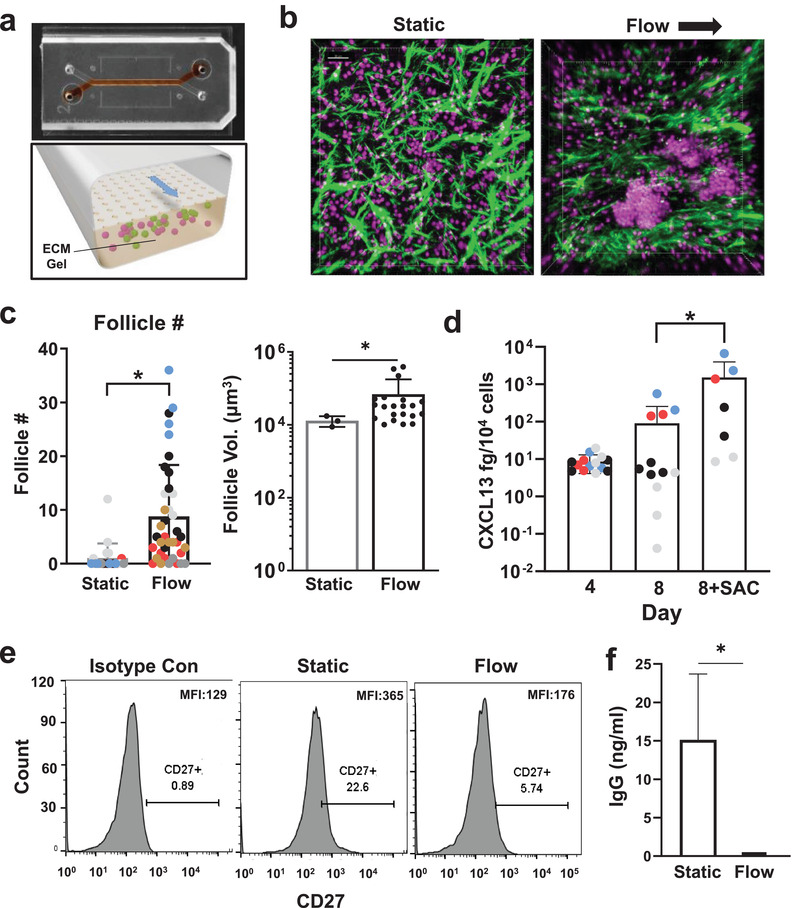
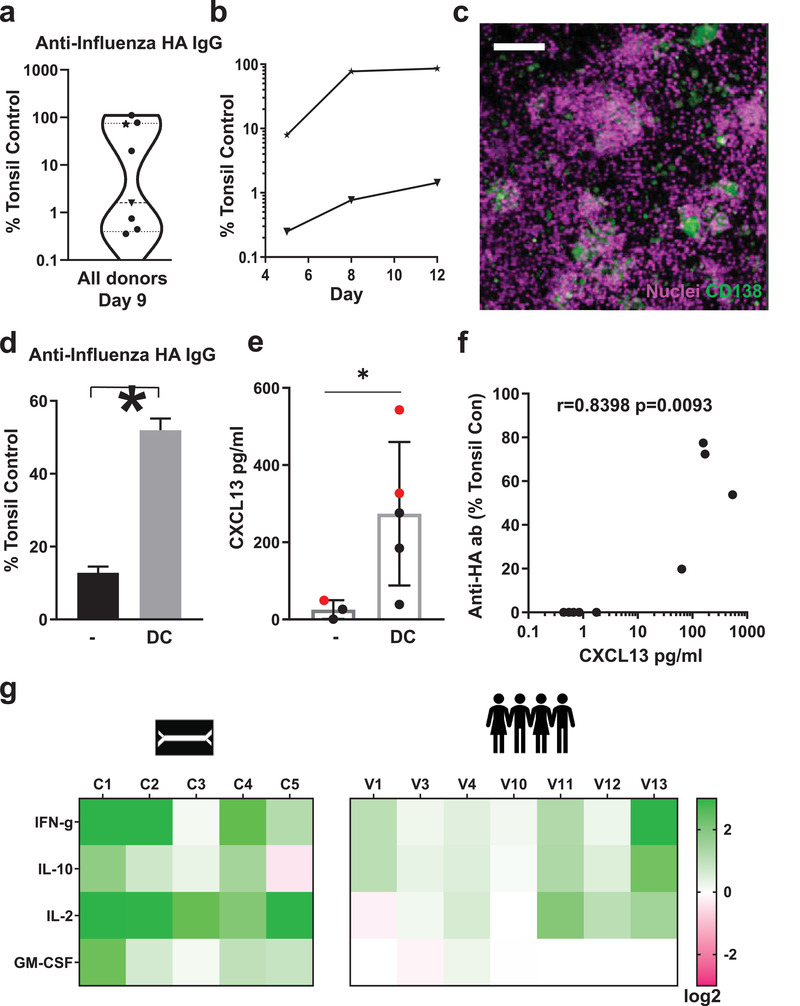
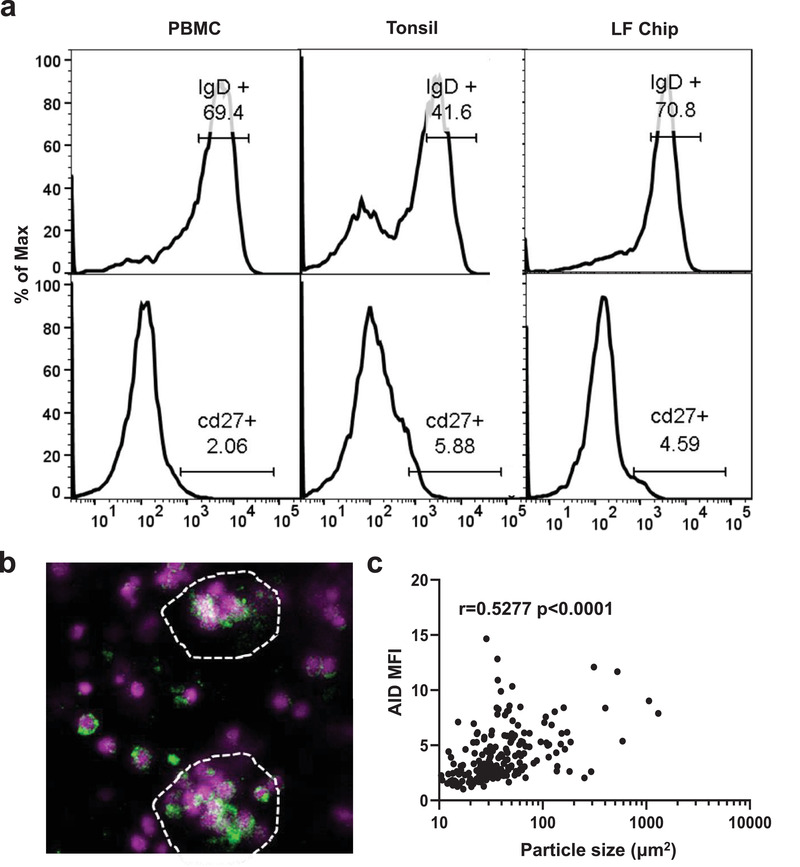
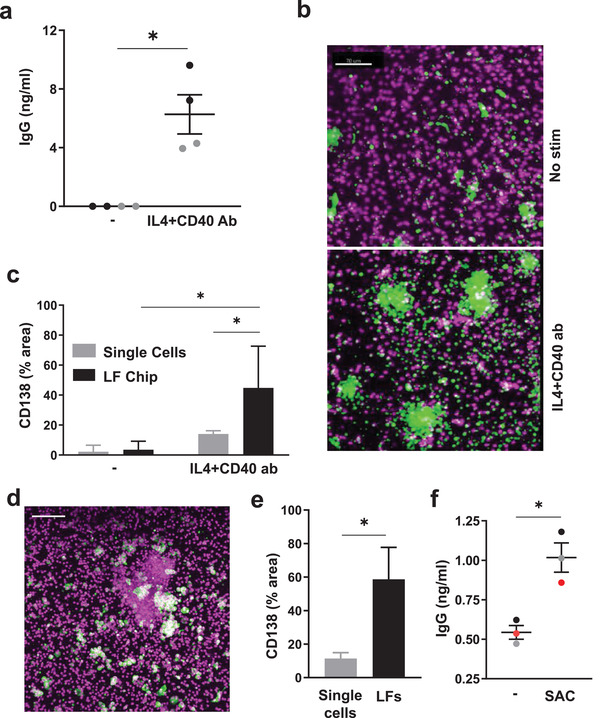
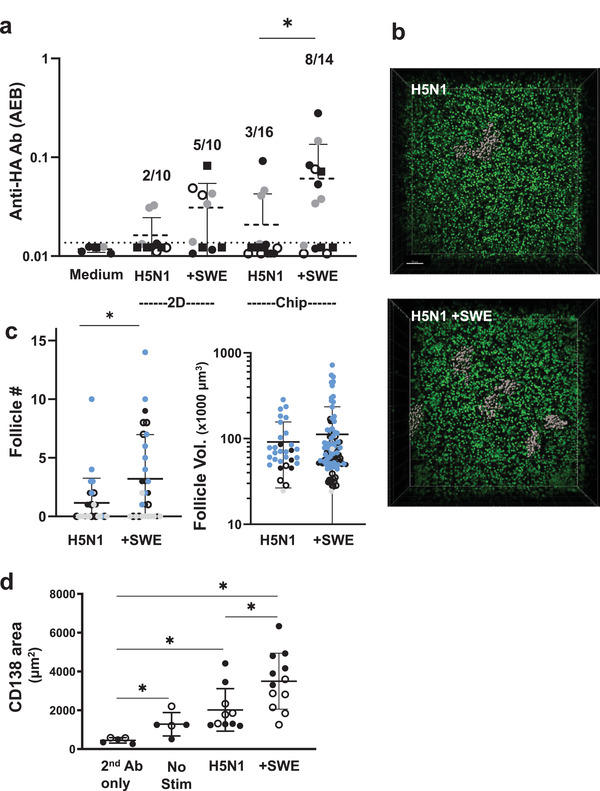
Lymphoid follicles (LFs) are responsible for generation of adaptive immune responses in secondary lymphoid organs and form ectopically during chronic inflammation. A human model of ectopic LF formation will provide a tool to understand LF development and an alternative to non-human primates for preclinical evaluation of vaccines. Here, it is shown that primary human blood B- and T-lymphocytes autonomously assemble into ectopic LFs when cultured in a 3D extracellular matrix gel within one channel of a two-channel organ-on-a-chip microfluidic device. Superfusion via a parallel channel separated by a microporous membrane is required for LF formation and prevents lymphocyte autoactivation. These germinal center-like LFs contain B cells expressing Activation-Induced Cytidine Deaminase and exhibit plasma cell differentiation upon activation. To explore their utility for seasonal vaccine testing, autologous monocyte-derived dendritic cells are integrated into LF Chips. The human LF chips demonstrate improved antibody responses to split virion influenza vaccination compared to 2D cultures, which are enhanced by a squalene-in-water emulsion adjuvant, and this is accompanied by increases in LF size and number. When inoculated with commercial influenza vaccine, plasma cell formation and production of anti-hemagglutinin IgG are observed, as well as secretion of cytokines similar to vaccinated humans over clinically relevant timescales.
淋巴滤泡 (LFs) 负责在次级淋巴器官中产生适应性免疫反应,并在慢性炎症期间异位形成。异位 LF 形成的人类模型将为 LF 发育提供一个研究工具,并为疫苗的临床前评估提供替代非人类灵长类动物的方法。本研究表明,当将原代人血液 B 和 T 淋巴细胞在双通道器官芯片微流控装置的一个通道内的 3D 细胞外基质凝胶中培养时,它们能够自主组装成异位 LF。通过微孔膜分隔的平行通道的灌注对于 LF 的形成是必需的,并且可以防止淋巴细胞的自身激活。这些类似于生发中心的 LF 含有表达激活诱导胞苷脱氨酶的 B 细胞,并在激活时表现出浆细胞分化。为了探索它们在季节性疫苗测试中的应用,将自体单核细胞衍生的树突状细胞整合到 LF 芯片中。与 2D 培养相比,人类 LF 芯片显示出对裂解病毒流感疫苗接种的改善的抗体反应,水包油佐剂进一步增强了这种反应,并且伴随着 LF 大小和数量的增加。当接种商业流感疫苗时,观察到浆细胞形成和抗血凝素 IgG 的产生,以及分泌类似于接种人类的细胞因子,这些在临床上相关的时间范围内都能观察到。