Aix-Marseille Université, CNRS, BIP, UMR 7281, IMM, Marseille, France.
Department of Biological Chemistry, The Alexander Silberman Institute of Life Sciences, Safra Campus Givat Ram, The Hebrew University of Jerusalem, Jerusalem, Israel.
mBio. 2022 Apr 26;13(2):e0325121. doi: 10.1128/mbio.03251-21. Epub 2022 Mar 15.
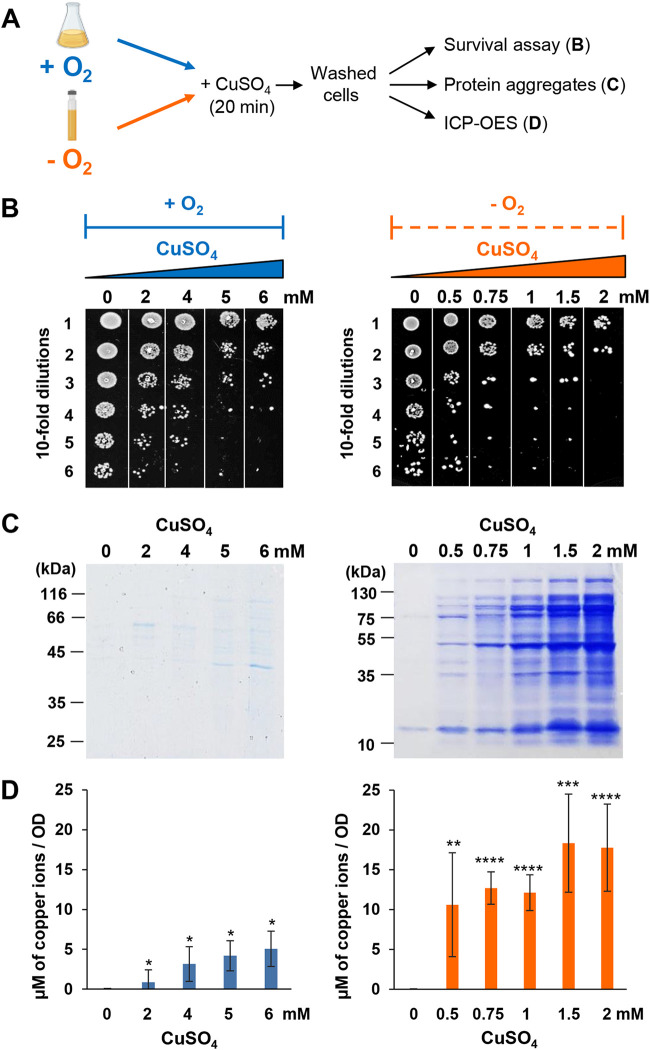
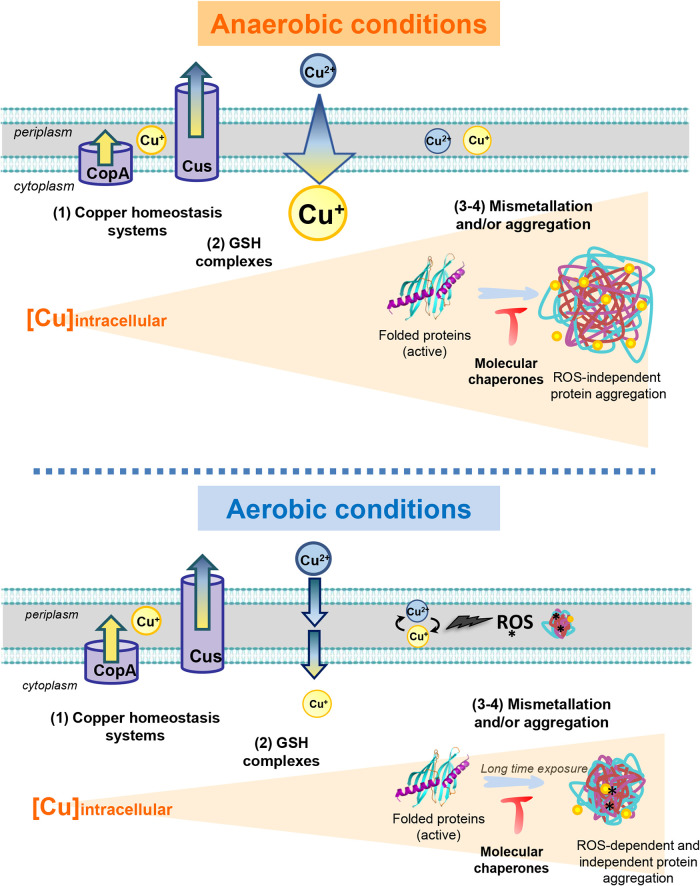
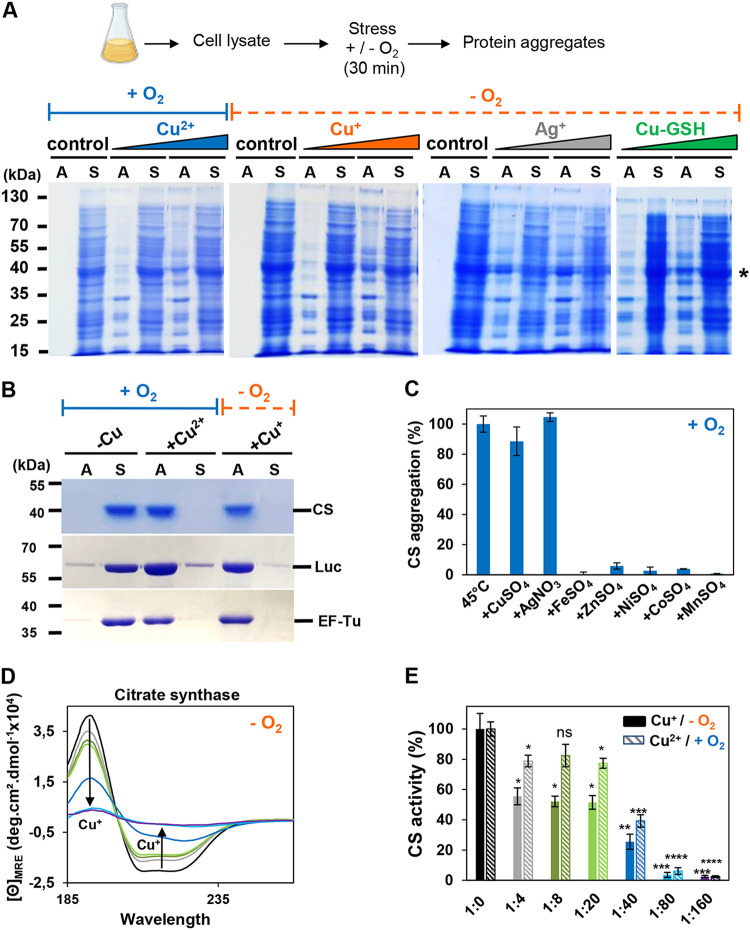
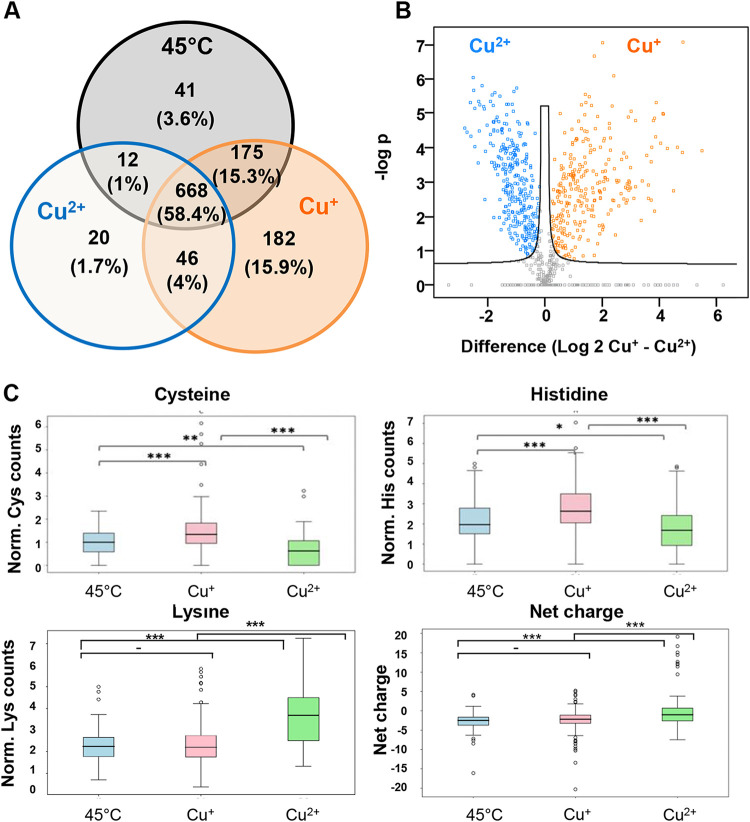
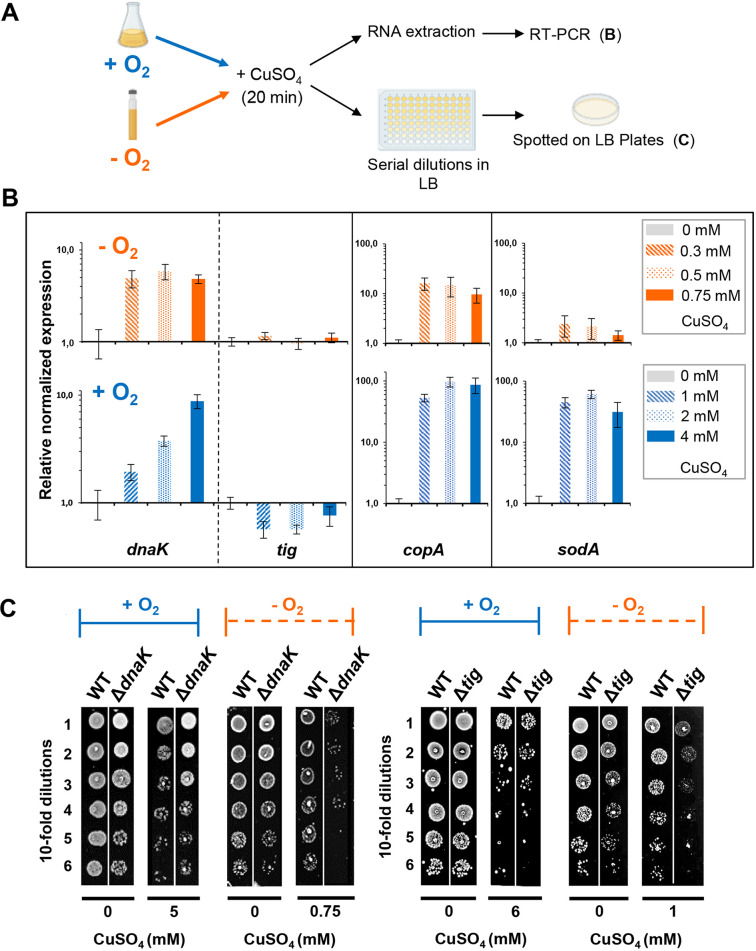
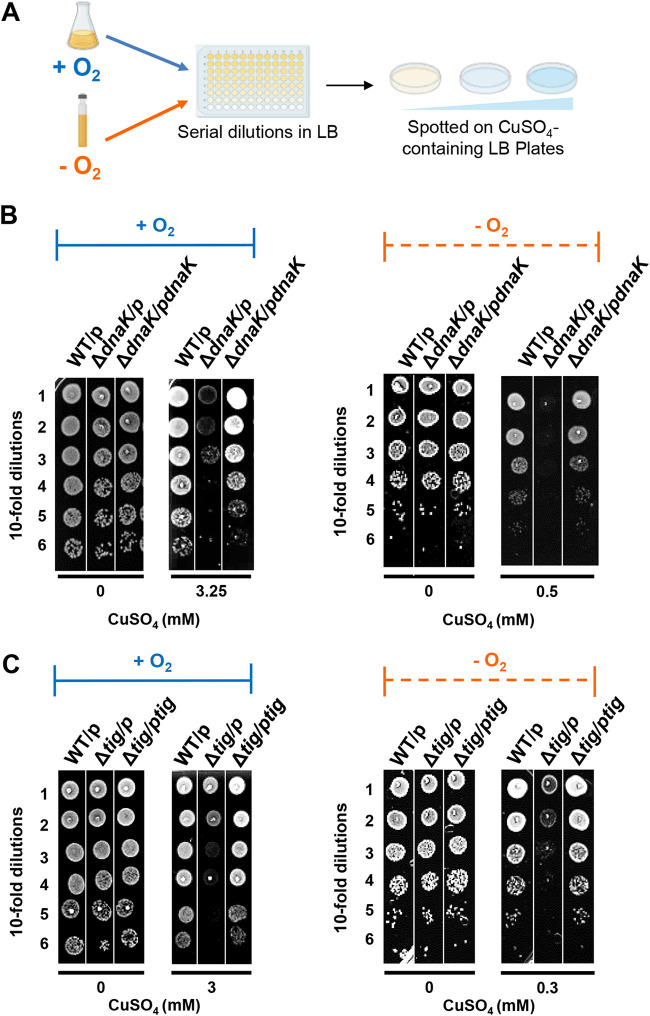
Copper is well known for its antimicrobial and antiviral properties. Under aerobic conditions, copper toxicity relies in part on the production of reactive oxygen species (ROS), especially in the periplasmic compartment. However, copper is significantly more toxic under anaerobic conditions, in which ROS cannot be produced. This toxicity has been proposed to arise from the inactivation of proteins through mismetallations. Here, using the bacterium Escherichia coli, we discovered that copper treatment under anaerobic conditions leads to a significant increase in protein aggregation. experiments using E. coli lysates and tightly controlled redox conditions confirmed that treatment with Cu under anaerobic conditions leads to severe ROS-independent protein aggregation. Proteomic analysis of aggregated proteins revealed an enrichment of cysteine- and histidine-containing proteins in the Cu-treated samples, suggesting that nonspecific interactions of Cu with these residues are likely responsible for the observed protein aggregation. In addition, E. coli strains lacking the cytosolic chaperone DnaK or trigger factor are highly sensitive to copper stress. These results reveal that bacteria rely on these chaperone systems to protect themselves against Cu-mediated protein aggregation and further support our finding that Cu toxicity is related to Cu-induced protein aggregation. Overall, our work provides new insights into the mechanism of Cu toxicity and the defense mechanisms that bacteria employ to survive. With the increase of antibiotic drug resistance, alternative antibacterial treatment strategies are needed. Copper is a well-known antimicrobial and antiviral agent; however, the underlying molecular mechanisms by which copper causes cell death are not yet fully understood. Herein, we report the finding that Cu, the physiologically relevant copper species in bacteria, causes widespread protein aggregation. We demonstrate that the molecular chaperones DnaK and trigger factor protect bacteria against Cu-induced cell death, highlighting, for the first time, the central role of these chaperones under Cu stress. Our studies reveal Cu-induced protein aggregation to be a central mechanism of Cu toxicity, a finding that will serve to guide future mechanistic studies and drug development.
铜的抗菌和抗病毒特性是众所周知的。在有氧条件下,铜的毒性部分依赖于活性氧物质(ROS)的产生,尤其是在周质腔中。然而,在厌氧条件下,铜的毒性要大得多,因为不能产生 ROS。这种毒性被认为是由于蛋白质的错配而失活。在这里,我们使用细菌大肠杆菌发现,在厌氧条件下用铜处理会导致蛋白质聚集显著增加。大肠杆菌裂解物和严格控制的氧化还原条件的实验证实,在厌氧条件下用 Cu 处理会导致严重的 ROS 非依赖性蛋白质聚集。聚集蛋白质的蛋白质组学分析表明,Cu 处理样品中富含含有半胱氨酸和组氨酸的蛋白质,表明 Cu 与这些残基的非特异性相互作用可能是导致观察到的蛋白质聚集的原因。此外,缺乏细胞质伴侣 DnaK 或触发因子的大肠杆菌菌株对铜应激高度敏感。这些结果表明,细菌依赖于这些伴侣系统来保护自己免受 Cu 介导的蛋白质聚集的影响,并进一步支持我们的发现,即 Cu 毒性与 Cu 诱导的蛋白质聚集有关。总的来说,我们的工作为 Cu 毒性的机制以及细菌用来生存的防御机制提供了新的见解。随着抗生素耐药性的增加,需要替代的抗菌治疗策略。铜是一种众所周知的抗菌和抗病毒剂;然而,铜导致细胞死亡的潜在分子机制尚未完全阐明。在此,我们报告了发现生理相关的铜物种 Cu 会引起广泛的蛋白质聚集。我们证明,分子伴侣 DnaK 和触发因子保护细菌免受 Cu 诱导的细胞死亡,这首次突出了这些伴侣在 Cu 应激下的核心作用。我们的研究揭示了 Cu 诱导的蛋白质聚集是 Cu 毒性的一个核心机制,这一发现将有助于指导未来的机制研究和药物开发。