Spritzer Daniel Tornaim, Andrade André Luiz Monezi, Xavier Aurora Zamora, da Silva Gabriel Teixeira, Kim Hyoun S, Kaliszewska-Czeremska Katarzyna, Laconi Stéphany, Igarashi Tasuku, Passos Ives Cavalcante, Hauck Simone
Graduate Program in Psychiatry and Behavioral Sciences, Universidade Federal Do Rio Grande Do Sul, R. Ramiro Barcelos, 2400 - 2º andar, Porto Alegre, Rio Grande Do Sul Zipcode: 90035-003 Brazil.
Center of Life Science, Pontifical Catholic University of Campinas, Av. John Boyd Dunlop, S/N - Jardim Ipajussara, Campinas, SP Zipcode: 13034-685 Brazil.
Curr Psychol. 2022 Mar 11:1-12. doi: 10.1007/s12144-022-02957-8.
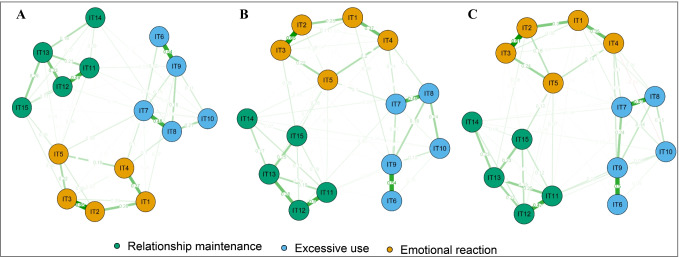
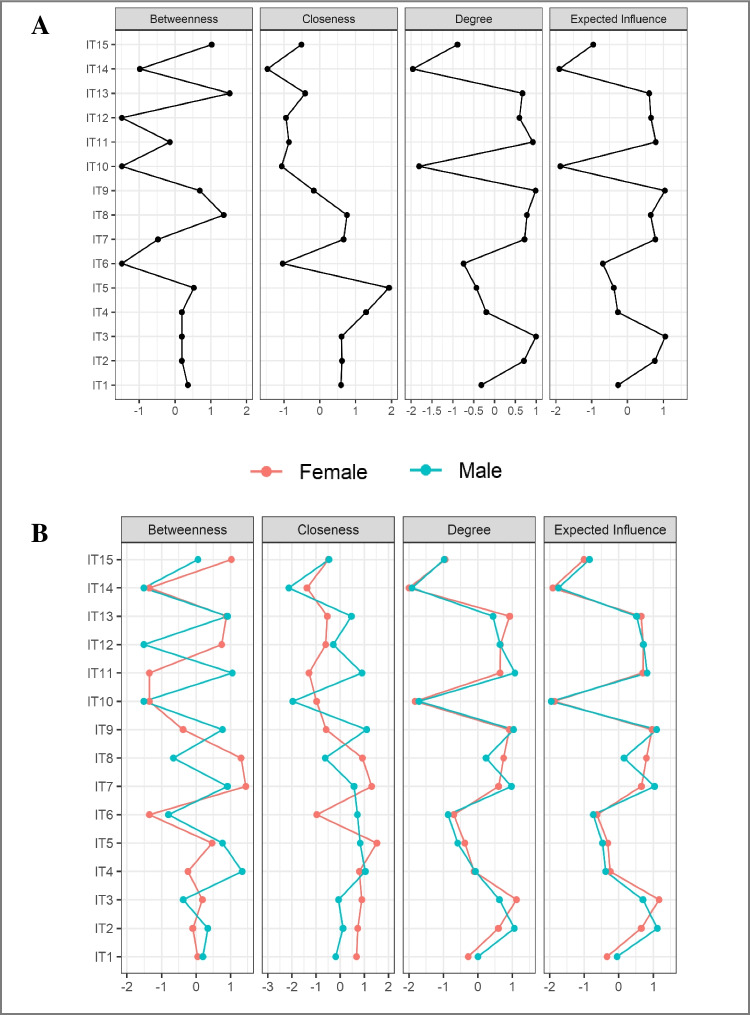
Text messaging is the primary form of technology-mediated interpersonal contact and the most carried out activity on cell phones. Despite its advantages, text messaging is not exempt from risks. The present paper aimed to validate and expand the psychometric properties of the Self-perception of Text-message Dependency Scale (STDS) in a Brazilian sample of adult internet users. In this cross-sectional study, we recruited a convenience sample of Brazilian internet users aged 18 and over. A total of 1,642 ( = 38.6, = 13.5; 73% female) participants completed the STDS, the Mobile Phone Problem Usage Scale-27 (MPPUS), and the Problematic Internet Use Questionnaire - Short form - 9 questionnaires (PIUQ-SF-9). Multigroup confirmatory factor analysis showed measurement invariance for gender and age. Internal consistency was high when accessed by both McDonalds' Omega and Cronbach's alpha. Network Analysis provided insights into the core symptoms of problematic text messaging. Convergent validity of the STDS was demonstrated by the subscale's correlation with MPPUS and PIUQ-SF-9. Due to its expanded psychometric properties and brevity, the STDS can be used in more comprehensive investigations about other excessive technology-related behaviors, such as problematic smartphone and internet use, allowing a better understanding of the mechanisms involved in problematic technology use.
The online version contains supplementary material available at 10.1007/s12144-022-02957-8.
短信是技术介导的人际接触的主要形式,也是手机上进行最多的活动。尽管有其优点,但短信也并非没有风险。本文旨在验证并扩展短信依赖自我认知量表(STDS)在巴西成年互联网用户样本中的心理测量特性。在这项横断面研究中,我们招募了一个年龄在18岁及以上的巴西互联网用户便利样本。共有1642名参与者(平均年龄 = 38.6岁,标准差 = 13.5岁;73%为女性)完成了STDS、手机问题使用量表 - 27(MPPUS)和问题性互联网使用问卷 - 简表 - 9问卷(PIUQ - SF - 9)。多组验证性因素分析显示该量表在性别和年龄上具有测量不变性。通过麦克唐纳欧米伽系数和克朗巴赫阿尔法系数评估时,内部一致性都很高。网络分析为问题短信的核心症状提供了见解。STDS的子量表与MPPUS和PIUQ - SF - 9的相关性证明了其收敛效度。由于其扩展的心理测量特性和简洁性,STDS可用于更全面地调查其他与技术过度使用相关的行为,如问题性智能手机和互联网使用,从而更好地理解问题性技术使用所涉及的机制。
在线版本包含可在10.1007/s12144 - 022 - 02957 - 8获取的补充材料。