National Referral Center for Rare Systemic Autoimmune Diseases, Internal Medicine, Cochin Hospital, AP-HP.Centre, University of Paris, Paris, France
National Referral Center for Rare Systemic Autoimmune Diseases, Internal Medicine, Cochin Hospital, AP-HP.Centre, University of Paris, Paris, France.
RMD Open. 2022 Mar;8(1). doi: 10.1136/rmdopen-2021-002160.
To investigate whether antineutrophil cytoplasm antibody (ANCA)-negative and myeloperoxidase (MPO)-ANCA-positive granulomatosis with polyangiitis (GPA) differ from proteinase-3 (PR3)-ANCA-positive GPA.
Diagnostic characteristics and outcomes of newly diagnosed French Vasculitis Study Group Registry patients with ANCA-negative, MPO-ANCA-positive or PR3-ANCA-positive GPA satisfying American College of Rheumatology criteria and/or Chapel Hill Conference Consensus Nomenclature were compared.
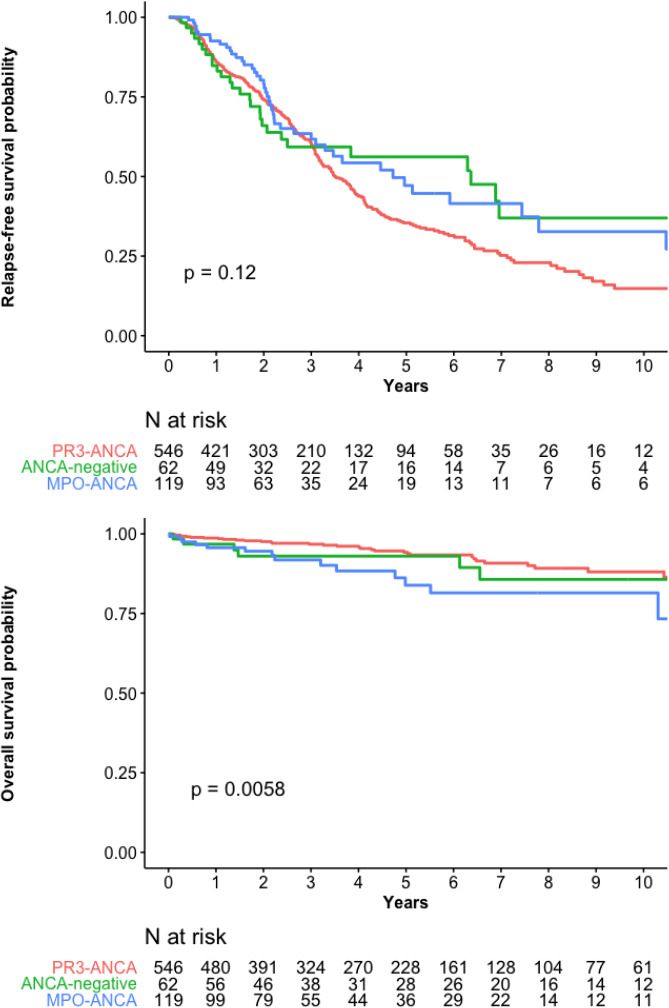
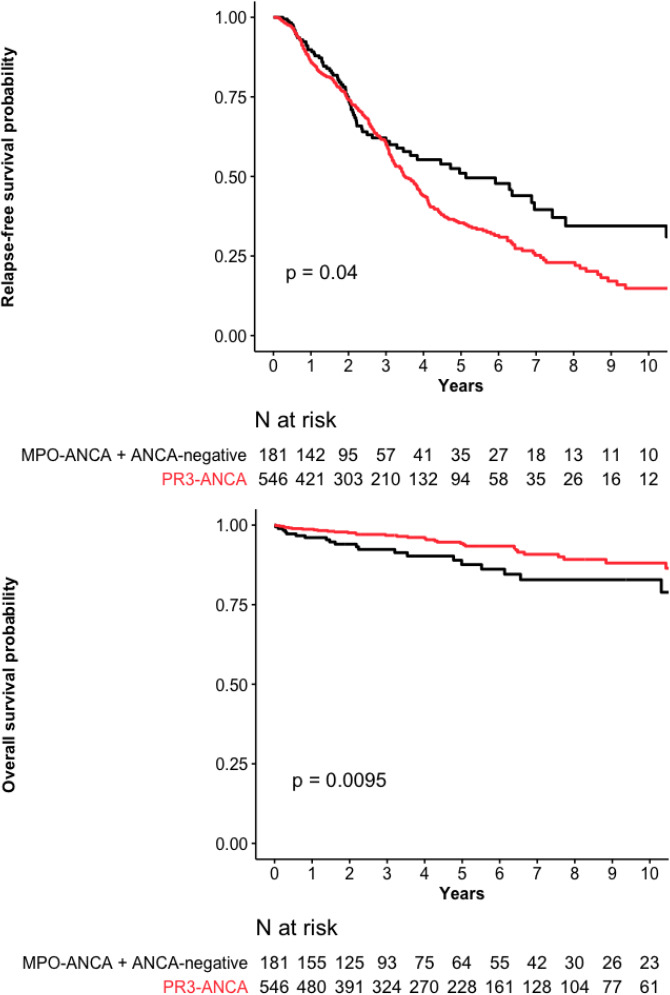
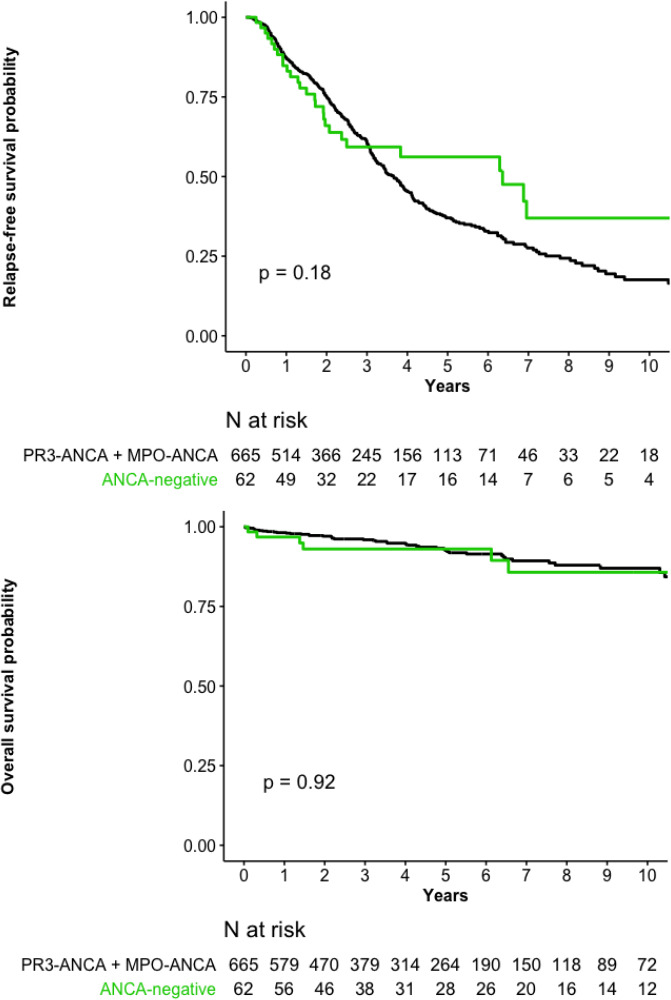
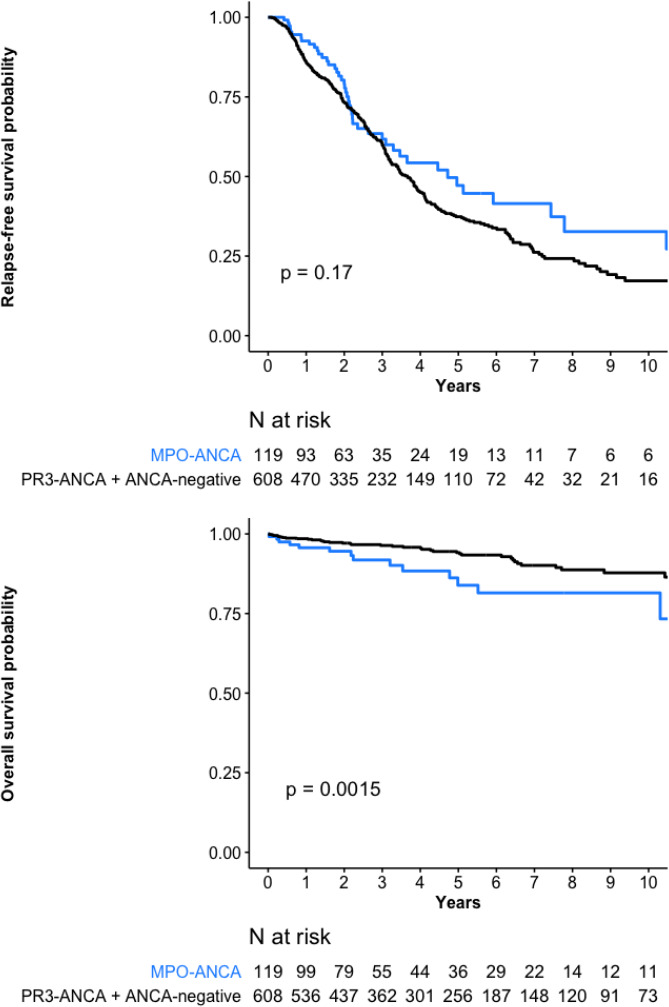
Among 727 GPA, 62 (8.5%) were ANCA-negative, 119 (16.4%) MPO-ANCA-positive and 546 (75.1%) PR3-ANCA-positive. ANCA-negative patients had significantly (p<0.05) more limited disease (17.7% vs 5.8%) and less kidney involvement (35.5% vs 58.9%) than those PR3-ANCA-positive or MPO-ANCA-positive, with comparable relapse-free (RFS) and overall survival (OS). MPO-ANCA-positive versus PR3-ANCA-positive and ANCA-negative patients were significantly more often female (52.9% vs 42.1%), older (59.8 vs 51.9 years), with more frequent kidney involvement (65.5% vs 55.2%) and less arthralgias (34.5% vs 55.1%), purpura (8.4% vs 17.1%) or eye involvement (18.5% vs 28.4%); RFS was similar but OS was lower before age adjustment. PR3-positive patients' RFS was significantly lower than for ANCA-negative and MPO-positive groups combined, with OS higher before age adjustment. PR3-ANCA-positivity independently predicted relapse for all GPA forms combined but not when comparing only PR3-ANCA-positive versus MPO-ANCA-positive patients.
Based on this large cohort, ANCA-negative versus ANCA-positive patients more frequently had limited disease but similar RFS and OS. MPO-ANCA-positive patients had similar RFS but lower OS due to their older age. PR3-ANCA-positive GPA patients' RFS was lower than those of the two other subsets combined but that difference did not persist when comparing only PR3 versus MPO-ANCA-positive patients.
研究抗中性粒细胞胞质抗体(ANCA)阴性和髓过氧化物酶(MPO)-ANCA 阳性肉芽肿性多血管炎(GPA)是否与蛋白酶 3(PR3)-ANCA 阳性 GPA 不同。
比较新诊断的法国血管炎研究组登记患者的诊断特征和结局,这些患者符合美国风湿病学会标准和/或 Chapel Hill 会议共识命名法,且为 ANCA 阴性、MPO-ANCA 阳性或 PR3-ANCA 阳性 GPA。
在 727 例 GPA 中,62 例(8.5%)为 ANCA 阴性,119 例(16.4%)为 MPO-ANCA 阳性,546 例(75.1%)为 PR3-ANCA 阳性。与 PR3-ANCA 阳性或 MPO-ANCA 阳性患者相比,ANCA 阴性患者的局限性疾病明显更多(17.7% vs 5.8%),肾脏受累明显更少(35.5% vs 58.9%),但无复发率(RFS)和总生存率(OS)相似。MPO-ANCA 阳性患者与 PR3-ANCA 阳性患者和 ANCA 阴性患者相比,女性明显更多(52.9% vs 42.1%),年龄更大(59.8 岁 vs 51.9 岁),肾脏受累更频繁(65.5% vs 55.2%),关节痛较少(34.5% vs 55.1%),紫癜(8.4% vs 17.1%)或眼部受累(18.5% vs 28.4%)更常见;在年龄调整前,RFS 相似,但 OS 较低。在未进行年龄调整时,PR3 阳性患者的 RFS 明显低于 ANCA 阴性和 MPO 阳性患者的总和,而 OS 则较高。PR3-ANCA 阳性独立预测所有 GPA 形式的复发,但在仅比较 PR3-ANCA 阳性与 MPO-ANCA 阳性患者时则不然。
基于这一大队列,与 ANCA 阳性患者相比,ANCA 阴性患者更常出现局限性疾病,但 RFS 和 OS 相似。MPO-ANCA 阳性患者的 RFS 相似,但由于年龄较大,OS 较低。PR3-ANCA 阳性 GPA 患者的 RFS 低于其他两个亚组的总和,但在仅比较 PR3 与 MPO-ANCA 阳性患者时,这种差异并不持续。