Department of Mechanical, Aerospace, and Nuclear Engineering, Rensselaer Polytechnic Institute, Troy, NY, USA.
Center for Modeling, Simulation, and Imaging in Medicine, Rensselaer Polytechnic Institute, Troy, NY, USA.
Sci Rep. 2022 Mar 16;12(1):4565. doi: 10.1038/s41598-022-08551-z.
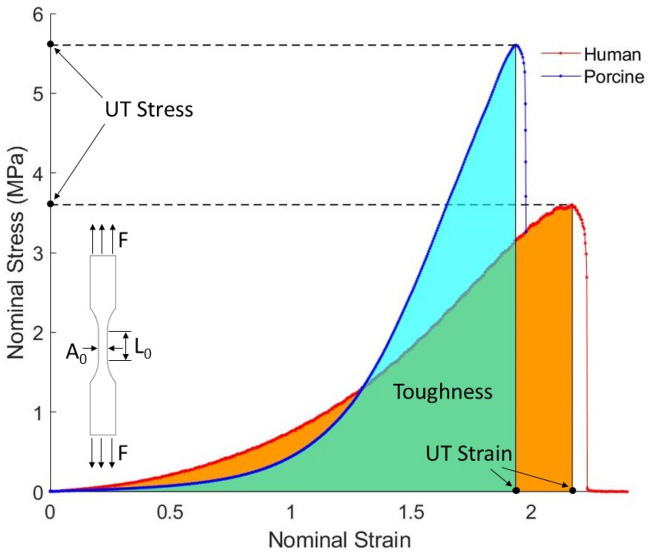
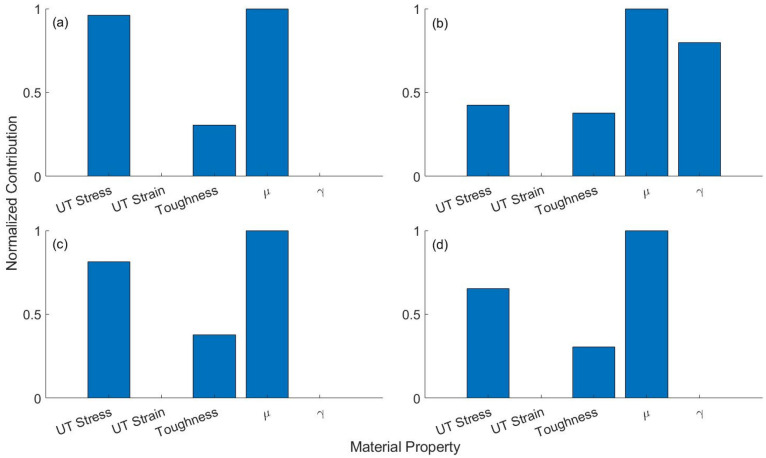
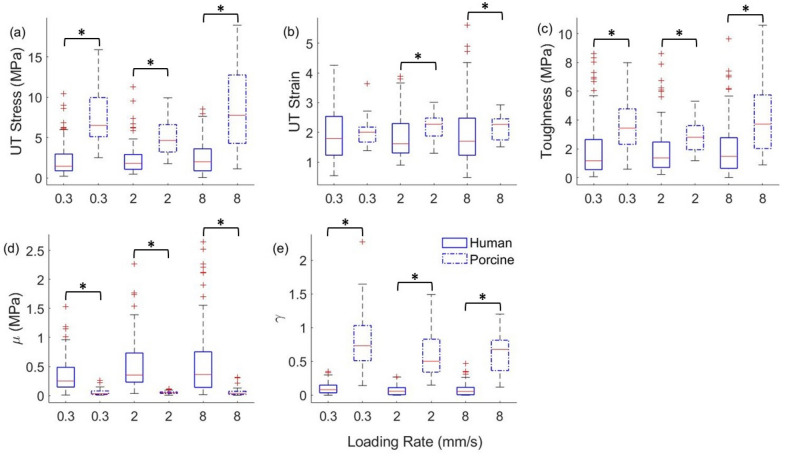
Porcine skin is considered a de facto surrogate for human skin. However, this study shows that the mechanical characteristics of full thickness burned human skin are different from those of porcine skin. The study relies on five mechanical properties obtained from uniaxial tensile tests at loading rates relevant to surgery: two parameters of the Veronda-Westmann hyperelastic material model, ultimate tensile stress, ultimate tensile strain, and toughness of the skin samples. Univariate statistical analyses show that human and porcine skin properties are dissimilar (p < 0.01) for each loading rate. Multivariate classification involving the five mechanical properties using logistic regression can successfully separate the two skin types with a classification accuracy exceeding 95% for each loading rate individually as well as combined. The findings of this study are expected to guide the development of effective training protocols and high-fidelity simulators to train burn care providers.
猪皮被认为是人体皮肤的事实上的替代品。然而,本研究表明,全层烧伤人体皮肤的机械特性与猪皮不同。该研究依赖于从与手术相关的加载速率的单轴拉伸试验中获得的五个机械性能:Veronda-Westmann 超弹性材料模型的两个参数、极限拉伸应力、极限拉伸应变和皮肤样本的韧性。单变量统计分析表明,对于每种加载速率,人和猪皮的性质都不相似(p < 0.01)。使用逻辑回归对涉及五个机械性能的多元分类可以成功地将两种皮肤类型分开,对于每种加载速率以及组合,分类准确率均超过 95%。本研究的结果有望指导有效的培训方案和高保真模拟器的开发,以培训烧伤护理提供者。