Sawyer Travis W, Taylor-Williams Michaela, Tao Ran, Xia Ruqiao, Williams Calum, Bohndiek Sarah E
Opt Express. 2022 Feb 28;30(5):7591-7611. doi: 10.1364/OE.446767.
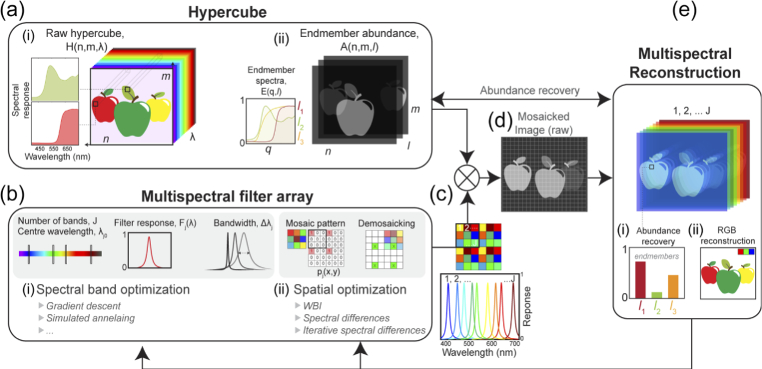
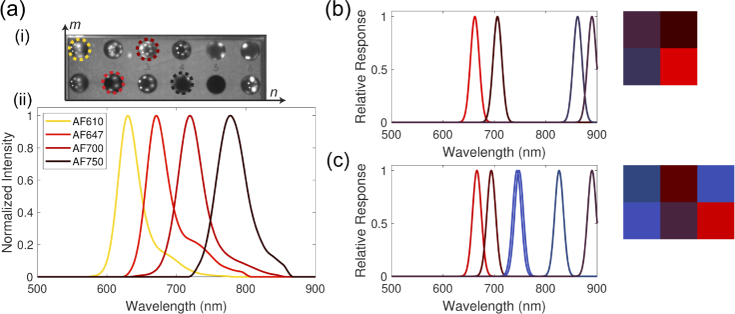
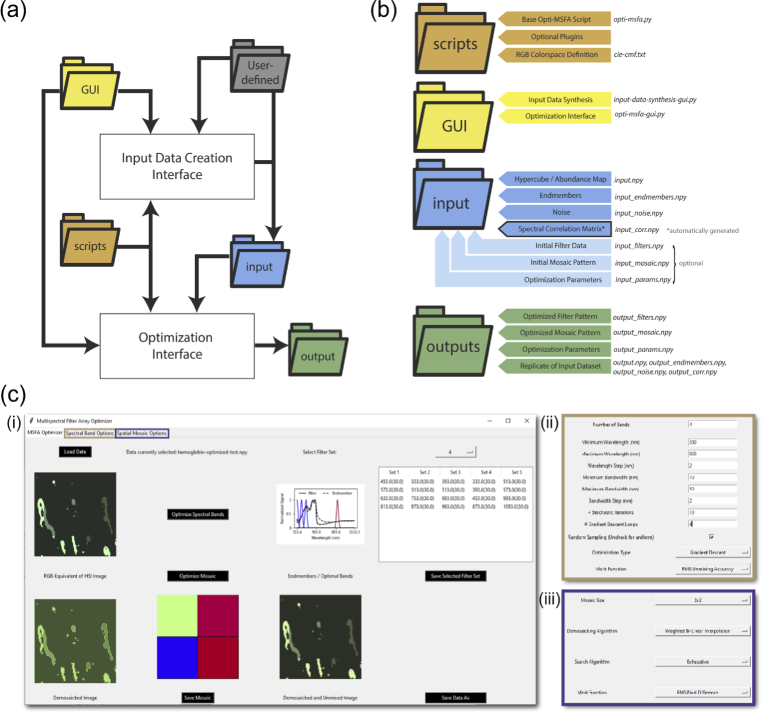
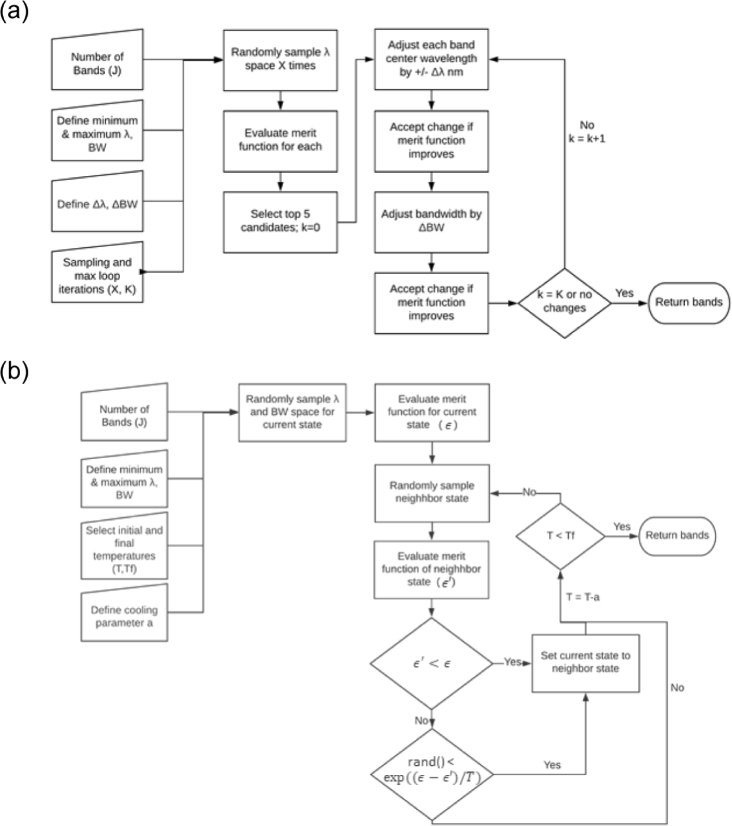
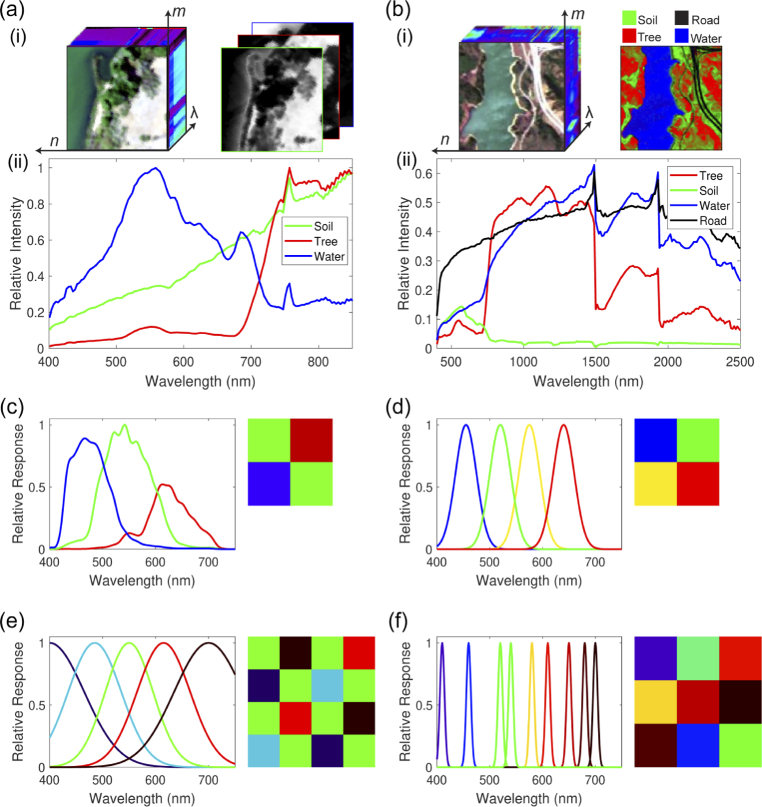
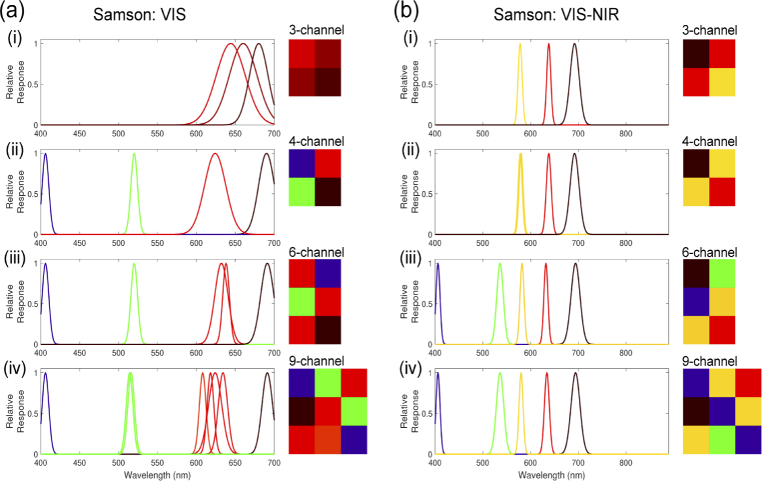
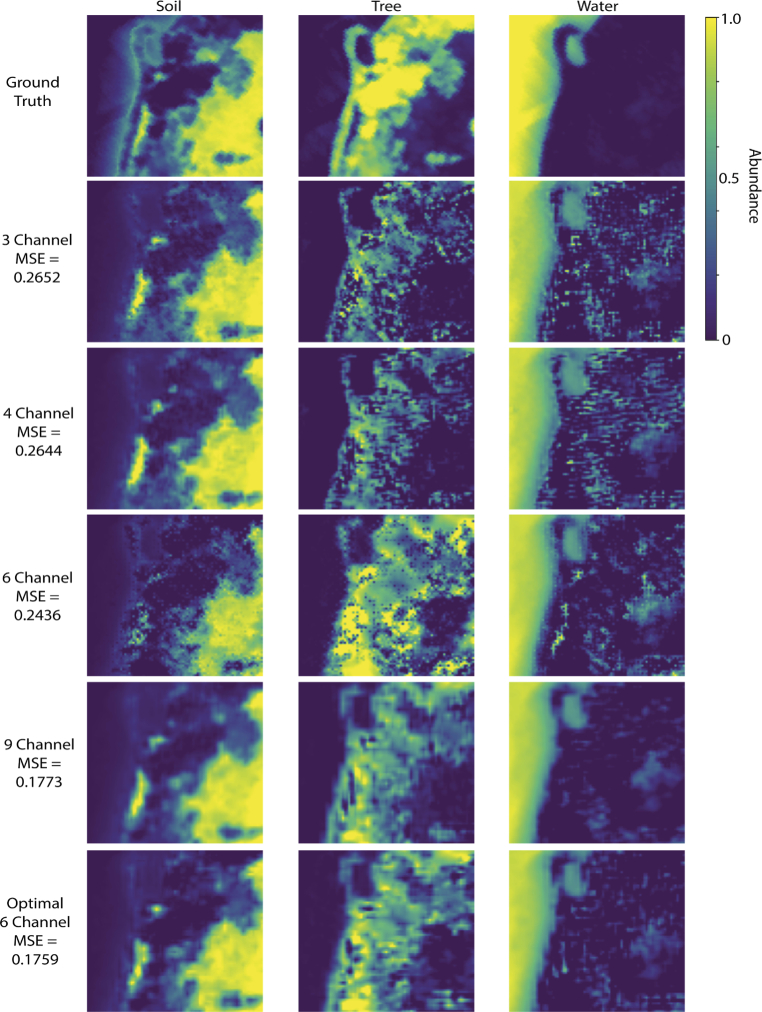
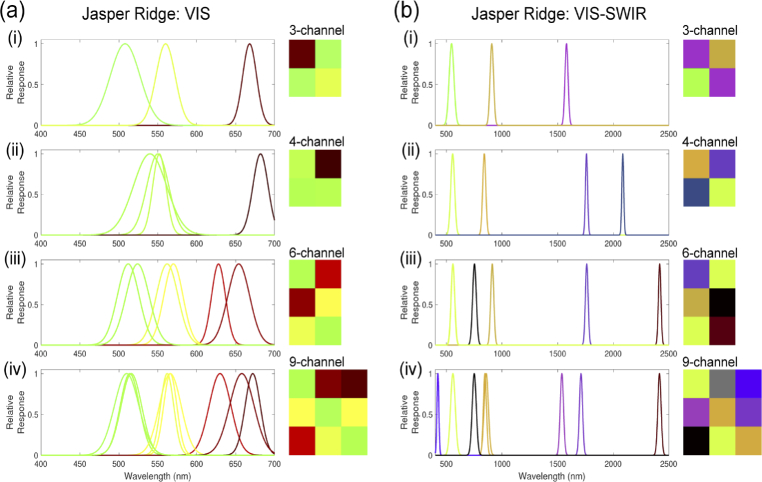
Multispectral imaging captures spatial information across a set of discrete spectral channels and is widely utilized across diverse applications such as remote sensing, industrial inspection, and biomedical imaging. Multispectral filter arrays (MSFAs) are filter mosaics integrated atop image sensors that facilitate cost-effective, compact, snapshot multispectral imaging. MSFAs are pre-configured based on application-where filter channels are selected corresponding to targeted absorption spectra-making the design of optimal MSFAs vital for a given application. Despite the availability of many design and optimization approaches for spectral channel selection and spatial arrangement, major limitations remain. There are few robust approaches for joint spectral-spatial optimization, techniques are typically only applicable to limited datasets and most critically, are not available for general use and improvement by the wider community. Here, we reconcile current MSFA design techniques and present Opti-MSFA: a Python-based open-access toolbox for the centralized design and optimization of MSFAs. Opti-MSFA incorporates established spectral-spatial optimization algorithms, such as gradient descent and simulated annealing, multispectral-RGB image reconstruction, and is applicable to user-defined input of spatial-spectral datasets or imagery. We demonstrate the utility of the toolbox by comparing against other published MSFAs using the standard hyperspectral datasets Samson and Jasper Ridge, and further show application on experimentally acquired fluorescence imaging data. In conjunction with end-user input and collaboration, we foresee the continued development of Opti-MSFA for the benefit of the wider research community.
多光谱成像可跨一组离散光谱通道捕获空间信息,在遥感、工业检测和生物医学成像等各种应用中得到广泛应用。多光谱滤波器阵列(MSFA)是集成在图像传感器之上的滤波器镶嵌体,有助于实现经济高效、紧凑的快照多光谱成像。MSFA根据应用进行预配置,即根据目标吸收光谱选择滤波器通道,因此对于给定应用而言,设计最优的MSFA至关重要。尽管有许多用于光谱通道选择和空间排列的设计与优化方法,但主要限制仍然存在。联合光谱-空间优化的稳健方法很少,技术通常仅适用于有限的数据集,最关键的是,这些技术并非可供广大社区普遍使用和改进。在此,我们整合了当前的MSFA设计技术,并推出了Opti-MSFA:一个基于Python的开放获取工具箱,用于MSFA的集中设计和优化。Opti-MSFA纳入了成熟的光谱-空间优化算法,如梯度下降和模拟退火算法、多光谱-RGB图像重建,并且适用于用户定义的空间-光谱数据集或图像输入。我们通过使用标准高光谱数据集Samson和Jasper Ridge与其他已发表的MSFA进行比较,展示了该工具箱的实用性,并进一步展示了其在实验获取的荧光成像数据上的应用。结合最终用户的输入和合作,我们预见Opti-MSFA将持续发展,造福更广泛的研究社区。