Bongrand Clotilde, Koch Eric, Mende Daniel, Romano Anna, Lawhorn Susannah, McFall-Ngai Margaret, DeLong Edward F, Ruby Edward G
Kewalo Marine Laboratory, SOEST, University of Hawai'i at Mānoa, Honolulu, HI, United States.
Department of Oceanography, SOEST, University of Hawai'i at Mānoa, Honolulu, HI, United States.
Front Microbiol. 2022 Mar 1;13:854355. doi: 10.3389/fmicb.2022.854355. eCollection 2022.
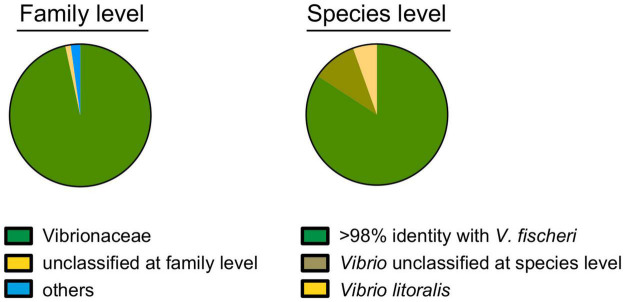
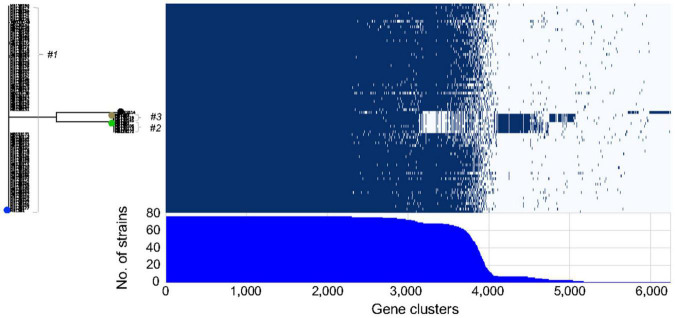
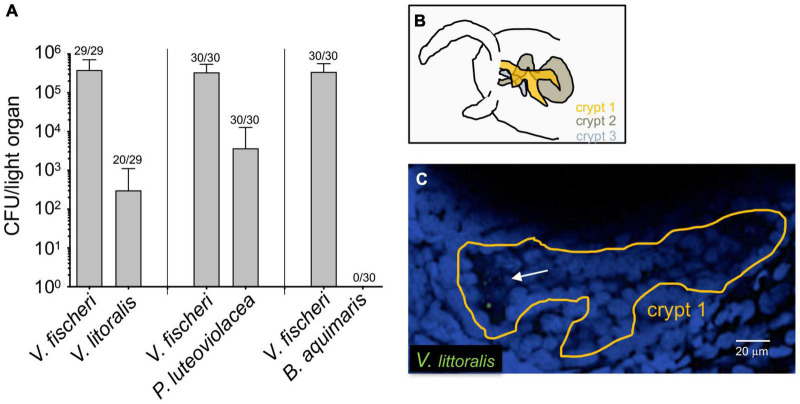
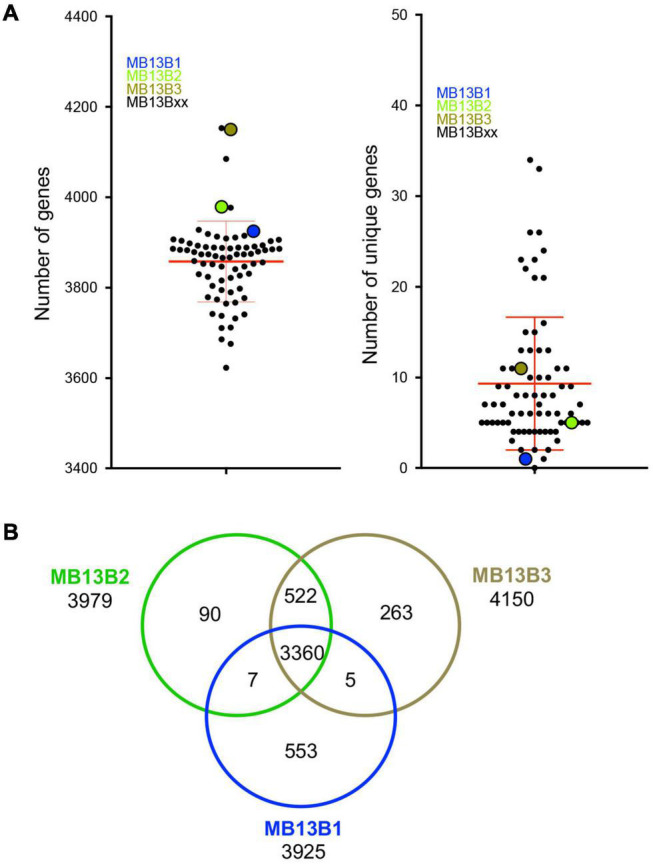
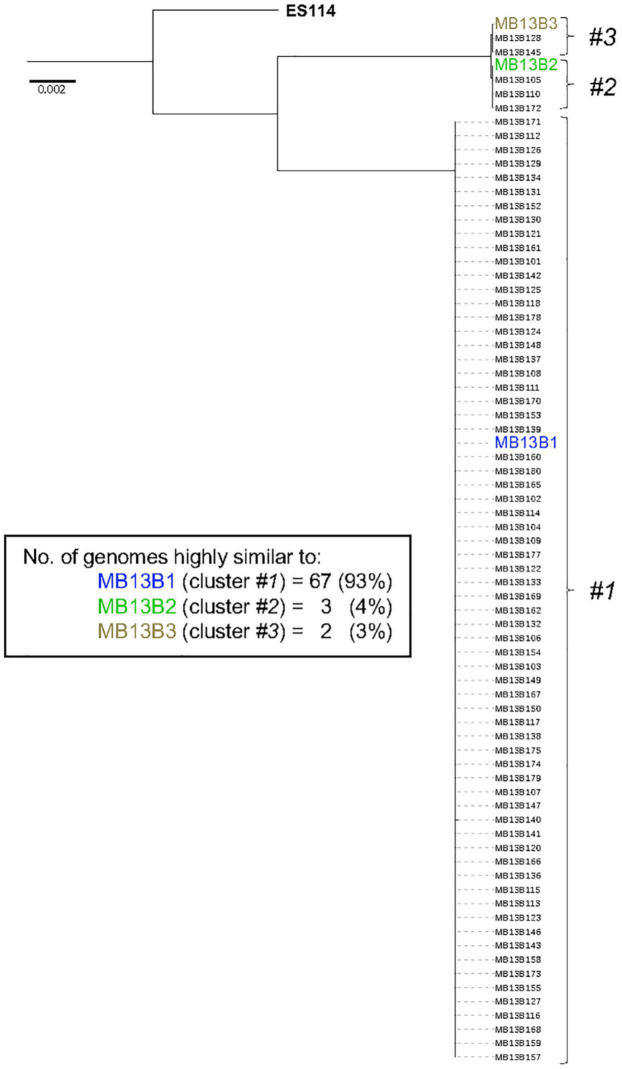
Planktonic cells of the luminous marine bacterium establish themselves in the light-emitting organ of each generation of newly hatched bobtail squid. A symbiont population is maintained within the 6 separated crypts of the organ for the ∼9-month life of the host. In the wild, the initial colonization step is typically accomplished by a handful of planktonic cells, leading to a species-specific, but often multi-strain, symbiont population. Within a few hours, the inoculating cells proliferate within the organ's individual crypts, after which there is evidently no supernumerary colonization. Nevertheless, every day at dawn, the majority of the symbionts is expelled, and the regrowth of the remaining ∼5% of cells provides a daily opportunity for the population to evolve and diverge, thereby increasing its genomic diversity. To begin to understand the extent of this diversification, we characterized the light-organ population of an adult animal. First, we used 16S sequencing to determine that species in the clade were essentially the only ones detectable within a field-caught . Efforts to colonize the host with a minor species that appeared to be identified, , revealed that, although some cells could be imaged within the organ, they were <0.1% of the typical population, and did not persist. Next, we determined the genome sequences of seventy-two isolates from one side of the organ. While all these isolates were associated with one of three clusters of strains, there was considerable genomic diversity within this natural symbiotic population. Comparative analyses revealed a significant difference in both the number and the presence/absence of genes within each cluster; in contrast, there was little accumulation of single-nucleotide polymorphisms. These data suggest that, in nature, the light organ is colonized by a small number of strains that can undergo significant genetic diversification, including by horizontal-gene transfer, over the course of ∼1500 generations of growth in the organ. When the resulting population of symbionts is expelled into seawater, its genomic mix provides the genetic basis for selection during the subsequent environmental dispersal, and transmission to the next host.
发光海洋细菌的浮游细胞在每一代刚孵化的短尾鱿鱼的发光器官中定殖。在宿主约9个月的生命期内,共生菌群体在该器官的6个分开的隐窝中维持。在自然环境中,最初的定殖步骤通常由少数浮游细胞完成,从而形成物种特异性但通常是多菌株的共生菌群体。在几个小时内,接种的细胞在器官的各个隐窝中增殖,此后显然没有多余的定殖。然而,每天黎明时分,大多数共生菌会被排出,剩余约5%的细胞重新生长为群体提供了每天进化和分化的机会,从而增加其基因组多样性。为了开始了解这种多样化的程度,我们对一只成年动物的发光器官群体进行了表征。首先,我们使用16S测序确定该进化枝中的物种基本上是在野外捕获的个体中唯一可检测到的物种。用一种似乎已被鉴定的次要物种定殖宿主的努力表明,尽管有些细胞可以在器官内成像,但它们占典型群体的比例不到0.1%,并且不能持续存在。接下来,我们确定了来自器官一侧的72个分离株的基因组序列。虽然所有这些分离株都与三个菌株簇之一相关,但在这个自然共生群体中存在相当大的基因组多样性。比较分析显示每个簇内基因的数量和存在/缺失都有显著差异;相比之下,单核苷酸多态性几乎没有积累。这些数据表明,在自然环境中,发光器官由少数菌株定殖,这些菌株在器官内约1500代的生长过程中可以经历显著的遗传多样化,包括通过水平基因转移。当产生的共生菌群体被排放到海水中时,其基因组组合为后续环境扩散期间的选择以及向下一个宿主的传播提供了遗传基础。