Tan Xiao-Feng, Bae Chanhyung, Stix Robyn, Fernández-Mariño Ana I, Huffer Kate, Chang Tsg-Hui, Jiang Jiansen, Faraldo-Gómez José D, Swartz Kenton J
Molecular Physiology and Biophysics Section, Porter Neuroscience Research Center, National Institute of Neurological Disorders and Stroke, National Institutes of Health, Bethesda, MD 20892, USA.
Theoretical Molecular Biophysics Laboratory, National Heart, Lung and Blood Institute, National Institutes of Health, Bethesda, MD 20892, USA.
Sci Adv. 2022 Mar 18;8(11):eabm7814. doi: 10.1126/sciadv.abm7814.
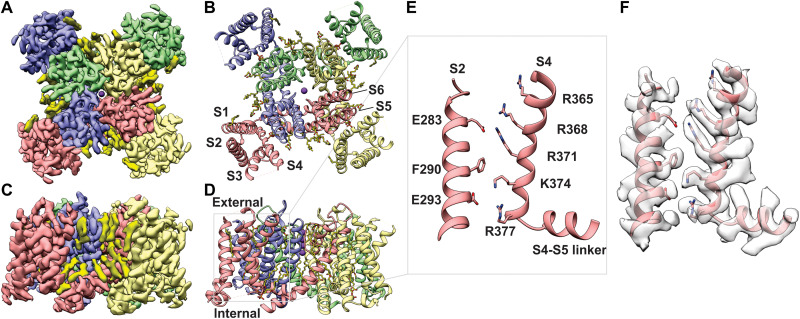
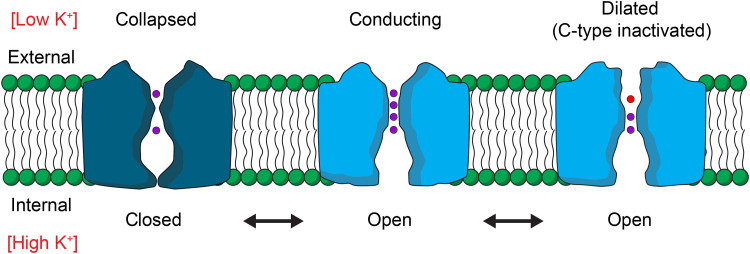
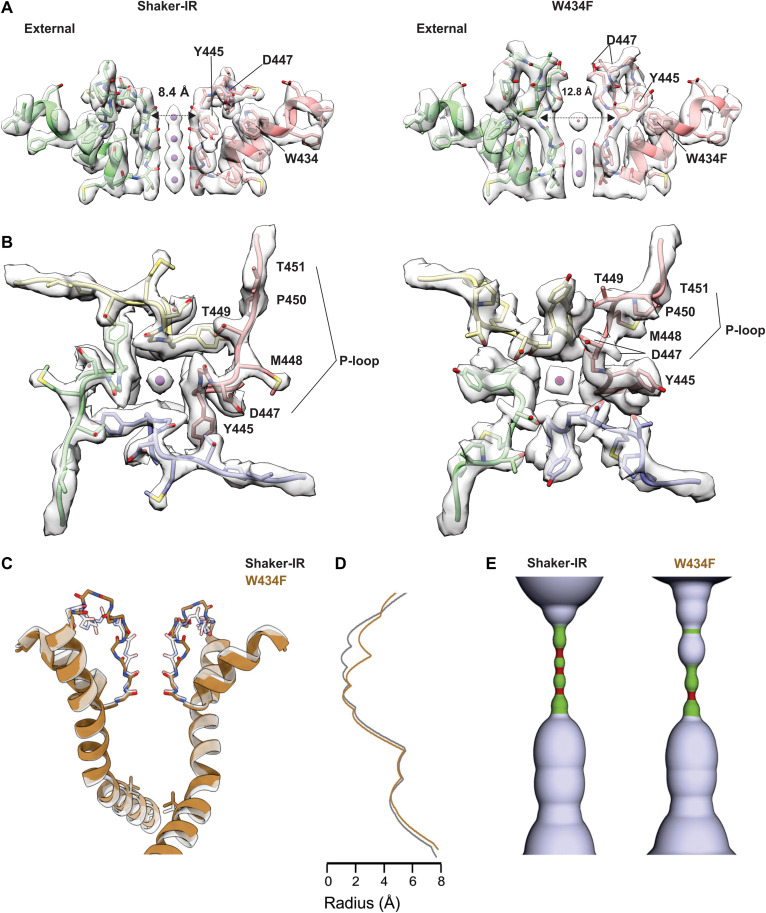
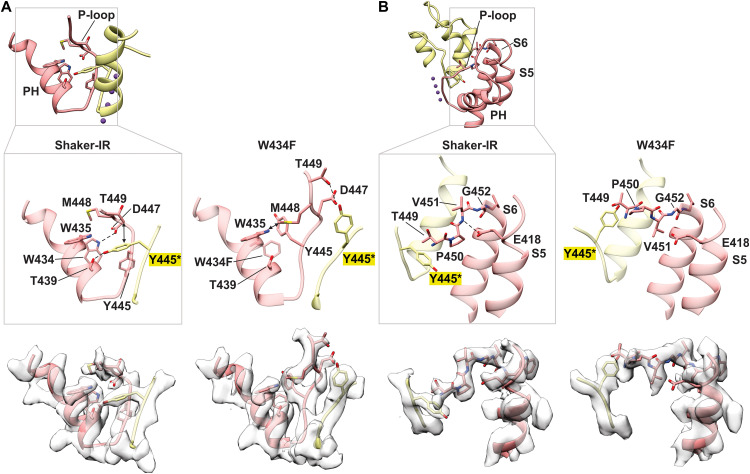
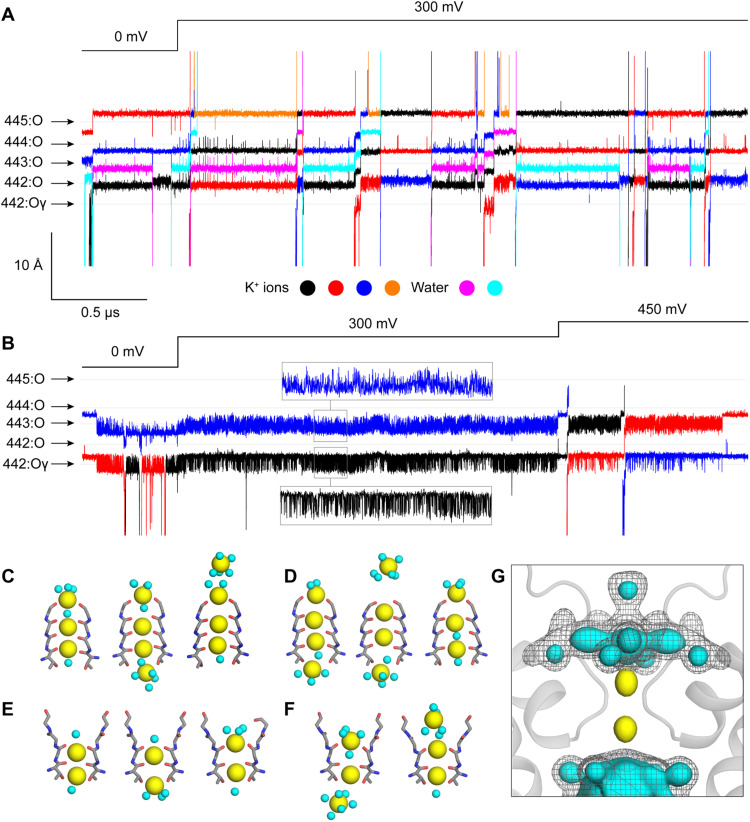
Voltage-activated potassium (Kv) channels open upon membrane depolarization and proceed to spontaneously inactivate. Inactivation controls neuronal firing rates and serves as a form of short-term memory and is implicated in various human neurological disorders. Here, we use high-resolution cryo-electron microscopy and computer simulations to determine one of the molecular mechanisms underlying this physiologically crucial process. Structures of the activated Shaker Kv channel and of its W434F mutant in lipid bilayers demonstrate that C-type inactivation entails the dilation of the ion selectivity filter and the repositioning of neighboring residues known to be functionally critical. Microsecond-scale molecular dynamics trajectories confirm that these changes inhibit rapid ion permeation through the channel. This long-sought breakthrough establishes how eukaryotic K channels self-regulate their functional state through the plasticity of their selectivity filters.
电压门控钾(Kv)通道在膜去极化时打开,并随后自发失活。失活控制神经元的 firing 速率,并作为一种短期记忆形式,且与多种人类神经系统疾病有关。在这里,我们使用高分辨率冷冻电子显微镜和计算机模拟来确定这一生理关键过程背后的分子机制之一。脂质双层中活化的 Shaker Kv 通道及其 W434F 突变体的结构表明,C 型失活需要离子选择性过滤器的扩张以及已知在功能上至关重要的相邻残基的重新定位。微秒级分子动力学轨迹证实,这些变化抑制了离子通过通道的快速渗透。这一长期寻求的突破确定了真核 K 通道如何通过其选择性过滤器的可塑性来自我调节其功能状态。